朱元璋为什么成了一个特别忙的皇帝?
Why Did Zhu Yuanzhang Become Such a Busy Emperor?
Page 1
皇帝几点起床?
What Time Did the Emperor Wake Up?
有人会说,古代皇帝三点起床,五点工作,一直到深夜。听起来很有趣,可是我们没有证据证明朱元璋每天都照着这张时间表生活。
朱元璋是明朝第一位皇帝。他从1368年统治到1398年。我们不知道他每天几点吃饭、睡觉,却知道很多政府报告会送到他面前。
Some stories give ancient emperors a perfect schedule: wake at three, start work at five, and keep going late into the night. It sounds exciting, but we do not have evidence that Zhu Yuanzhang followed that timetable every day.
Zhu was the first emperor of the A time in China from 1368 to 1644.. He ruled from 1368 to 1398. We do not know what time he ate or slept each day. We do know that a great deal of government work traveled toward him.
Page 2
从贫穷少年到皇帝
From a Poor Boy to an Emperor
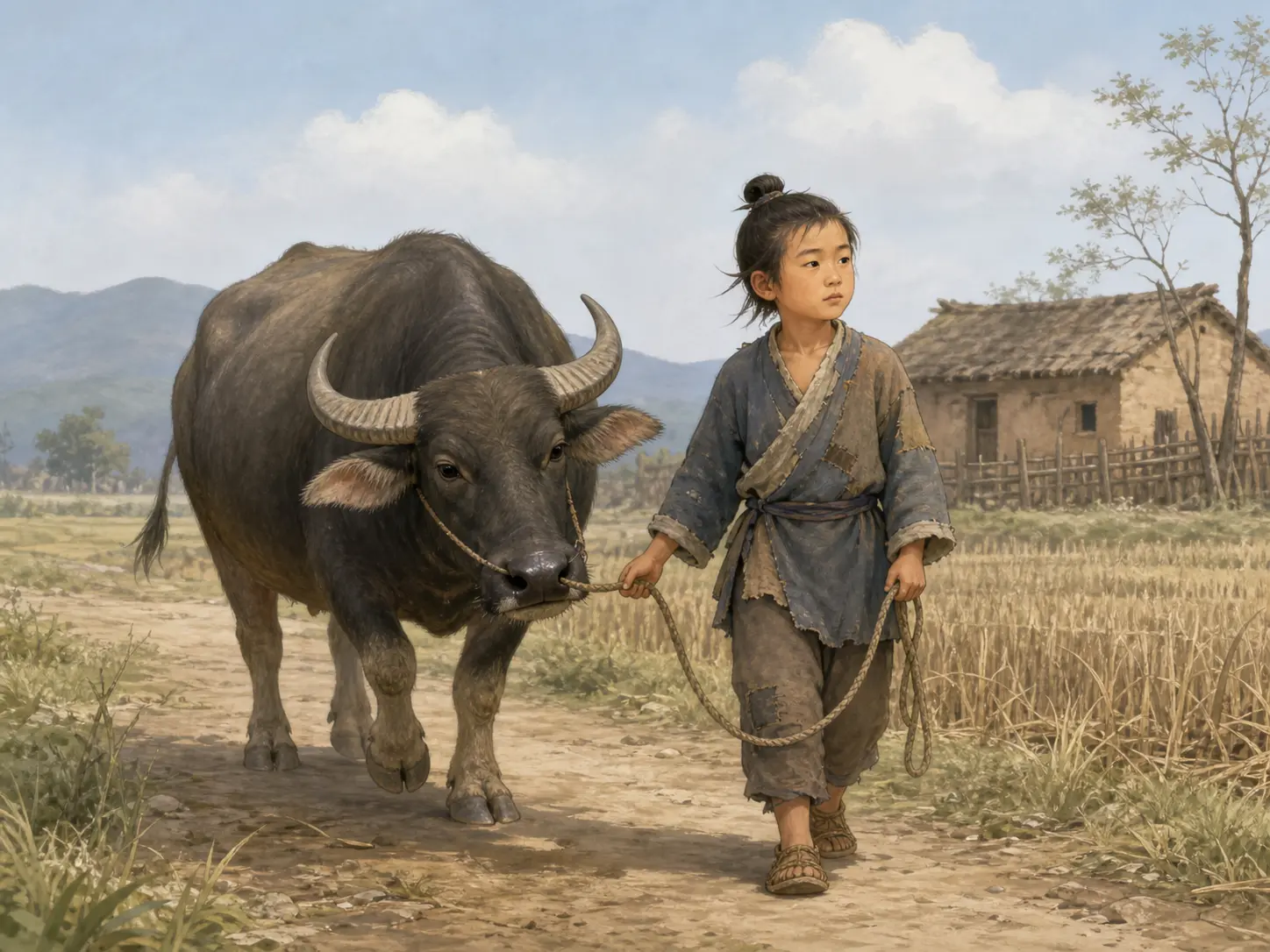
This is a modern imagined scene. Accounts say that Zhu grew up poor and herded animals for others.
朱元璋出生在一个非常贫穷的家庭。后来的记载说,他小时候替人放过牲畜,后来还进过寺院。
灾荒、疾病和战争改变了他的生活。他参加军队,经过多年战争,最后建立明朝。
战争结束以后,新的政府要处理河水、粮食、法律、军队和许多别的事情。每一件事都需要有人了解、报告和决定。
Zhu Yuanzhang was born into a very poor family. Later accounts say that he herded animals for other people and later lived in a monastery.
Famine, disease, and war changed his life. He joined a rebel army and, after years of fighting, founded the Ming dynasty.
The new government had to handle rivers, grain, laws, armies, and much more. People needed to study each problem, report it, and make a decision.
Page 3
报告不能直接跑进房间
A Report Could Not Run into His Room
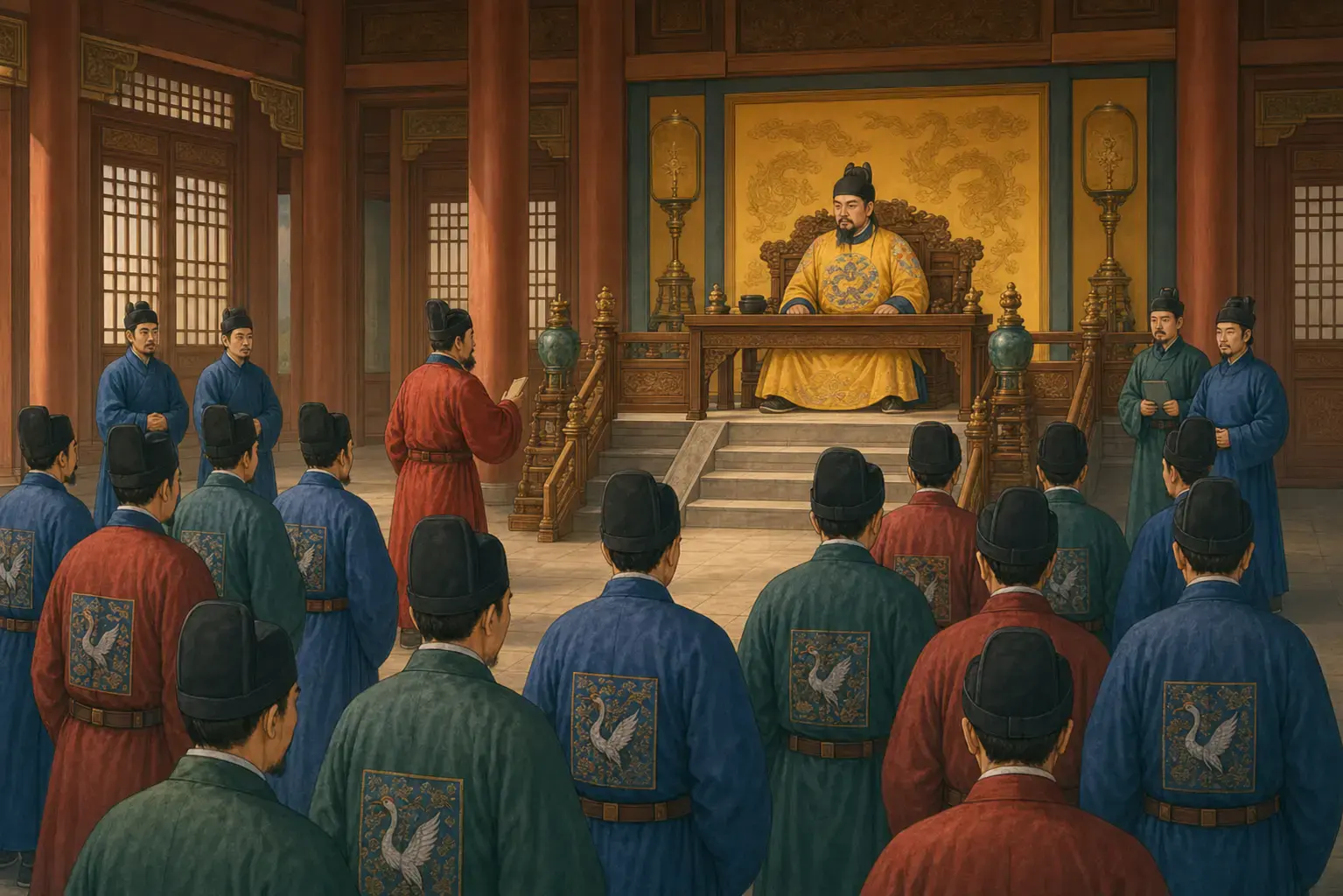
This modern illustration shows officials reporting government business. It is not a record of one real meeting.
想象一个地方发了大水。当地官员要报告损失,还可能请求粮食。他们把事情写成正式文书,送往中央政府。
送信人不能直接跑进皇帝的房间。不同办公室要接收、登记、检查和整理文书,很多官员一起工作。
一份报告里也可能有好几件事。皇帝书桌上的忙碌,来自一个大政府不断送来的问题。
Imagine that a flood damages a county. Local officials need to describe what happened and may ask for grain. They write a formal report and send it toward the central government.
The messenger cannot run straight into the emperor's room. Government offices receive, record, check, and organize the document. Many people help move the work along.
One report may even contain several problems. The emperor's crowded desk begins with a large government sending him questions.
Page 4
更多道路通向一张书桌
More Roads Led to One Desk
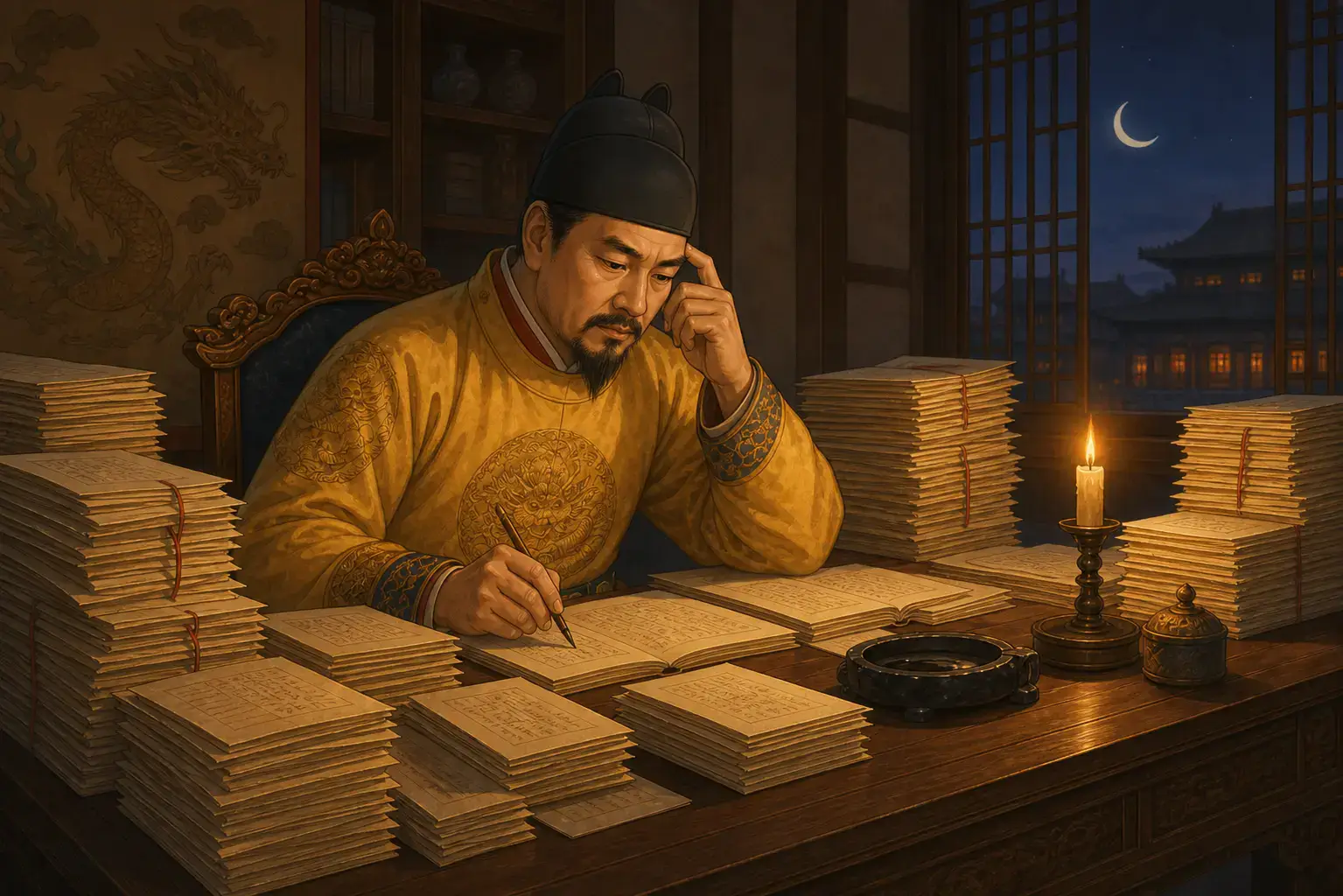
The moon, lamp, and stacks of paper show pressure. They are not a picture of one documented night.
明朝开始时,有一个重要机构帮助皇帝管理很多政务。1380年,朱元璋撤掉了这个机构和丞相的职位。六个主要部门后来更直接地向皇帝报告。
这样,皇帝有了更多决定权,也有更多工作来到面前。不过,他并不是一个人完成所有事情。许多官员仍然整理报告、起草文字和执行命令。
当更多道路都通向一个人,那个人有更多权力,那里也更容易堵车。
Early in the Ming dynasty, a powerful office and its chancellor helped manage government business. In 1380, Zhu removed both. Six major departments then reported more directly to the emperor.
That gave the emperor more control and brought more work to him. Still, he did not do everything alone. Many officials organized reports, drafted words, and carried out orders.
When more roads lead to one person, that person gains power. That point can also become a traffic jam.
忙不等于永远正确
Busy Does Not Always Mean Right
很多文件可以说明工作很多,却不能证明每个决定都公平。朱元璋统治后期越来越严酷,许多官员被关进监狱或处死。
所以,这不是“最忙的皇帝就是最好的皇帝”的故事。权力集中时,一个人的好决定影响很大,错误和怀疑也会伤害更多人。
A mountain of paperwork can show that there was a great deal to do. It cannot prove that every decision was fair. Zhu's rule became harsher in his later years, and many officials were imprisoned or killed.
This is not a story in which the busiest emperor must be the best. When power gathers around one person, good choices can matter greatly - and mistakes and suspicion can harm many people too.
朱元璋为什么成了一个特别忙的皇帝?
Why Did Zhu Yuanzhang Become Such a Busy Emperor?
Page 1
不要先画一张时间表
Do Not Begin with a Timetable
写“皇帝的一天”时,很容易编出一张整齐的时间表:三点起床,五点上朝,一直工作到深夜。问题是,这种说法常把不同皇帝、不同朝代的习惯拼在一起。我们没有可靠证据证明朱元璋每天照着同一只钟生活。
我们能问一个更好的问题:作为皇帝,什么工作会来到他面前?朱元璋又叫洪武皇帝,是明朝第一位皇帝,从1368年统治到1398年,首都在今天的南京。
It is tempting to begin an emperor's day with a tidy schedule: wake at three, hold court at five, and work until midnight. The trouble is that such schedules often mix emperors and dynasties. We have no reliable evidence that Zhu Yuanzhang lived by one exact clock every day.
History lets us ask a better question: What work reached him as emperor? Zhu, also known as the Hongwu emperor, founded the A time in China from 1368 to 1644. and ruled from 1368 to 1398. His capital was in present-day Nanjing.
Page 2
一个新王朝要处理什么?
What Did a New Dynasty Have to Do?
朱元璋1328年出生在今天安徽凤阳一带,家庭非常贫困。后来的生平记载说,他少年时替人放牧,后来进过寺院。元末的灾荒、疾病和战争改变了他的人生。他加入起义军,经过多年战争建立明朝。
做皇帝以后,他面对的不是一个顺利运转的国家。政府需要在战争后重建制度,把命令送到各地,也要处理粮食、税收、河道、法律、官员和边防。
Zhu was born in 1328 near present-day Fengyang in Anhui. His family was extremely poor. Later biographies say that he herded animals and then entered a monastery. Famine, disease, rebellion, and war transformed his life. He joined a rebel army and eventually founded a new dynasty.
As emperor, he did not inherit a country that was already running smoothly. The government had to rebuild after war, send orders across the empire, and manage grain, taxes, rivers, laws, officials, and border defense.
现代想象图。生平资料说朱元璋出身贫困,也曾替人放牧。
This is a modern imagined scene. Biographical accounts say that Zhu grew up poor and herded animals.
Page 3
跟着一份报告走
Follow One Report
This modern illustration shows officials reporting business. It does not reconstruct one Hongwu meeting.
假设一个地方遇到洪水,官员要报告损失,并请求粮食或减税。他们把事情写成正式文书。这里可以把“章奏”理解成送给皇帝的报告、请求或建议。
送信人不会直接闯进皇帝房间。政府机构要接收、登记、检查和转送文书。修河、调粮、任命官员、审理案件和边境消息,还需要不同部门研究。
朱元璋逐步改变文书上报的道路,让一些重要报告绕过最高行政机构中书省,更直接地来到御前。
Suppose a flood strikes a county. Officials describe the damage and ask for grain or lower taxes. Their formal document joins the flow of memorials - reports, requests, and advice sent toward the emperor.
A messenger does not burst into the emperor's private room. Offices receive, register, check, and pass along the document. River repairs, grain shipments, appointments, court cases, and border news may require several departments to study them.
Zhu gradually changed the route. Some important reports could now reach him more directly instead of first passing through the Central Secretariat, the highest administrative office.
Page 4
1380年的大改变
The Great Change of 1380
明初,中书省和丞相帮助皇帝统领许多政务。可以把这个机构想成皇帝和六个主要部门之间的一张重要书桌。
1380年,胡惟庸案以后,朱元璋撤销中书省,也不再设置丞相。管理官员、钱粮户籍、礼仪、军事、司法和工程的六部,后来更直接地向皇帝负责。
这项改变把更多权力集中到皇帝手中,也让更多政务来到他面前。它不是皇帝喜欢“自己做作业”的习惯,而是影响明朝政府很多年的政治选择。
Early in the Ming, the Central Secretariat and its chancellor helped direct much of the government. Think of the institution as a major desk between the emperor and six important ministries.
In 1380, after the case against Chancellor Hu Weiyong, Zhu abolished the office and stopped appointing a chancellor. The Six Ministries - which managed officials, revenue and population records, ceremonies, the military, law, and public works - then answered more directly to him.
The change concentrated more authority in the emperor's hands and sent more business his way. It was not a personal preference for “doing his own homework.” It reshaped Ming government.
Page 5
八天、1660通文书
Eight Days and 1,660 Documents
Lamplight and paper stacks show pressure. They do not record one real night or an exact pile of documents.
一部后来编成的官方记录保存了一个惊人的统计。1384年连续八天,中央和地方部门上报1,660通章奏,里面共有3,391件事。平均每天超过两百通文书、四百件事项。
数字需要小心读。它统计的是政府上报的文书和事项,没有说朱元璋独自读完每一个字,或亲手给每件事写长篇回答。八天也不能代表他三十年统治中的每一天。
不过,这仍说明废除丞相以后,皇帝成为更多决定道路的终点。
An official record compiled after Zhu's death preserves an astonishing count. During eight days in 1384, central and local offices submitted 1,660 memorials containing 3,391 separate matters. That averages more than two hundred documents and four hundred issues each day.
Read those numbers carefully. They count business submitted by the government. They do not say that Zhu read every character alone or wrote a long answer to every matter. Eight days cannot stand for every day of a thirty-year reign.
The tally still shows that, after the chancellor disappeared, more paths of decision ended with the emperor.
Page 6
权力、帮助和危险
Power, Help, and Danger
朱元璋并没有一个人工作。六部处理各自事务,其他机构整理章奏,翰林学士等官员帮助阅看、记录或按照皇帝指示起草文字。后来形成的内阁也经历了很长的发展,不能简单说成“丞相换了名字”。
拿掉一位强大的助手,让皇帝掌握更多决定;当所有道路都通向一个人时,那里也会变成最大的堵点。
文件多只能证明工作量大,不能证明决定公平。朱元璋统治后期越来越严酷,许多官员在政治清洗中被监禁或处死。权力越集中,一个人的错误和怀疑也可能造成越大的伤害。
Zhu did not work alone. The Six Ministries handled their own areas. Other offices organized memorials. Scholars near the emperor helped review documents, record decisions, or draft texts following his instructions. The later Grand Secretariat developed gradually; it was not simply the old chancellorship with a new name.
Removing one powerful helper gave the emperor more control. It also created a traffic jam when more roads led to one person.
A high document count proves workload, not fairness. Zhu's rule grew harsher in its later years, and many officials were imprisoned or killed in political purges. When one emperor holds so much power, his mistakes and suspicions can cause greater harm.
再看深夜的灯
Look Again at the Lamplight
画里的月光、灯火和纸堆很适合表现政务集中的压力,却不是某个夜晚的历史记录。
我们不知道朱元璋每天的准确作息。我们知道的是,政府产生大量事务,1380年的改革让六部更直接面对皇帝,许多官员仍在帮助处理工作,而权力集中也让风险集中。
比编一张时间表更可靠的办法,是跟着文书走过政府,看看为什么那么多道路通向同一张书桌。
Moonlight, lamplight, and piles of paper make the pressure of concentrated government easy to see. They do not show one documented night.
We do not know Zhu's exact daily routine. We do know that government produced a huge flow of business, the 1380 reform made the ministries answer more directly to him, many officials still helped process the work, and concentrated authority also concentrated danger.
Instead of inventing a timetable, we can follow a document through the government and ask why so many roads ended at the same desk.
朱元璋为什么成了一个特别忙的皇帝?
Why Did Zhu Yuanzhang Become Such a Busy Emperor?
Page 1
我们真的知道他几点起床吗?
Do We Really Know When He Woke Up?
写“皇帝的一天”,最诱人的办法就是先画一张时间表:凌晨三点起床,五点上朝,白天见大臣,晚上批奏章。可是,这样的时间表常常把不同朝代、不同皇帝的习惯拼在了一起。我们没有可靠材料,能证明明朝开国皇帝朱元璋每天都照着同一只钟过日子。
历史也不是完全沉默。官方记录留下了许多朝会、命令和文书,也记下了政府怎样把事情送到皇帝面前。它们不能让我们偷看朱元璋每一天的早餐和睡觉时间,却能回答一个更重要的问题:他作为皇帝,到底要处理什么?
这篇文章只看一位皇帝和一个时期:朱元璋,又称洪武皇帝。他从1368年统治到1398年,是明朝的第一位皇帝,当时的首都在今天的南京。
The easiest way to describe “a day in the life of an emperor” is to draw a schedule: wake at three, hold court at five, meet officials all day, and read reports late into the night. The problem is that schedules like this often mix customs from different dynasties and different emperors. We do not have trustworthy evidence that Zhu Yuanzhang, the first Ming emperor, followed one exact timetable every day.
History is not completely silent, though. Official records preserve court meetings, government orders, and the flow of paperwork. They cannot show us what Zhu ate for breakfast or when he went to bed each night. They can answer a better question: What work actually reached him as emperor?
This article follows one emperor in one period. Zhu Yuanzhang, also called the Hongwu Emperor, ruled from 1368 to 1398. He founded the Ming dynasty, and his capital was in the city now called Nanjing.
Page 2
从贫穷少年到新王朝的皇帝
From a Poor Childhood to a New Dynasty
朱元璋出生于1328年,家乡在今天的安徽凤阳一带。资料清楚说明他的家庭非常贫困;后来的生平记载还说,他少年时曾替人放牧,后来又进寺院做过和尚。元朝末年的灾荒、疾病和战争改变了他的人生,他参加起义军,经过多年战争,最终建立明朝。
做了皇帝以后,朱元璋面对的不是一座已经运转顺利的国家。他要在战争之后重建政府、恢复制度,并让新的命令送到各地。接下来真正重要的不是猜他几点睁眼,而是跟着一份报告,看看它怎样来到皇帝的书桌。
Zhu Yuanzhang was born in 1328 near present-day Fengyang in Anhui Province. The evidence clearly shows that his family was extremely poor. Later biographical accounts also say that he herded animals for others as a boy and then became a monk. Famine, disease, and warfare shook the final years of the Yuan dynasty. Zhu joined a rebel army and, after years of fighting, founded a new dynasty.
When Zhu became emperor, he did not inherit a government that was already running smoothly. He had to rebuild institutions after years of war and make new orders reach distant places. Instead of guessing what time he opened his eyes, let us follow a government report toward his desk.
这是一幅现代想象图。生平资料记载朱元璋少年时家境贫困、曾替人放牧;牛的样子和这个瞬间不是可核对的历史现场。
This is a modern imagined scene. Accounts say Zhu grew up poor and herded animals, but this buffalo and this moment are not a documented event.
Page 3
一份报告怎样来到御前?
How Did a Report Reach the Emperor?
This modern illustration shows officials reporting to an emperor. It is not an exact record of a particular Hongwu court meeting.
假设某地遇到水灾,地方官需要报告受灾情况,并请求粮食或减免税收。他们会把事情写成给朝廷的正式文书。古代文书有不同种类,这里可以把“章奏”理解成官员送给皇帝的报告、请求或建议。
这些文件不是由送信人直接跑进皇帝的房间。明初设有接收和转送章奏的机构,也有官员登记、检查和整理。朱元璋还逐步改变了文件上报的道路,让一些重要报告不再先由最高行政机构中书省控制,而能更直接地送到御前。
一份章奏里可能不只写一件事。修河堤、调粮、任免官员、审理案件和边防消息,都可能需要不同部门研究,再等待皇帝的决定。皇帝桌上的“忙”,首先是一个庞大政府不断送来的信息和选择。
Imagine that a flood struck a county. Local officials needed to describe the damage and ask for grain or a break from taxes. They would send a formal written document to the central government. Ancient China had several kinds of official documents. For this story, think of a memorial as a report, request, or piece of advice sent toward the emperor.
A messenger could not simply run into the emperor's room. Government offices received, registered, checked, and passed along documents. Zhu gradually changed this route so that some important reports no longer had to pass first through the Central Secretariat, the highest administrative office.
One memorial could contain more than one issue. River repairs, grain shipments, appointments, court cases, and news from the borders might all require study by different offices and a decision from above. The emperor's workload began with a huge government sending him information and choices.
Page 4
1380年,他从政府中拿掉了一张重要的书桌
In 1380, He Removed an Important Desk
明朝刚建立时,中央有一个叫中书省的最高行政机构,丞相在这里帮助皇帝统领许多政务。中书省可以先看章奏,也负责把命令传下去。你可以把它想成皇帝与六个主要部门之间的一张重要书桌。
1380年,朱元璋在胡惟庸案后撤销中书省,不再设置丞相。原来由中书省统领的吏、户、礼、兵、刑、工六部,后来更直接地向皇帝负责。这六部大致分别管理官员、钱粮户籍、礼仪、军事、司法和工程。
这个改变让皇权更加集中,也让更多政务更直接地来到皇帝面前。它不是一个“朱元璋喜欢亲自做作业”的小习惯,而是一项影响后来明朝政府结构的重大政治选择。
At the beginning of the Ming dynasty, the Central Secretariat helped run the government. Its chancellor stood between the emperor and many parts of the administration. The office could review reports before the emperor saw them and help send orders back out. You might picture it as an important desk between the emperor and six major ministries.
In 1380, after the case against Chancellor Hu Weiyong, Zhu abolished the Central Secretariat and stopped appointing a chancellor. The Six Ministries then answered more directly to the emperor. Together, they handled officials, taxes and population records, ceremonies, the military, law, and public works.
This change pulled more power toward the emperor. It also brought more government business closer to his desk. It was not simply a personal habit of an emperor who liked to “do all his own homework.” It was a major political choice that shaped the Ming government for generations.
Page 5
八天里来了多少事情?
How Much Business Arrived in Eight Days?
Moonlight, a lamp, and paper stacks make the pressure visible. This is not a record of one night, and the papers are not evidence of an exact form or count.
朱元璋去世后由朝廷编修的《明太祖实录》,保存了一项惊人的统计。洪武十七年,也就是1384年,有官员统计了连续八天送来的文书:内外各部门共有章奏1,660通,里面涉及3,391件事。平均下来,每天超过两百通文书、四百件事项。
但这里要慢一点。这项统计说的是政府收到和上报的数量,并没有说朱元璋独自把每个字都读完,也没有说他亲手给每一件事写下长篇批语。“一通”章奏还可能包含不止一件事情。我们更不能拿这八天,编出他每天几点点灯、几点放下毛笔的时间表。
即便加上这些限制,数字仍然告诉我们一件重要的事:废除丞相后,皇帝成为许多决定更集中的终点。那张书桌忙碌的,不只是朱元璋一个人,也是围绕皇权运转的一整套政府。
The Veritable Records of Ming Taizu, an official chronicle compiled after Zhu's death, preserves an astonishing count. During one eight-day stretch in 1384, officials counted 1,660 memorials from offices inside and outside the capital. Those documents contained 3,391 separate matters. That averages more than two hundred documents and four hundred issues each day.
Now slow down. The record counts what government offices submitted. It does not say that Zhu read every character alone or wrote a long answer to every item with his own brush. One memorial could hold several matters. The numbers also cannot tell us exactly when he lit a lamp or put down his brush on those nights.
Even with those limits, the count teaches us something important. After the chancellorship disappeared, the emperor stood at the end of more decision-making paths. The crowded desk reflected Zhu’s workload, but it also revealed an entire government organized around imperial power.
Page 6
皇帝并没有真的一个人工作
The Emperor Did Not Truly Work Alone
六部官员先处理各自的事务,负责传递章奏的机构整理来文,翰林学士等文字官员也会帮助阅看文件、记录决定或按照皇帝的意思起草文字。朱元璋废除了丞相,却没有让整个政府消失。
后来,明朝逐渐发展出大学士和内阁,帮助皇帝处理越来越复杂的文书。洪武时期的这些助手还没有后来内阁那样的地位,也不能简单当成换了名字的丞相。制度一边把决定权集中到皇帝,一边又不得不寻找新的办法,让数量巨大的政务能够流动。
这就是故事里的矛盾:拿掉一位权力很大的助手,可以让皇帝掌握更多决定;可是,当更多道路都通向同一个人时,那里也更容易变成最拥挤的地方。
Officials in the Six Ministries handled matters in their own areas. Other offices received and organized reports. Scholars serving near the emperor could help review documents, record decisions, or draft words that followed his instructions. Zhu removed the chancellor, but he did not remove the rest of government.
Over time, the Ming developed grand secretaries and then a Grand Secretariat to help manage complicated paperwork. Zhu's early assistants did not yet have all the influence that later grand secretaries gained, and they were not simply chancellors with a new name. The system pulled final authority toward the emperor while also searching for new ways to keep the paperwork moving.
That is the puzzle at the center of this story. Removing a powerful helper can give the emperor more control. But when more roads lead to one person, that person can also become the government’s biggest bottleneck.
Page 7
忙碌不等于每个决定都正确
Busy Does Not Mean Every Decision Was Good
朱元璋确实投入大量精力重建明初政府,也用很严的办法管理官员。不过,“文件很多”只能说明工作量大,不能证明每个决定都公平或有效。他统治后期的政治越来越严酷,不少官员在大案和清洗中被监禁或处死。
所以,这不是一个“皇帝越忙就是越好的皇帝”的故事。权力集中以后,皇帝的决定更难绕开,他的错误和猜疑也可能产生更大的后果。研究一张书桌上的文件,也是在看一种政府怎样分配权力、传递信息和承担风险。
Zhu spent great energy rebuilding government in the early Ming, and he controlled officials with severe rules. Yet a large pile of documents shows workload, not wisdom. It does not prove that every choice was fair or effective. In the later part of his reign, his rule became increasingly harsh, and many officials were imprisoned or killed during major political purges.
This is not a story saying that the busiest emperor must be the best emperor. When so much power rests with one person, the emperor's choices are harder to escape. His mistakes and suspicions can also cause greater harm. Studying the papers on one desk also shows us how a government shared power, moved information, and handled risk.
再看那盏深夜的灯
Look Again at the Lamp
画里的朱元璋坐在月光和灯火之间,四周堆满奏章。这幅图很适合表现“政务集中”的感觉,却不是历史记录的某一个夜晚。
我们不能确定朱元璋普通日子的每一个时辰,却能确定更有意义的事实:明初政府产生大量事务;1380年的制度改革让六部更直接地面对皇帝;皇帝仍依靠许多官员整理、起草和执行政务;而权力越集中,工作和风险也越集中。
“皇帝的一天”不是一张可以随便填满的作息表。更可靠的读法,是跟着一份文书走过政府,最后看看:为什么这么多道路,都通向了同一张书桌?
In the picture, Zhu sits between moonlight and lamplight, surrounded by memorials. The scene is a useful symbol of concentrated government work, but it is not a record of one particular night.
We cannot fill in every hour of Zhu's ordinary day. We can establish facts that matter more: the early Ming government produced a huge flow of business; the 1380 reform made the Six Ministries answer more directly to the emperor; many officials still helped sort, draft, and carry out decisions; and concentrated power brought concentrated work and danger.
An emperor's day is not an empty schedule that we may fill with guesses. A more trustworthy story follows a document through the government and asks why so many paths ended at the same desk.