阴和阳:同一座山的两边
Yin and Yang: Two Sides of One Mountain
Page 1
一边暖,一边凉
Warm on One Side, Cool on the Other

This artwork puts light and shade on one mountain. It is not a real view of the sky.
清晨,你走在山路上。一边已经被太阳晒暖,石头摸起来热乎乎的。转过弯,另一边还在阴影里,泥土又湿又凉。
同一座山,怎么会有两种感觉?
很久以前,中国人用“阳”说向着阳光的一面,用“阴”说背着阳光的一面。这两个字先从眼睛能看见、皮肤能感觉到的差别开始。
Early in the morning, you walk along a mountain trail. Sunshine has warmed one side. The rocks feel warm under your hand. Around the bend, the ground is still shady, damp, and cool.
How can one mountain feel so different?
Long ago in China, yang could describe a sunny side, while yin could describe a shady side. The ideas began with a difference people could see and feel.
Page 2
石头会一直阴凉吗?
Will the Rock Stay Shady Forever?
中午以后,阳光可能照到刚才背阴的石头。到了夜里,向阳的石头也会慢慢变凉。同一块石头,不会永远只属于阴或只属于阳。
阴和阳常常在说一种关系。亮和暗相比,比较像阳;暗和亮相比,比较像阴。活动和休息也可以这样观察。
夜晚不是坏掉的白天,休息也不是失败的活动。阴阳不是好和坏。两边都有自己的作用。
Later, sunlight may reach the rock that was in shade. At night, the sunny rock will cool down. The same rock is not always yin or always yang.
Yin and yang often describe a relationship. We notice light beside darkness and activity beside rest.
Night is not a broken kind of day. Rest is not failed activity. Yin and yang do not mean good and bad. Each side can have a purpose.
Page 3
黑白圆圈在说什么?
What Does the Black-and-White Circle Show?
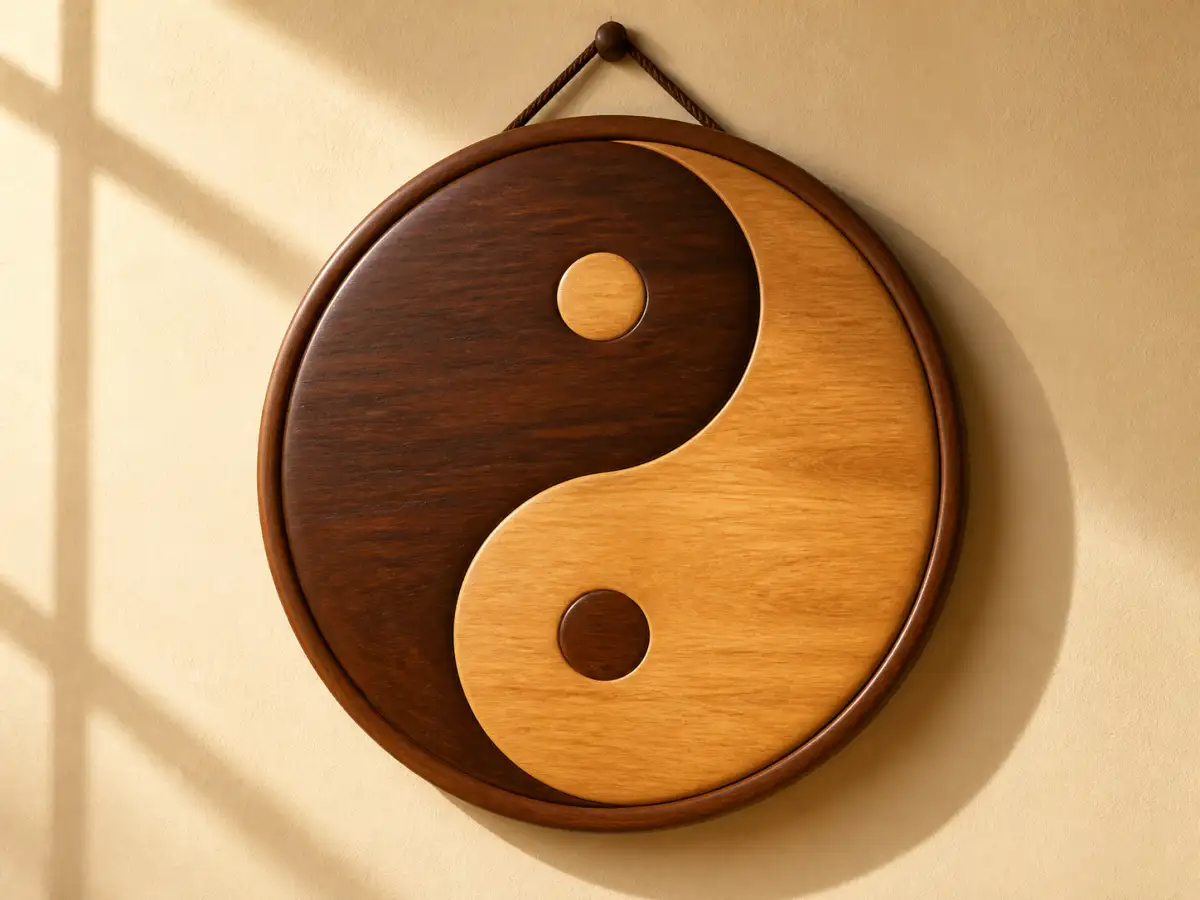
The idea of yin and yang is much older than this familiar black-and-white design.
今天,很多人想到阴阳,就会想到一个黑白相抱的圆。这个图案叫太极图。
弯曲的黑白看起来像在转动。每一边还有一个相反颜色的小点。今天的人常把它看成一幅“变化图”:一种状态里,也许已经有了另一种状态的开端。
不过,人们先用阴阳思考了很久,后来才有这种图案。不是先有标志,再有思想。
Today, many people picture a black-and-white circle when they hear “yin and yang.” It is called a taiji diagram.
The curved shapes seem to turn. Each side holds a dot of the other color. People often read the picture as a reminder that change may already be beginning inside the present moment.
But people used yin and yang to think for a very long time before this design appeared. The idea came first. The familiar symbol came later.
Page 4
把重量慢慢移过去
Shift Your Weight
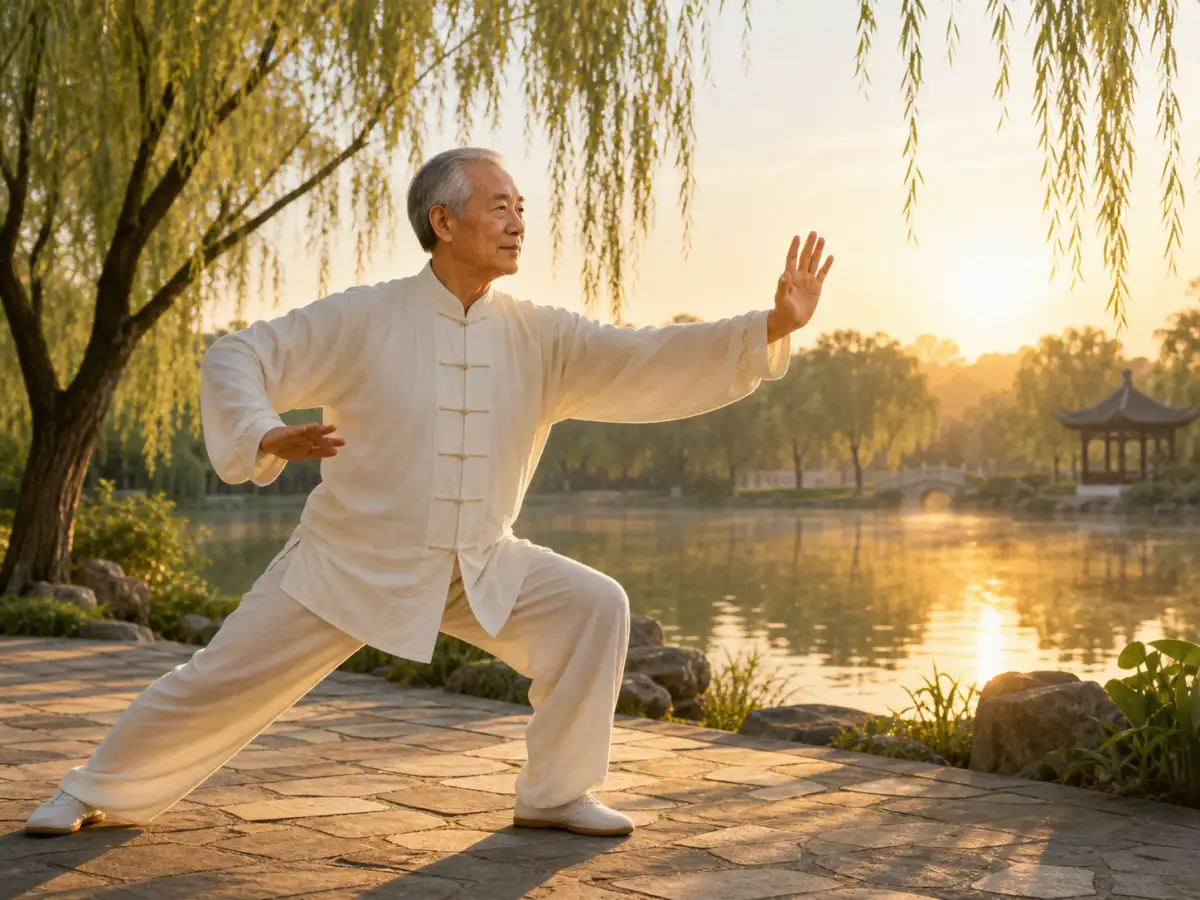
A Tai Chi practitioner moves slowly while staying steady.
双脚站稳,把大部分重量轻轻移到左脚,再慢慢移到右脚。不要抬脚。你会感觉到,一边承受更多重量时,另一边比较自由,准备下一步。
不要背成“左脚永远是阴,右脚永远是阳”。下一秒,两边的作用就会交换。
每个人都需要活动和休息,也都可以勇敢行动或安静思考。阴阳不应该变成限制女孩、男孩或任何人的标签。
Stand with both feet on the floor. Gently move most of your weight to your left foot. Then move it slowly to your right. When one side carries more weight, the other side is freer and ready for the next step.
Do not memorize “The left foot is always yin, and the right foot is always yang.” One moment later, their jobs can switch.
Everyone needs activity and rest. Anyone can act bravely or think quietly. Yin and yang should never become labels that limit girls, boys, or anyone else.
再看同一座山
Look at the Mountain Again
回到清晨的山上。一边明亮,一边阴凉,可它们不是两座山。太阳移动,影子也改变。
阴阳不是把世界切成黑白两半。它帮助我们看见三件事:差别、联系和变化。
下次遇到两种相反的东西,可以问:它们怎样联系?如果时间改变,它们会不会也改变?
Return to the mountain. One side is bright and one side is shady, but they are not two separate mountains. The sun moves, and the shadows change.
Yin and yang are not a way to cut the world into black and white. They help us notice three things: difference, connection, and change.
The next time two things seem opposite, ask how they are connected. If time passes, might they change too?
阴和阳:看见关系与变化
Yin and Yang: Seeing Connection and Change
Page 1
从一座山开始
Begin with a Mountain
This artwork uses light and shade on one mountain to help us think. It is not a literal view of the sky.
想象清晨爬山。山路一边的石头已经被太阳晒暖,另一边的泥土还在阴影里,草叶上挂着露珠。同一座山,为什么像有两种天气?
在中国古代,“阳”可以指山坡向着阳光的一面,“阴”可以指背光而阴凉的一面。《诗经》的一首古诗也写到人们观察山坡的阴阳和流动的泉水。这两个字最初说的不是神秘力量,而是能看见、能感觉的差别。
在中国许多地方,山南往往比山北得到更多阳光。不过,季节、时刻、天气和山势都会改变真实的光照,地名里的一个字不能告诉我们全部答案。
Imagine climbing a mountain early in the morning. Sunlight has warmed the rocks on one side of the trail. Around the bend, the ground is still shady and damp, with dew on the grass. How can one mountain seem to hold two kinds of weather?
In early China, yang could describe a sunny slope, while yin could describe a shaded one. An ancient poem in the Book of Songs mentions people studying a hillside's light and shade along with its flowing springs. The words did not begin as names for mysterious powers. They described differences that people could see and feel.
Across much of China, a mountain's southern face often receives more sunlight than its northern face. Season, time, weather, and the shape of the land all matter, however. One yin or yang in a place name cannot tell us everything.
Page 2
阴阳是关系,不是盒子
A Relationship, Not Two Boxes
中午以后,刚才背阴的石头可能被太阳照到;夜里,向阳的石头也会变凉。同一块石头不会永远贴着“阴”或“阳”的标签。
亮相对于暗,偏阳;暗相对于亮,偏阴。活动相对于休息,偏阳;休息相对于活动,偏阴。可是一盏小灯在白天不显眼,在黑暗房间里却很亮。判断时要问:和什么相比?在什么时间和环境里?
阴阳也不是好与坏。夜晚不是坏掉的白天,休息不是失败的活动。两面不同,却可能彼此需要,也会随着环境改变。
By afternoon, sunlight may reach the rock that was in shade. At night, the sunny rock cools. The same stone does not wear a permanent yin or yang label.
Brightness may lean toward yang beside darkness; darkness may lean toward yin beside brightness. Activity and rest can form another pair. Yet a small lamp that looks dim at noon may look bright in a dark room. We have to ask: Compared with what? At what time? In what setting?
Yin and yang are not good and evil. Night is not broken daylight, and rest is not failed activity. The two sides differ, but they may depend on each other and change with the situation.
Page 3
哲学比喻不是科学原因
A Symbol Is Not a Scientific Cause
后来,中国思想家用阴阳讨论寒暑、昼夜、季节和更多变化。《易经》的《系辞》说:“一阴一阳之谓道。”它邀请读者观察一来一往、一消一长的关系。
这不表示古人发现了两种叫“阴能量”和“阳能量”的液体。更准确地说,阴阳是一组帮助人们整理变化的概念。
太阳和月亮后来常被当作阳和阴的象征。不过,地球自转带来白天和黑夜;月亮白天也可能出现,月光是反射的阳光。哲学形象和科学原因都可以讲,只要不把它们混成一件事。
Later Chinese thinkers used yin and yang to discuss cold and warmth, night and day, the seasons, and other patterns of change. A commentary attached to the Book of Changes says, “One yin and one yang - this is called the Way.” The line invites readers to notice relationships that alternate and shift.
That does not mean ancient thinkers discovered two invisible liquids called “yin energy” and “yang energy.” Yin and yang are better understood as connected qualities or categories used to think about change.
The sun and moon later became familiar symbols of yang and yin. Symbols are not scientific causes. Earth's rotation creates day and night. The moon can appear in daytime, and moonlight is reflected sunlight. A philosophical picture and a scientific explanation can both be useful when we keep them clear.
Page 4
黑白图案来得更晚
The Black-and-White Symbol Came Later
The familiar taiji diagram is much younger than early yin-yang thought.
今天常见的太极图里,黑白两面弯曲着进入对方,每边还有一个相反颜色的小点。许多人把它读成变化的图:两边像在转动,一种状态里已经出现另一种状态的开端。这是很有用的现代解释。
不过,阴阳思想出现很早,熟悉的黑白旋涡图案却晚得多。古人不是先看到标志,再发明思想。人们先用阴阳思考了很多世纪,后来才用不同图形表达这些关系。
图案也不是万能钥匙。看见黑白或两个人意见不同,不代表事情已经解释清楚。它应该让我们继续问:两边怎样联系?什么时候改变?怎样互相影响?
In the familiar taiji diagram, curved black and white shapes flow into each other. Each side holds a dot of the opposite color. Many people read it as a picture of change: the shapes seem to turn, and the beginning of one state may already be present inside another. That is a useful modern reading.
Yin-yang thought is much older than this swirling design. Early thinkers did not see the symbol and then invent the idea. People had used yin and yang for centuries before later scholars and artists drew diagrams to represent those relationships.
The picture is not a magic key. Two colors or two people who disagree do not explain a problem by themselves. The symbol should lead us to ask how the sides connect, when they change, and how each affects the other.
Page 5
平衡不是永远一半对一半
Balance Is Not Always Fifty-Fifty
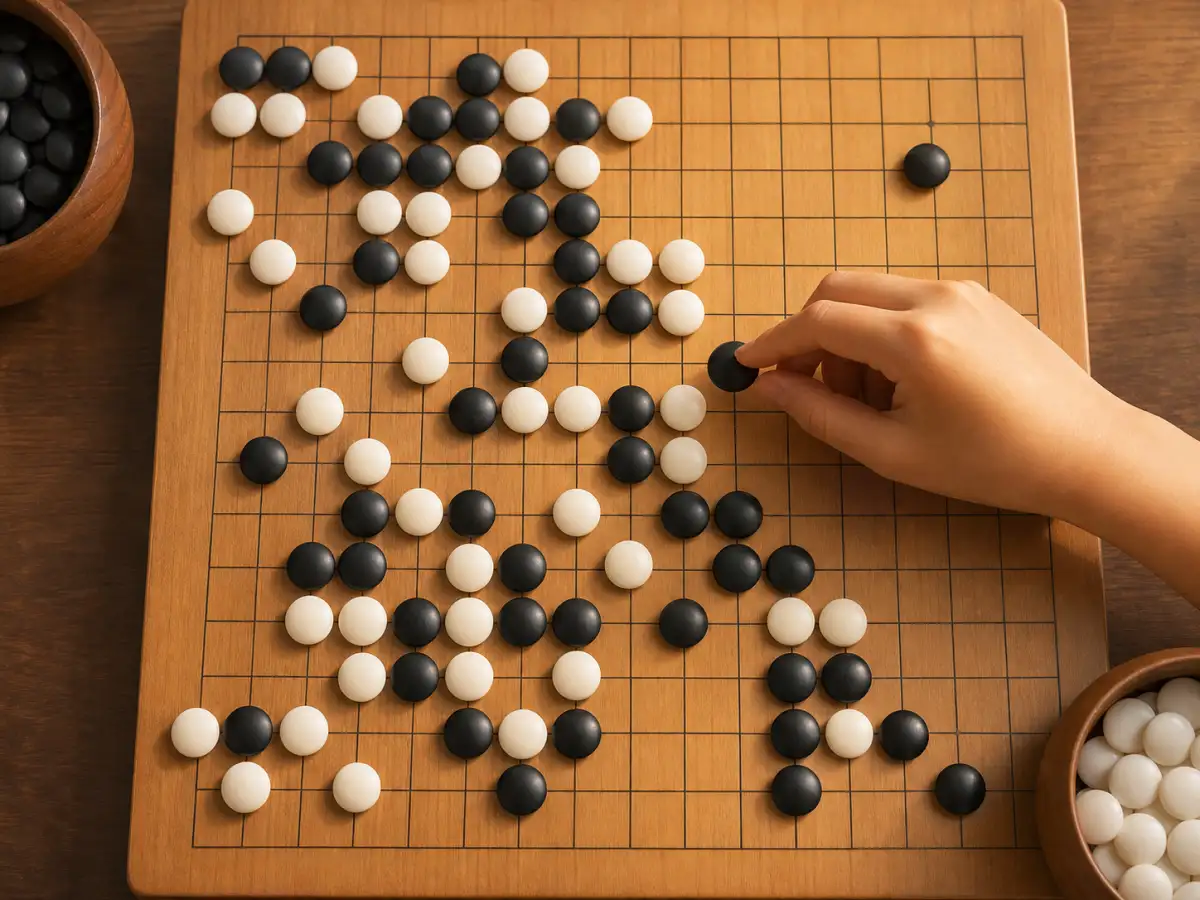
Black and white Go stones form changing relationships. This is a modern example, not proof of how the game began.
阴阳常用“平衡”来解释,但平衡不等于永远五十对五十。跑步十分钟以后可能要休息;睡了一夜以后又该活动。冬天穿外套,夏天穿短袖,也不是把冷热平均分开。
围棋有黑子和白子,很容易让人想到阴阳。可是刚才很强的一片棋,可能因为一步变得危险;一颗孤单的棋也可能和远处连起来。一手棋还可能同时进攻和防守。
这不证明围棋规则来自阴阳,也不要求黑永远代表阴、白永远代表阳。真正值得观察的是关系、时机和变化。
Yin and yang are often explained with the word balance. Balance, however, does not always mean fifty-fifty. After running, you may need rest. After sleeping all night, you need to move. A winter coat and a summer T-shirt do not divide cold and heat into equal halves.
The black and white stones in Go easily bring yin and yang to mind. Yet a strong group can become threatened after one move, while a lonely stone may connect with others. One move may defend and attack at the same time.
This does not prove that Go's rules came from yin-yang philosophy, and black does not have to mean yin forever. What matters in the example is relationship, timing, and change.
Page 6
变化不是给人贴标签
Change, Not Labels
A Tai Chi practitioner slowly shifts weight while staying steady.
双脚站稳,把重量轻轻移到左脚,再慢慢移到右脚。一边承受较多重量时,另一边更自由,准备下一步。重心移动,两边的关系也改变。
这个体验能帮助我们感觉阴阳的相对和流动,却不能变成“左脚永远是阴,右脚永远是阳”的规则。下一秒,作用就可能交换。
传统文献有时把女性和阴、男性和阳联系起来。这段历史不能变成“女孩只能安静,男孩必须强壮”的规定。每个人都需要行动和休息,都可以勇敢前进或安静思考。
Stand with both feet planted. Move most of your weight gently to the left, then slowly to the right. While one side carries more weight, the other is freer and ready for the next step. As your center moves, the relationship changes.
This can help us feel the relative, flowing quality of yin and yang. It should not become a rule that the left foot is always yin and the right is always yang. Their roles may switch in the next moment.
Some traditional texts connect female with yin and male with yang. That history cannot become a rule that girls must be quiet or boys must be strong. Every person needs action and rest. Anyone can move forward bravely or sit quietly and think.
学会看三件事
Learn to Notice Three Things
回到清晨的山顶。一边明亮,一边阴凉,却从来不是两座互不相干的山。太阳移动,影子也改变。
阴阳最有意思的地方,不是把世界切成黑白两半,而是训练我们看见差别、联系和变化。
下一次遇到两种相反的东西,可以问:它们在什么情况下相反?它们彼此需要吗?时间改变以后,它们的位置也会改变吗?
Return to the morning mountain. One slope is bright and the other is cool, but they have never been two separate mountains. The sun moves, and the shadows change.
The most useful part of yin and yang is not dividing the world into black and white. It is learning to notice difference, connection, and change.
The next time two things seem opposite, ask: In what situation are they opposites? Do they depend on each other? When time passes, might their roles change?
阴和阳:一座山为什么有两种温度?
Yin and Yang: How Can One Mountain Have Two Temperatures?
Page 1
先别急着看黑白圆圈
Do Not Start with the Black-and-White Circle
This artwork places brightness and shade on one mountain. It is an image for thinking, not a literal view of the sky.
想象你在清晨爬一座山。山路的一边已经被太阳晒暖,石头摸起来热乎乎的;绕到背光的一边,泥土还是湿的,草叶上也许还挂着露珠。
同一座山,为什么像有两种天气?
这正是理解“阴”和“阳”的好起点。在中国古代,“阳”可以指山上朝向阳光的一面,“阴”可以指背着阳光、比较阴凉的一面。《诗经》里有一首很古老的诗,写人们察看山坡的向阳和背阴,还观察流动的泉水。那时,这两个字说的不是神秘力量,而是眼睛能看见、皮肤能感觉到的差别。
在中国许多地方,太阳大多从南边的天空照来,所以山南往往比较向阳,山北往往比较背阴。这也帮助我们理解一些地名。不过,真正的光照还会受到季节、时间、山势和天气影响,不能只凭一个“阴”或“阳”字就下结论。
Imagine climbing a mountain early in the morning. On one side of the trail, sunlight has already warmed the rocks. Around the bend, the ground is still damp and cool. Drops of dew may still cling to the grass.
How can one mountain feel warm on one side and cool on the other?
This is a good place to begin understanding yin and yang. In early China, yang could describe the sunny side of a hill. Yin could describe the shaded side. An ancient poem in the Book of Songs tells of people examining a hillside’s light and shade while also looking at its flowing springs. At first, these words were not names for mysterious powers. They described a difference that eyes could see and skin could feel.
Across much of China, the sun usually travels through the southern part of the sky. As a result, the southern face of a mountain often receives more sunlight, while its northern face is often shadier. This pattern even helped shape some Chinese place names. Yet real sunlight also depends on the season, time of day, weather, and shape of the land. One word in a place name cannot tell us everything.
Page 2
阴阳说的是“关系”
Yin and Yang Describe a Relationship
现在再摸一摸那块背阴的石头。中午以后,阳光也许照到了它;到了夜里,向阳的石头也会慢慢冷下来。同一块石头,不会永远只属于“阴”或只属于“阳”。
这说明了一个重要特点:阴阳常常不是贴在东西身上的永久标签,而是描述一种关系。
亮,相对于暗,偏阳;暗,相对于亮,偏阴。活动,相对于休息,偏阳;休息,相对于活动,偏阴。可是一盏小灯在白天并不显眼,在漆黑的房间里却很亮。判断阴阳,要问:“它正在和什么相比?在什么时间和情境里?”
所以,阴阳不是两个装东西的盒子,更不是好与坏。夜晚不是坏掉的白天,休息也不是失败的活动。它们各有自己的作用。
Now touch the shaded rock again later in the day. Sunlight may have reached it by then. After night falls, the sunny rock will cool. The same rock is not permanently “yin” or permanently “yang.”
That reveals something important: yin and yang often describe a relationship, not a label glued onto an object forever.
Brightness leans toward yang when compared with darkness. Darkness leans toward yin when compared with brightness. Activity can be yang in relation to rest, while rest can be yin in relation to activity. But a small lamp that looks dim at noon can look bright in a dark room. To use yin and yang carefully, we have to ask, “Compared with what? At what time? In what situation?”
Yin and yang are not two storage boxes for sorting the entire world. They are not the same as good and bad, either. Night is not a broken version of day, and rest is not failed activity. Each can have a place.
Page 3
从山坡走向变化的世界
From a Hillside to a Changing World
后来,中国思想家把这个观察用得越来越广。他们用阴阳讨论寒暑、昼夜、季节和许多变化。《易经》的《系辞》中有一句:“一阴一阳之谓道。”它提醒读者,世界的运行常常能从一来一往、一消一长中观察。
这不等于古人发现了两种叫“阴能量”和“阳能量”的液体。更准确地说,阴阳是一组用来整理变化的概念:两面彼此不同,又彼此有关;一面增强时,关系也会跟着改变。
太阳和月亮后来常被拿来象征阳和阴,但它们只是帮助思考的形象。科学上,地球自转带来白天和黑夜;月亮在白天也常常出现在天空,而且月光其实是反射的阳光。哲学的比喻和科学的原因,可以同时讲清楚,不必混在一起。
Over time, Chinese thinkers used yin and yang to discuss wider patterns: cold and warmth, night and day, the seasons, and many other kinds of change. A commentary attached to the Book of Changes says, “One yin and one yang - this is called the Way.” The line invites readers to notice how the world moves through alternating and changing relationships.
This does not mean ancient thinkers discovered two invisible liquids called “yin energy” and “yang energy.” It is more accurate to call yin and yang connected qualities or categories. They help us think about two aspects that differ, depend on each other, and change their relationship over time.
The sun and moon later became familiar symbols of yang and yin, but symbols are not scientific causes. Earth’s rotation gives us day and night. The moon can be visible during the day, and moonlight is reflected sunlight. A philosophical image and a scientific explanation can both be useful as long as we do not mix them up.
Page 4
太极图不是故事的开头
The Taiji Diagram Came Later
The familiar black-and-white diagram is much younger than the idea of yin and yang.
今天一提到阴阳,很多人马上想到一个黑白相抱的圆。它通常被叫作太极图。黑白弯曲着进入对方,每一边又有一个相反颜色的小点。
许多人把它读成一幅“变化图”:黑白不是被直线切开的两块,而像在旋转;小点提醒我们,一种状态里可能已经出现了另一种状态的开端。这是一个很好用的现代解释。
不过,阴阳观念出现得很早,我们今天熟悉的这种黑白旋涡图案却形成得晚得多。古人不是先看到这个标志,再发明阴阳;顺序正好相反。人们先用阴阳思考了很久,后来的学者和画家才用不同图形把这些关系画出来。
图案也不是一把能打开所有问题的万能钥匙。看到黑白、冷热或两个人意见不同,并不表示我们已经解释了事情。它只是邀请我们继续问:两面怎样联系?什么时候变化?怎样相互影响?
Today, many people think first of a black-and-white circle. It is usually called a taiji diagram. Two curved shapes flow into each other, and each holds a dot of the opposite color.
People often read it as a picture of change. Black and white are not frozen behind a straight dividing line. They seem to turn. The dots can remind us that the beginning of one state may already be present inside another. That is a useful modern reading of the symbol.
However, the idea of yin and yang is much older than the familiar swirling design. Early Chinese thinkers did not see this logo and then invent the philosophy. The order was the other way around. For centuries, people used yin and yang to think about the world. Only later did scholars and artists draw diagrams to represent those relationships.
The symbol is not a magic key that unlocks every question. Finding two colors, two temperatures, or two people who disagree does not mean we have explained anything yet. The picture should lead to better questions: How are the two sides connected? When do they change? How does each affect the other?
Page 5
“平衡”不一定是一半对一半
Balance Does Not Always Mean Fifty-Fifty
阴阳常被翻译成“平衡”,可是平衡很容易被误会成永远五十对五十。
想一想你的一天:跑步十分钟以后,可能需要休息;睡了整整一夜以后,可能需要起身活动。最合适的活动和休息并不需要分钟数完全相同。冬天穿厚外套,夏天换成短袖,也不是把冷和热平均分成两半。
在阴阳思想里,更重要的是关系、时机和变化。哪一面现在太多?哪一面不够?什么时候应该行动,什么时候应该停下来观察?今天合适的安排,明天也许要调整。
这也表示“和谐”不是没有差别。小提琴和鼓的声音不同,才可能一起演奏;如果所有乐器都只发同一个声音,反而没有丰富的音乐。不同可以制造紧张,也可以形成配合,关键在它们怎样相遇。
Yin and yang are often explained with the word balance. That can be helpful, but balance does not mean everything must be divided into perfectly equal halves.
Think about one day. After running for ten minutes, you may need to rest. After sleeping all night, you may need to get up and move. The right amounts of movement and rest do not have to be equal. Wearing a thick coat in winter and a T-shirt in summer does not mean dividing cold and heat equally.
In yin-yang thinking, timing and relationship matter. What is too much right now? What is missing? When is it time to act, and when is it time to pause and observe? An arrangement that works today may need to change tomorrow.
Harmony also does not mean erasing every difference. A violin and a drum can make music together because they sound different. If every instrument made exactly the same sound, the music would lose much of its richness. Differences can create conflict, but they can also create a partnership. What matters is how the parts meet.
Page 6
围棋:黑白只是第一眼
Go: Black and White Are Only the First Thing You See
Black and white stones form changing relationships. This is a modern example, not proof of how Go began.
围棋棋盘上有黑子和白子,两位棋手轮流落子,想办法围住地盘。黑白颜色很容易让人想到阴阳,但颜色本身还不是完整的道理。
看一盘正在进行的棋:刚才很强的一片棋,可能因为对手的一步而突然危险;一颗看起来孤单的棋子,也可能和远处的棋子连成新的力量。棋手不能给每一步永久贴上“进攻”或“防守”的标签,因为一手棋常常同时做几件事。
因此,这一页不是在说“围棋规则来自阴阳”,也不是说黑子一定代表阴、白子一定代表阳。围棋只是一个今天可以观察的例子:对比、联系和变化,比简单的黑白分类更值得看。
In the game of Go, one player uses black stones and the other uses white stones. They take turns placing stones and try to surround territory. The colors quickly bring yin and yang to mind, but color alone does not contain the whole idea.
Watch a game as it changes. A group of stones that looked powerful a moment ago can suddenly become threatened by one move. A lonely stone may connect with others and become part of a new plan. A move cannot always be labeled forever as either “attack” or “defense,” because one move can often do several jobs.
This does not prove that the rules of Go came from yin-yang philosophy. It also does not require black to mean yin and white to mean yang. Go is simply a modern example we can observe. The contrast, connections, and changes on the board are more interesting than a quick black-and-white label.
Page 7
太极拳:把变化放进身体里
Tai Chi: Feeling Change in Your Body
A Tai Chi practitioner keeps adjusting weight and balance through slow movement.
公园里练太极拳的人,动作常常缓慢、连贯。身体的重量从一条腿移到另一条腿,一只手向前时,身体其他部分仍在调整和保持稳定。
你可以做一个很小的体验:双脚站稳,把大部分重量轻轻移到左脚,再慢慢移到右脚。不要抬脚,也不要追求动作漂亮。你会发现,一边承受较多重量时,另一边就比较自由,准备下一步;重心一移动,两边的关系也跟着改变。
这个体验能帮助我们感受阴阳的“相对”和“流动”。但不要把它背成“左脚永远是阴,右脚永远是阳”。下一秒,作用就可能交换。真正值得注意的是变化怎样发生,以及身体怎样在变化中不失去稳定。
People practicing Tai Chi in a park often move slowly and continuously. Their weight travels from one leg to the other. As one hand moves forward, the rest of the body keeps adjusting to remain steady.
You can try one very small experiment. Stand with both feet planted. Gently move most of your weight to your left foot, and then slowly move it to your right. Keep both feet on the floor. When one side carries more weight, the other side becomes freer and ready for the next step. As your center shifts, the relationship between the two sides changes.
This can help us feel the yin-yang ideas of relationship and movement. But do not memorize a rule that says, “The left foot is always yin, and the right foot is always yang.” Their roles can switch in the very next moment. The interesting part is how change happens and how the body stays steady while changing.
Page 8
阴阳不是给人贴标签
Yin and Yang Are Not Personality Labels
传统文献有时把女性与阴相联系,把男性与阳相联系。但阴阳本来并不等于“女孩只能安静,男孩必须强壮”,更不能用来决定一个人的性格、能力或工作。
每个人都需要活动,也需要休息;可以勇敢向前,也可以安静思考。把古代的一组关系变成限制现代人的硬规定,就失去了阴阳原本强调的情境和变化。
Some traditional texts connect female with yin and male with yang. That history does not mean girls must be quiet or boys must be forceful. It should never be used to decide a person’s character, talents, or future.
Every person needs activity and rest. Anyone can move forward bravely or sit quietly and think. Turning an ancient set of relationships into a hard rule for modern people would miss the importance that yin-yang thinking places on context and change.
再看同一座山
Look at the Mountain Again
现在回到清晨的山顶。一边明亮,一边阴凉,但它们从来不是两座互不相干的山。太阳继续移动,影子也跟着改变;到了夜里,整座山又进入新的关系。
阴阳最有意思的地方,不是把世界切成黑白两半,而是训练我们看见三件事:差别、联系和变化。
下一次遇到两种看起来相反的东西,可以先别急着选一边。问一问:它们在什么情境下相反?它们是不是彼此需要?如果时间改变,它们的位置会不会也改变?
问题问到这里,阴阳就不只是一个圆形标志了。它成了一种更仔细地观察世界的方法。
Return to the mountaintop in the morning. One slope is bright and the other is cool, but they have never been two separate mountains. As the sun moves, the shadows change. At night, the whole mountain enters a new relationship with light.
The most interesting part of yin and yang is not cutting the world into a black half and a white half. It is learning to notice three things: difference, connection, and change.
The next time you meet two things that seem opposite, do not rush to choose one side. Ask: In what situation are they opposites? Do they depend on each other? If time passes, might their roles change?
Once we ask those questions, yin and yang become more than a round symbol. They become a careful way of looking at the world.