
阴和阳:同一座山的两边
Yin and Yang: Two Sides of One Mountain
Page 1
一座山,两种感觉
One Mountain, Two Sides

One side of the mountain glows in sunlight while the other remains in shadow and night.
清晨,你开始沿着山路往上走。太阳已经照到了山坡的一边,石头被晒得暖暖的,草叶上的水汽也慢慢干了。可是绕到山的另一面,感觉一下就变了。这里还藏在阴影里,泥土又湿又凉,叶子上也许还挂着露珠。明明是同一座山,同一片天空,山的两面却很不一样。
很久以前,中国人就会用“阳”来形容山坡向着阳光的一面,用“阴”来说背着阳光、比较阴凉的一面。Shījīng · 中国现存最早的诗歌总集,收录了三百多首古代诗歌。里有一首非常古老的诗,还写到人们察看山坡的“yīn yáng · 用来理解相反、相连而又不断变化的关系的一组概念。”,同时寻找流动的泉水。所以,“阴”和“阳”最开始并不是很神秘的东西。它们来自人每天都能看到、摸到的差别:阳光和阴影,温暖和阴凉。
不过,先别急着下山。太阳还在移动。
Early in the morning, you start walking up a mountain. The sun has already reached one side of the slope. Rocks there feel warm, and the grass is beginning to dry. Walk around the mountain, though, and the ground feels different. This side is still shaded. The soil is cool and damp, and drops of dew may still cling to the leaves. It is the same mountain under the same sky.
Long ago in China, yáng could describe the sunny side of a mountain, while yīn could describe the shaded side. One of the oldest Chinese poems in the Shījīng · 《诗经》 · The oldest surviving collection of Chinese poetry, containing more than three hundred poems. even speaks of people examining a hill’s yīn yáng · 阴阳 · A paired idea for understanding contrasts that remain connected and change over time. while looking for flowing springs. The two words began with something very ordinary: light and shade, warmth and coolness, things people could see and feel.
But now stay on the mountain for a while. The sun is still moving.
Page 2
阴影不会一直待在那里
The Shade Does Not Stay Put
到了下午,早晨还躲在阴影里的地方,可能已经被太阳照亮;刚才暖暖的石头,也可能慢慢落进阴影里。等到夜晚,整座山都会渐渐凉下来。所以,同一块石头并不会永远只能是“阴”或者只能是“阳”。重要的是,它正在和什么相比,又处在什么样的时间和环境里。
后来,中国思想家把“阴阳”用到了更多地方。明和暗、冷和热、动和静、白天和黑夜,都可以用阴阳来观察。它们慢慢变成了一种看世界的方法:看两个不同的方面怎样互相联系,又怎样随着时间改变。
白天不会永远把黑夜赶走,黑夜也不会永远留下。天亮了,又会天黑;黑夜过去,太阳又会回来。四季也是这样。夏天越来越热以后,会慢慢走向秋天;冬天到了最冷的时候,春天也已经在前面等着。世界一直在变。
By afternoon, sunlight may reach a place that was cool and shaded in the morning. A rock that felt warm earlier may fall into shadow. When night comes, both sides of the mountain cool. So a stone does not have to be “yīn forever” or “yáng forever.” What matters is its relationship to what is around it.
Chinese thinkers gradually used the words in this wider way. Bright and dark could be described through yáng and yīn. So could warmth and cold, movement and rest, day and night. The pair became a way of noticing how different parts of the world relate to one another and how those relationships change.
Think about daytime and nighttime. Day does not defeat night forever. Night does not destroy day. One gives way to the other, then the pattern turns again. The seasons do something similar. Summer grows warmer and brighter, then begins moving toward autumn. Winter reaches its coldest, darkest part of the year, but spring is already ahead. The world keeps changing.
Page 3
不一样,不等于一定要打败对方
Different Does Not Mean Enemies
看到两样相反的东西,很容易觉得一定有一个比较好,一个比较坏。可阴阳并不一定是这样的关系。
活动和休息很不一样,可人两样都需要。跑了很久,要停下来歇一歇;睡了一整晚,天亮以后又会起床活动。明亮和黑暗也不同。太阳出来的时候,人们工作,植物得到阳光;夜晚到来以后,许多人休息,世界进入另一种节奏。
所以,阴阳真正有意思的问题不是:“哪一个应该赢?”而是:“它们之间正在发生什么?”
两千多年前,Yìjīng · 中国古代讨论卦象、变化和思想的一部经典,又称《周易》。的《系辞》中有一句很有名的话:“一阴一阳之谓道。”后来很多中国思想家都用阴阳来理解这种一来一往、不断变化的世界。
It is easy to see two opposite things and imagine that one must be good and the other bad. That is not the most useful way to understand yīn and yáng.
Rest and movement are different, but you need both. If you run all afternoon, eventually you need to sit down. After sleeping all night, staying in bed forever would not be very useful either. Light and darkness are different too. Sunlight helps plants grow, but darkness belongs to the daily cycle as well.
The interesting question is not, “Which side should win?” It is, “What is happening between them?”
More than two thousand years ago, a commentary on the Yìjīng · 《易经》 · An ancient Chinese classic about patterns, change, and interpretation, also called the Yijing. used a famous phrase: “One yīn and one yáng—this is called the Way.” Chinese thinkers used this kind of language to describe a world in which change comes through alternating, connected patterns rather than through one side staying the same forever.
Page 4
后来才有那个黑白圆圈
Then Came the Famous Circle
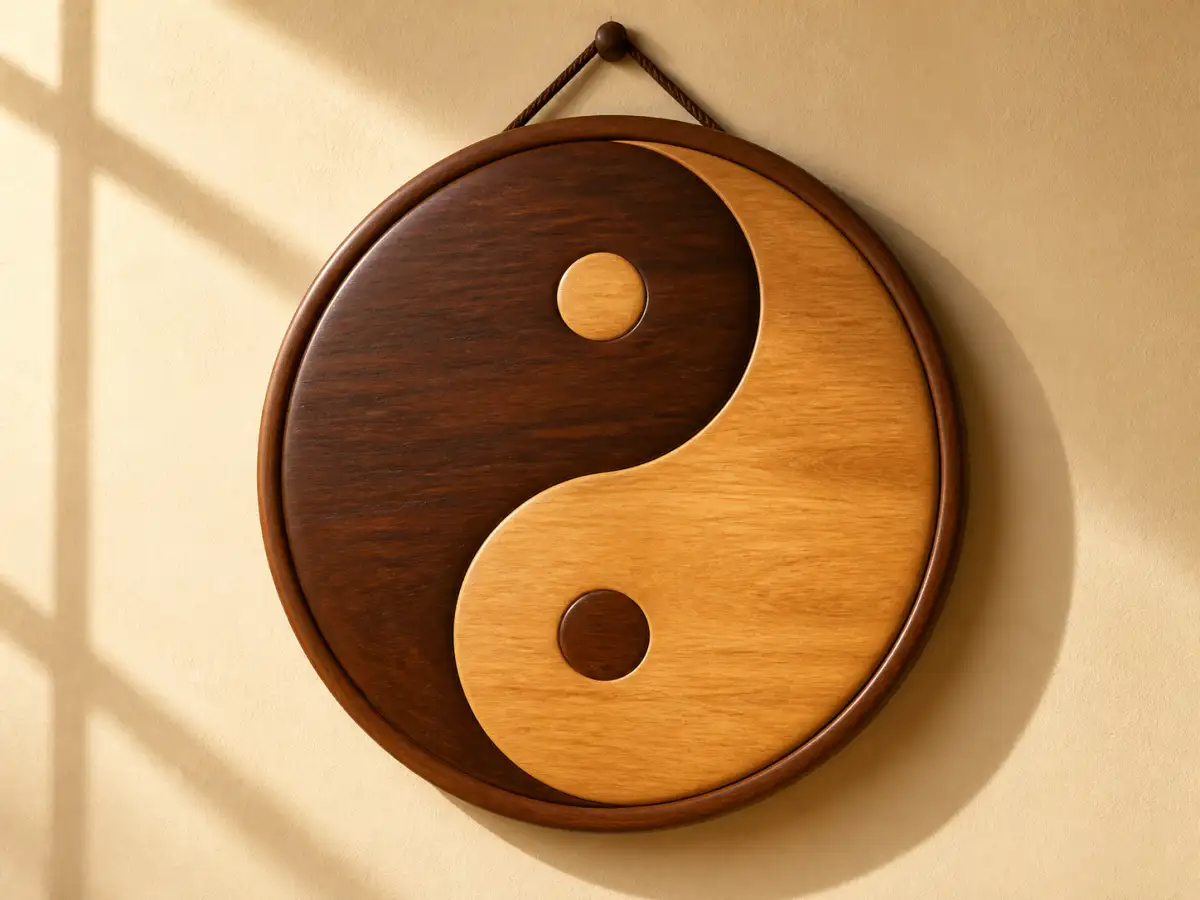
A wooden taiji diagram hangs on the wall, its light and dark curves each holding a dot of the opposite color.
今天说到阴阳,很多人马上会想到一个黑白相抱的圆圈。这个图案通常叫作tàijítú · 后来用来表现阴阳相连、相互变化关系的圆形图案。。
可是,阴阳的想法比我们今天熟悉的太极图古老得多。到了Sòng cháo · 中国历史上从960年延续到1279年的朝代。以后,用圆形图案来表现阴阳和太极的方式才越来越重要。
不过,这个图确实很适合表现“变化”。黑色和白色不是被一条直线硬生生切成两半,而是弯弯地伸进对方。黑色里面有一点白,白色里面也有一点黑。整个圆看起来好像随时都可以继续转动。你可以看出为什么人们后来用它来表现变化。
一边多起来,另一边就少一些;过一阵,关系又会改变。没有哪一边永远单独存在,也没有哪一边永远保持原样。
Today, mention yīn and yáng and many people immediately picture a black-and-white circle. That picture is called a tàijítú · 太极图 · A later circular diagram used to show yin and yang as connected and changing..
The idea of yīn and yáng is much older than the familiar diagram. Circular tàijí diagrams became important many centuries later, especially from the Sòng cháo · 宋朝 · The Chinese dynasty that lasted from 960 to 1279. onward.
Still, the picture fits the old idea beautifully. The black and white sides curve into one another instead of being divided by a stiff straight line. Each side contains a small dot of the other color. The whole thing looks as though it could keep turning. You can see why people came to use it as a picture of change.
One side grows, then the other grows. Neither side stands alone, and neither stays exactly the same forever.
Page 5
再回到那座山
Back on the Mountain
现在已经到了下午。早晨爬过的还是同一座山,可阳光和阴影的位置已经不同了。原来阴凉的山坡可能亮了起来,另一块地方却开始慢慢变凉。
山什么也没有换掉。只是时间过去了,关系就改变了。
这也许是记住阴阳最简单的方法。它从一座山上的阳光和阴影开始,后来慢慢变成中国人观察变化的一种重要方式。看看山的两边。然后,等一等。
Now it is late afternoon. The mountain you climbed this morning is still the same mountain, but the pattern of sunlight has changed. A slope that began the day in shadow may now glow in the sun. Another part has already become cool.
Nothing had to leave the mountain for the relationship to change. Only time had to pass.
That is a useful way to remember yīn and yáng. The idea began with contrasts as simple as sunshine and shade, then grew into a much larger way of thinking about the changing world. Look at the two sides of the mountain. Then wait.