明光铠:为什么叫“明光”?
Mingguang Armor: Why Was It Called “Bright Light”?
Page 1
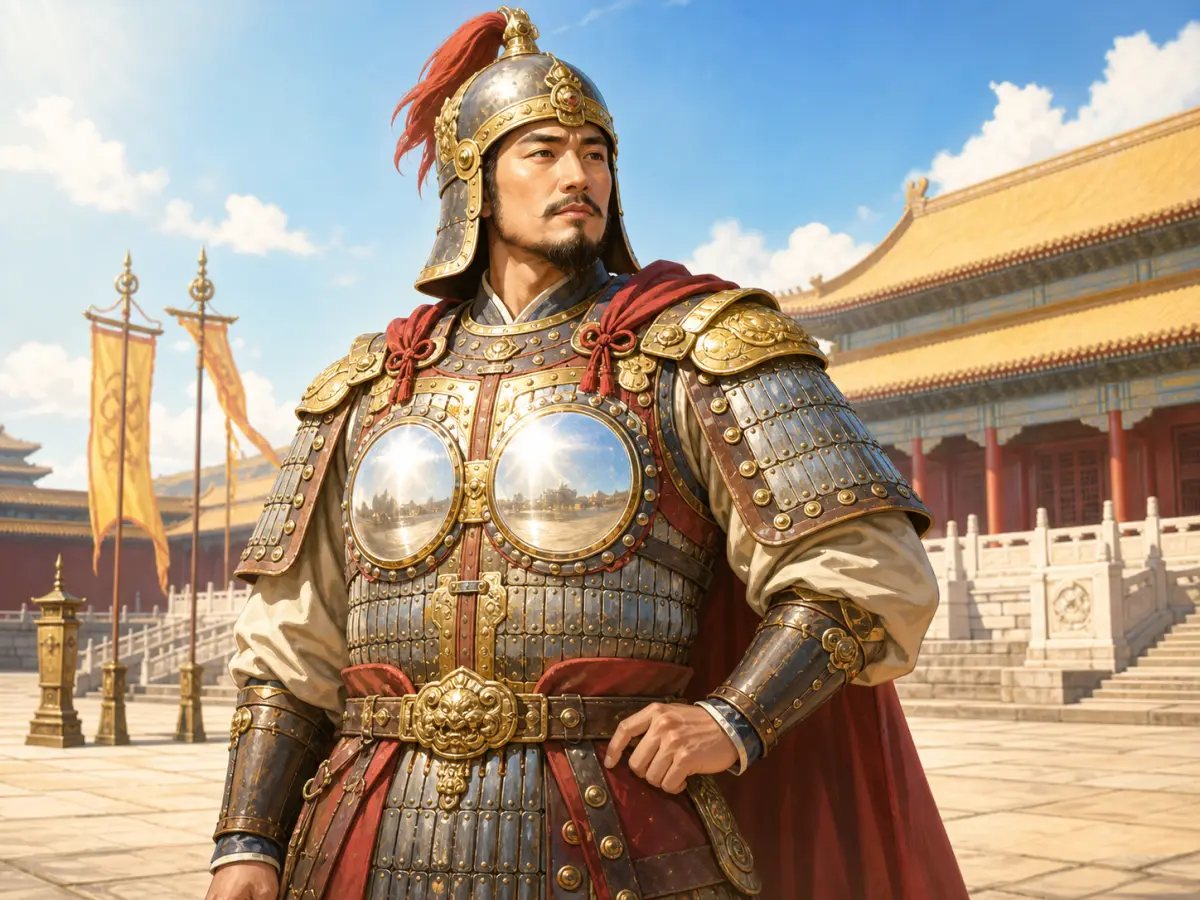
A general wears armor with two striking round guards catching the sunlight across his chest.
一千四百多年前,一本中国古书里记着一位叫Cài Yòu · 北朝将领,因穿着明光铠作战而被敌军称为“铁猛兽”。的将军。他上战场时穿着铁甲,对面的士兵还给他起了一个很难忘的外号:“铁猛兽。”
古书还告诉我们,他穿的这种铠甲有一个很好听的名字——míngguāng kǎi · 名字与胸前明亮护片有关的一类古代铠甲。。“明光”,就是明亮的光。
这个名字有点奇怪。铠甲听起来应该又硬又重,“明光”却好像是天上才会有的东西。为什么一件铠甲会叫这个名字呢?
More than 1,400 years ago, an old Chinese history book tells of a general named Cài Yòu · 蔡祐 · A Northern Dynasties general whose bright armor helped earn him the nickname Iron Beast. going into battle wearing iron armor. The soldiers on the other side gave him a rather unforgettable nickname: “the iron beast.”
The book also tells us the name of his armor: míngguāng kǎi · 明光铠 · A type of ancient armor named for the bright plates on its chest.. Míngguāng means “bright light.”
That is a curious name for something made to protect a soldier. Armor sounds heavy and hard. “Bright light” sounds like something that belongs in the sky. So where did the name come from?
Page 2
胸前的两个大圆护
Two Bright Circles
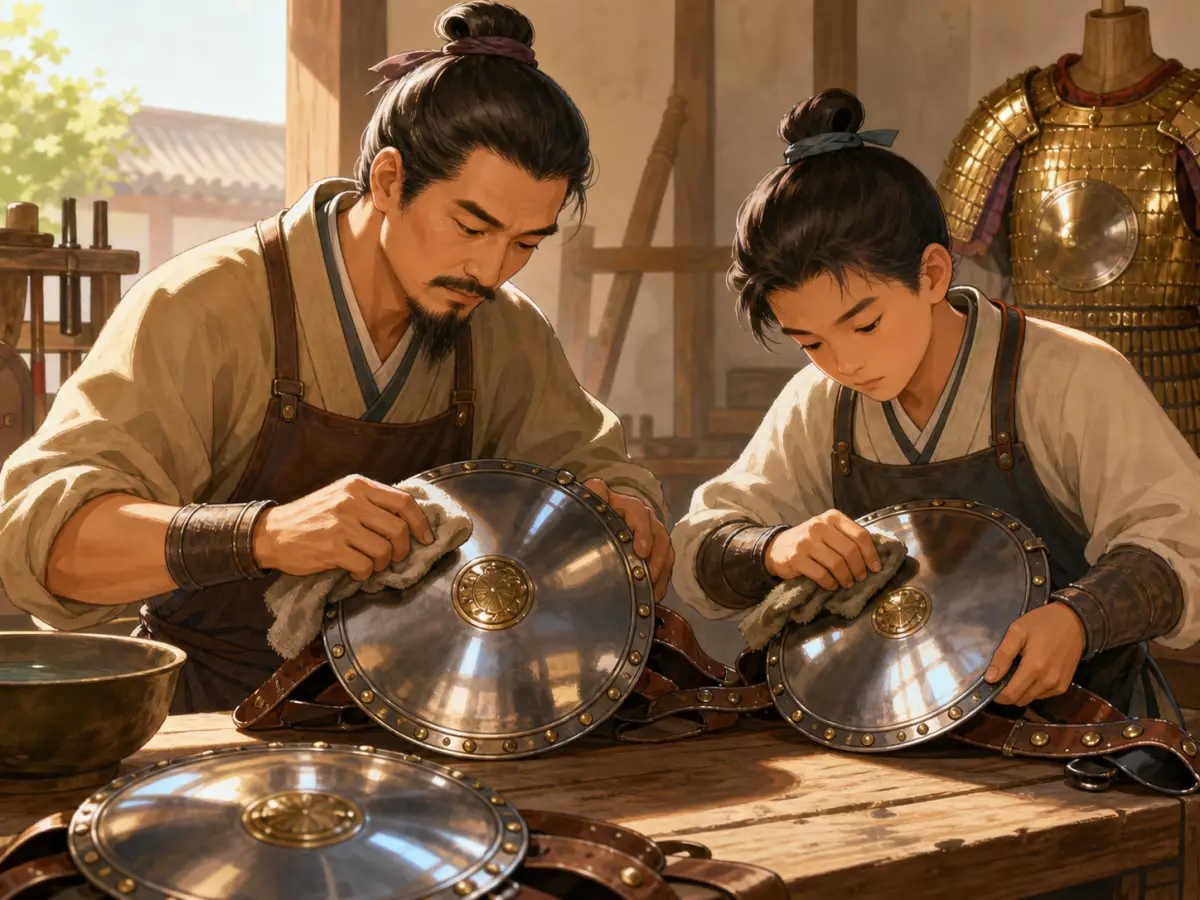
Craftspeople polish round metal guards until their smooth surfaces catch the light.
看看那个时代前后的中国武士俑,会发现一种很醒目的样子。许多武士身上的铠甲由一排排小甲片组成,可胸前却多了两个很大的圆形或者椭圆形护板。一眼就能看到。
今天,中国的一些博物馆把这种样式称为明光铠。胸前的大圆护可以加强身体正面的保护,而“明光”这个名字有一种常见的解释:金属圆护经过打磨以后,表面能在阳光下发亮。
它不是什么能把整支军队照得睁不开眼睛的神奇镜子,只是光滑的金属在阳光下自然会有光泽。不过,对一身本来就很威武的铠甲来说,那已经足够显眼了。
圆护外面,还有保护肩膀的披膊、一排排连起来的甲片、腰带和垂到腿部的甲裙。不同年代留下来的俑像也不完全一样,因为明光铠使用了很长时间,它的样子当然也会变化。
Look at warrior figures from China about this time and a striking shape appears again and again. Many wear armor made from rows of small plates, but over the chest are two large round or oval guards. They are hard to miss.
Museums in China often identify this style as Mingguang armor. The round guards were made to strengthen the front of the body, and a common explanation for the name is that their metal surfaces could be polished until they caught the light.
Not giant mirrors. Not magical shields that could blind an army. Just smooth metal doing something metal can do very well: shine in the sun. That would have made an already impressive suit of armor even more noticeable.
The rest of the armor could be carefully built around those guards. There might be protection over the shoulders, rows of small plates around the body, a belt at the waist, and armor hanging down over the legs. Different figures show different versions, because Mingguang armor was worn over a long stretch of time and did not always look exactly the same.
Page 3
一个用了很多年的名字
A Famous Name
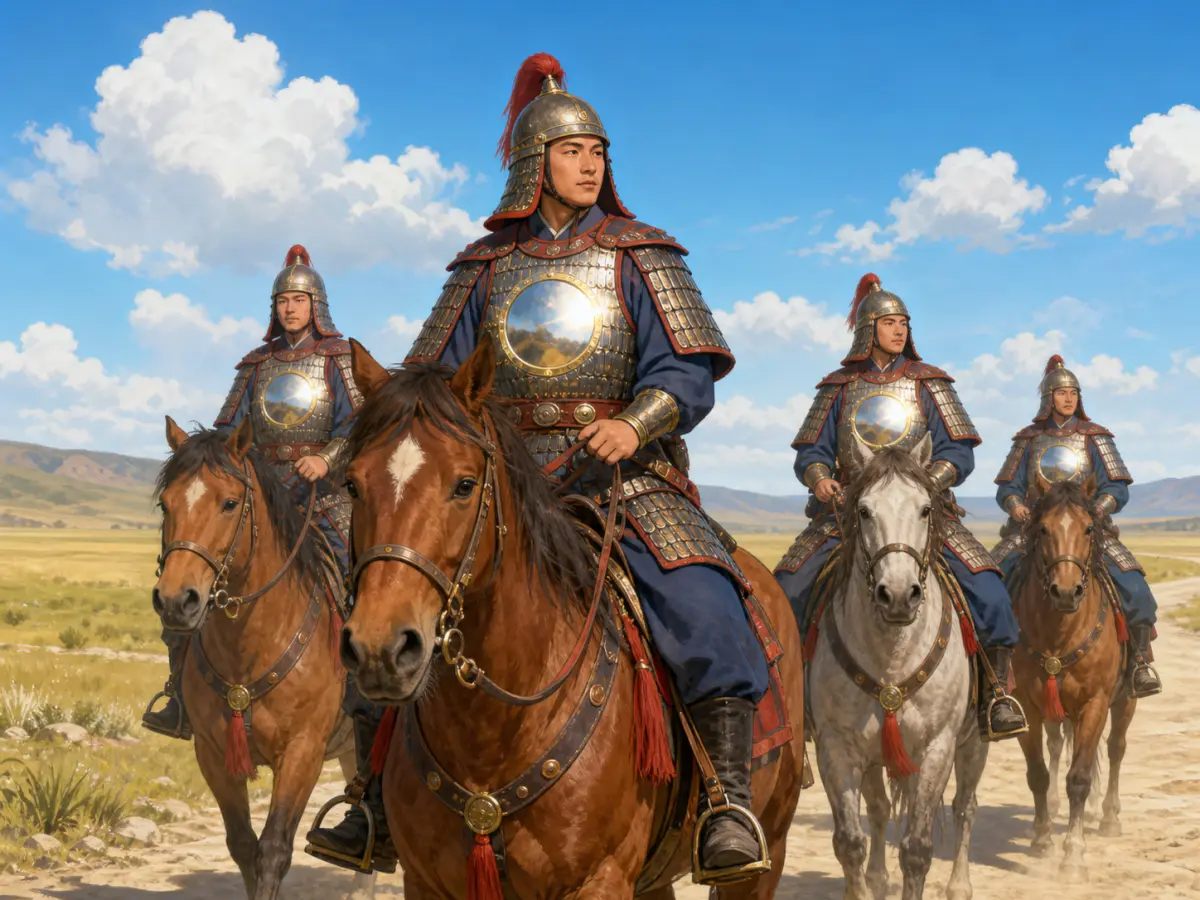
Four mounted warriors ride across open country wearing armor with round chest guards.
“明光甲”这个名字,其实比蔡祐生活的年代还要早。几百年前,Cáo Zhí · 三国时期诗人,也是曹操的儿子。曾经写过一篇文章,说父亲Cáo Cāo · 东汉末年的政治家、军事家和诗人。送给他几种铠甲,其中就有“黑光铠”和“明光铠”。这说明到了三国时期,“明光”已经是古人真正使用的铠甲名称。
而且,这个名字后来一直没有消失。到了Táng cháo · 618年至907年的中国朝代。,一本记录国家制度的《唐六典》列出了十三种铠甲,明光甲就排在第一种,书中还把它列为铁甲。
这时候,明光铠已经不只是某一位名将身上的一套珍贵铠甲了。从南北朝到隋唐的武士俑、石刻和壁画里,我们一次又一次看到胸前带着大圆护的武士形象。
而今天帮助我们认识这些铠甲的,有很多根本不是真正的士兵。它们是泥土做的。
The name itself is older than Cai You. Several centuries earlier, the poet and prince Cáo Zhí · 曹植 · A Three Kingdoms poet and a son of Cao Cao. wrote that his father, Cáo Cāo · 曹操 · A powerful leader, commander, and poet at the end of the Eastern Han dynasty., had given him several kinds of armor. Among them were “black-light armor” and “bright-light armor.” So by the third century, Mingguang was already the name of a real kind of armor.
The name stayed around for centuries. By the Táng cháo · 唐朝 · The Chinese dynasty that lasted from 618 to 907., an official government book listed thirteen kinds of armor used by the state. Mingguang armor came first on the list, and the book described it as iron armor.
By then, it was no longer just one rare suit belonging to one famous man. Images from the Northern Dynasties, Suí Cháo · 隋朝 · The short dynasty from 581 to 618 that reunified China before the Tang., and Tang periods show warriors wearing the large round chest guards again and again.
Some of the clearest examples are not real soldiers at all. They are made of clay.
Page 4
留下来的武士
The Warriors That Stayed Behind
一套真正的铁甲想在地下保存一千多年,并不容易。铁会生锈,皮革和绳子也会腐烂。可是埋在墓里的陶俑,却可能把铠甲的样子一直保存下来。
中国国家博物馆收藏的一件唐代武士俑,就穿着明光铠。它的肩膀有护甲,身上的甲一直垂到靠近靴子的地方。工匠把武士的服装和铠甲一层一层仔细做了出来。其他陶俑和石刻上,也能看到胸前那醒目的圆护。
这些俑像不能告诉我们,每一套真正的铠甲到底有多亮。不过,它们让我们看见了一种非常容易认出来的武士形象:一排排甲片之间,胸前两个大圆护格外醒目。后来,类似的铠甲还出现在佛教天王和护法的雕像、绘画上。原本属于人间武士的铠甲,也被艺术家穿到了威风凛凛的神将身上。
这样再回头看“明光”这个名字,就很容易记住了。一个武士穿着一层层编缀起来的铠甲,胸前的大圆护迎着太阳泛起光泽。对面的士兵看见蔡祐,把他叫作“铁猛兽”。而他身上那件铠甲的名字,却记住了另一件东西:光。
A real iron suit has a difficult job surviving for more than a thousand years. Iron rusts. Leather and cords rot away. But a clay figure buried in a tomb can preserve the shape of armor long after the armor itself is gone.
One Tang tomb figure in the National Museum of China still shows a warrior dressed in Mingguang armor. His shoulders are covered, armor hangs toward his boots, and the sculptor carefully shaped the parts of his protective clothing. Other tomb figures and stone carvings show the familiar round guards on the chest.
These figures do not tell us how brightly every real suit shone. What they do show is how important the look of this armor became. The two round guards were large, bold, and easy to recognize. Over time, similar armor even appeared on statues and paintings of powerful Buddhist guardian figures. An armor style that once belonged to human warriors also became part of the way artists pictured heavenly protectors.
Perhaps that is why the name Mingguang still feels so fitting. A warrior stood inside rows of carefully joined armor, with two great guards across his chest. Metal caught the daylight. The whole figure looked strong enough for an enemy to remember him long afterward. One old army remembered Cai You as an “iron beast.” The name of his armor remembered the light.