
《孙子兵法》:打仗以前,先看清楚
The Art of War: Look Before You Fight
Page 1
城墙就在前面
The Wall in Front of You
想象一支军队来到一座城下。城墙高高的,城门紧闭,士兵已经准备好了。眼前好像只有一个最直接的办法:把攻城的器械推上来,开始进攻。可是,一本两千多年前的中国兵书却先问了另一个问题:真的非得攻这座城吗?
这本书就是《Sūnzǐ · 传统上被认为与《孙子兵法》有关的古代军事思想家。兵法》。它传统上和孙子这位古代军事思想家联系在一起,全书共有十三篇。书里有一个非常有名的想法:就算每一仗都打赢了,也还不是最高明的办法。更好的结果,是“不战而屈人之兵”——不经过正面大战,就让对方放弃抵抗。
这当然不是说两边突然变成了好朋友。《孙子兵法》讲的还是战争。它只是问:如果不用让士兵冲向城墙,也能达到目的,为什么偏要选择损失最大的办法?所以,书里把攻打有城墙的城市放在很靠后的选择。围城可能拖很久,器械会损坏,粮食会消耗,士兵也会付出很大的代价。
城墙就在面前。可是《孙子兵法》说:先别急着往前冲。
Picture an army arriving outside a walled city. The soldiers are ready. The wall is high, the gates are shut, and everyone knows the obvious way forward: bring up the equipment and attack. An ancient Chinese book called The Art of War asks a different question. Do you really need to attack the wall?
The book, traditionally connected with a thinker called Sūnzǐ · 孙子 · The ancient strategist traditionally associated with The Art of War., is made up of thirteen short chapters about war. One of its most famous ideas is that winning battle after battle is not the greatest skill. Better still, it says, is to make the other side give in without fighting a battle at all.
That does not mean everyone suddenly becomes friends. Sunzi is still writing about war. His point is simpler: if you can reach your goal without sending soldiers against a wall, why choose the most costly way? In fact, The Art of War puts attacking a walled city near the bottom of its choices. A siege could take a long time, wear out equipment, use up supplies, and cost many lives.
So before anyone starts climbing that wall, the book wants the commander to stop and look again.
Page 2
你到底知道多少?
What Do You Know?
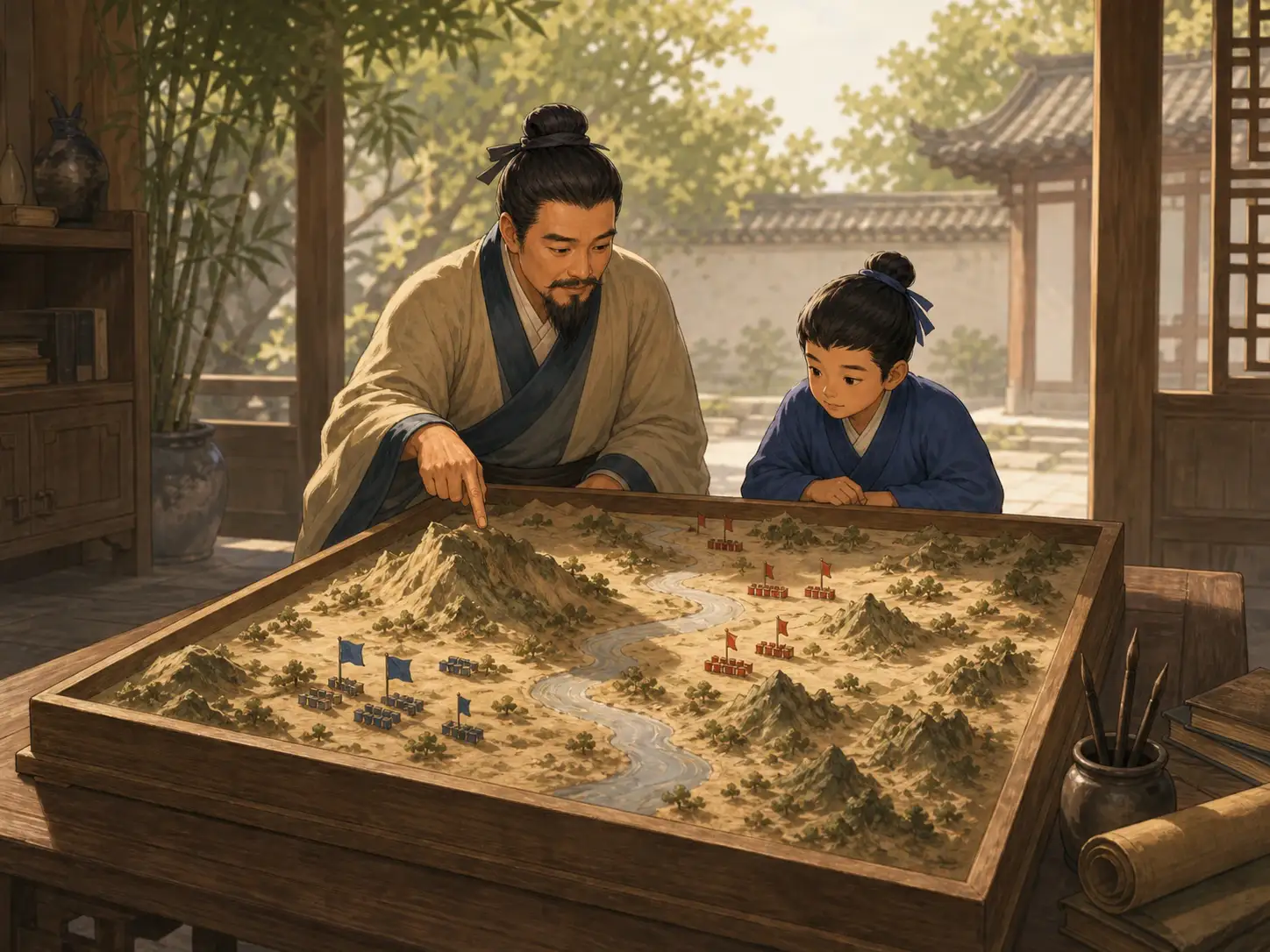
A teacher and child compare terrain, roads, and both sides’ positions on a tabletop map.
《孙子兵法》第一篇一开始就说,战争关系重大,不能糊里糊涂地开始。行动以前,要先把双方的情况看清楚。天气怎么样?前面的路和地形怎么样?士兵准备好了吗?命令能不能传清楚?带兵的人会不会判断局面?
书里把这些问题分成几个方面来比较。其实背后的道理并不难:勇敢并不能把不知道的事情变成知道。
一支军队人数很多,可是刚刚走了很远的路,已经又累又饿。另一支军队人数少一些,却休息充分,而且熟悉附近的道路。只数一数哪边人多,并不能告诉你全部答案。
所以,《孙子兵法》里还有一句后来特别有名的话:“知彼知己,百战不殆。” 这里的意思并不是“只要知道得够多,就保证每次都赢”。“殆”更接近危险。了解对方,也了解自己,才不容易糊里糊涂地走进危险里。先看看对面。再看看自己。然后才决定下一步。
The very first chapter begins by saying that war is too serious to rush into. Before acting, a commander should compare the conditions on both sides. What is the weather like? What kind of ground lies ahead? Are the soldiers ready? Are orders clear? Can the leaders make good decisions?
Sunzi gathers these questions into several groups, but the idea behind them is easy to understand: courage cannot make bad information disappear.
Imagine that one army is larger, but exhausted after a long march. Another is smaller but rested and knows the roads. Simply counting soldiers would not tell you everything.
That is why another line from the book became famous: “Know the other side and know yourself; in a hundred battles you will not be in danger.” The old Chinese phrase does not promise that someone who knows enough will magically win every time. It says that understanding both sides helps keep you from stumbling blindly into danger. First look outward. Then look at yourself. Only then decide what to do.
Page 3
计划不能像一块石头
A Plan Should Not Be a Stone
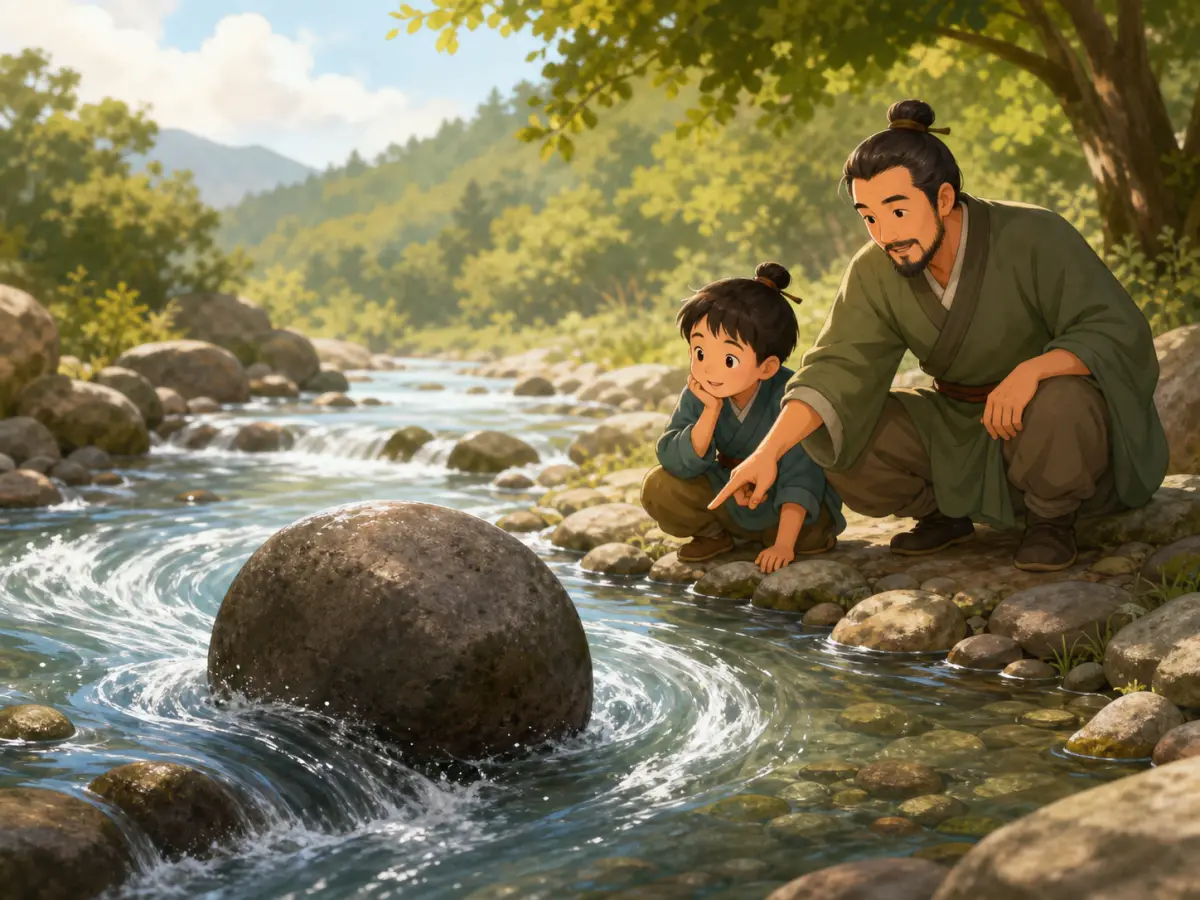
A stream changes direction with the land and flows around a large rock in its path.
《孙子兵法》后来还请读者想一想水。一条小河往前流的时候,从来不会永远保持同一个样子。到了平地,它会铺开;遇到石头,它会绕过去;进入狭窄的地方,水流又会收紧。
书里说:“水因地而制流,兵因敌而制胜。” 水会随着地形改变流法,行动的方法也要随着眼前的情况改变。这和“找到一个最好的办法,以后永远照着做”完全不一样。
昨天好用的方法,今天可能已经不合适了。原来宽阔的路可能变成狭窄的山口,晴天可能变成大雨,对方也可能去了原来没有想到的地方。如果四周都变了,计划却死活不肯变,那计划本身反而可能变成麻烦。
水能一直往前走,就是因为它会看着眼前的地形改变方向。
Later in the book, Sunzi asks the reader to think about water. A stream does not keep one shape as it travels. On flat ground it spreads out. Between rocks it narrows. When the land bends, the water bends with it.
The Art of War says, “Water shapes its flow according to the ground; an army shapes its victory according to the enemy.” That is a much more interesting picture than a commander carrying one perfect plan everywhere.
A plan that worked yesterday may not fit today. A wide road may become a narrow pass. Dry weather may turn into rain. An opponent may move somewhere unexpected. If the situation changes but the plan never does, the plan can become the problem.
Water keeps moving because it responds to what is in front of it. Sunzi wanted a commander to do the same.
Page 4
再回到那座城
Back at the City Wall
现在,再回到开头那座城墙前面。刚到这里的时候,好像很简单:有一座城,那就攻城。
可是读过《孙子兵法》以后,问题一下子多了起来。真的需要攻吗?有没有损失更小的办法?如果长期围城,要付出什么代价?自己的军队准备好了吗?眼前的局面是不是已经变了?
最后的答案有时仍然可能是打仗。《孙子兵法》毕竟是一本真正讨论战争的书。可是它从来没有把“马上冲上去”当成勇敢的证明。它一次又一次把人拉回行动以前的那个时刻:先观察,先比较,情况变了,就重新想办法。
Now return to the army outside the city. At the beginning, the answer seemed obvious: there is the wall, so attack the wall.
After reading The Art of War, the commander has many more questions. Is an attack really necessary? Is there another way to make the enemy give up? What will a long siege cost? Is the army ready? Has the situation changed?
Sometimes the final answer might still be battle. The Art of War certainly does not pretend that war can always be avoided. But it refuses to treat rushing forward as proof of bravery. That may be why a book written for a world of ancient armies survived for so long. It keeps returning to the moment before the action, when there is still time to observe, compare, and change a plan.
Page 5
写在竹片上的书
Words on Bamboo
1972年,考古工作者在Shāndōng · 中国东部沿海省份。临沂的Yínquèshān · 山东临沂的汉墓遗址,出土了《孙子兵法》等竹简。发掘Hàn cháo · 从公元前206年延续到公元220年的中国重要朝代。墓葬时,发现了近五千枚写着文字的竹简。其中,就有两千多年前抄写的《孙子兵法》。
那时候还没有今天这样的纸书。人们可以把字写在一条条细长的竹片上,再用绳子编起来。很久以前,有人就这样把《孙子兵法》一个字一个字抄在竹简上。
后来,编竹简的绳子烂掉了,竹片也变得又黑又脆。可是上面的许多文字还留了下来。两千多年以后,人们重新读到了它们。
而那些古老的文字里,仍然藏着开头那个问题:城墙已经在眼前了。冲上去以前,你真的把局面看清楚了吗?
In 1972, archaeologists in Shāndōng · 山东 · A coastal province in eastern China. opened ancient tombs at Yínquèshān · 银雀山 · A Han tomb site in Shandong where bamboo-strip texts including The Art of War were found. and found thousands of bamboo strips covered with writing. Among them were parts of The Art of War. The tombs had been closed more than two thousand years earlier.
Before paper books became common, a text like this could be written on narrow pieces of bamboo and tied together with cords. Someone long ago had copied Sunzi’s words onto strip after strip and placed them in a tomb.
The cords eventually disappeared. The bamboo became dark and fragile. Yet many of the words could still be read.
And inside those old strips was the same question that begins our story. There is a wall in front of you. Before you charge toward it, have you looked carefully enough?