
宋词:给曲子配上新词
Song Ci: New Words for a Tune
Page 1
一支曲子,换上新的词
One Tune, New Words
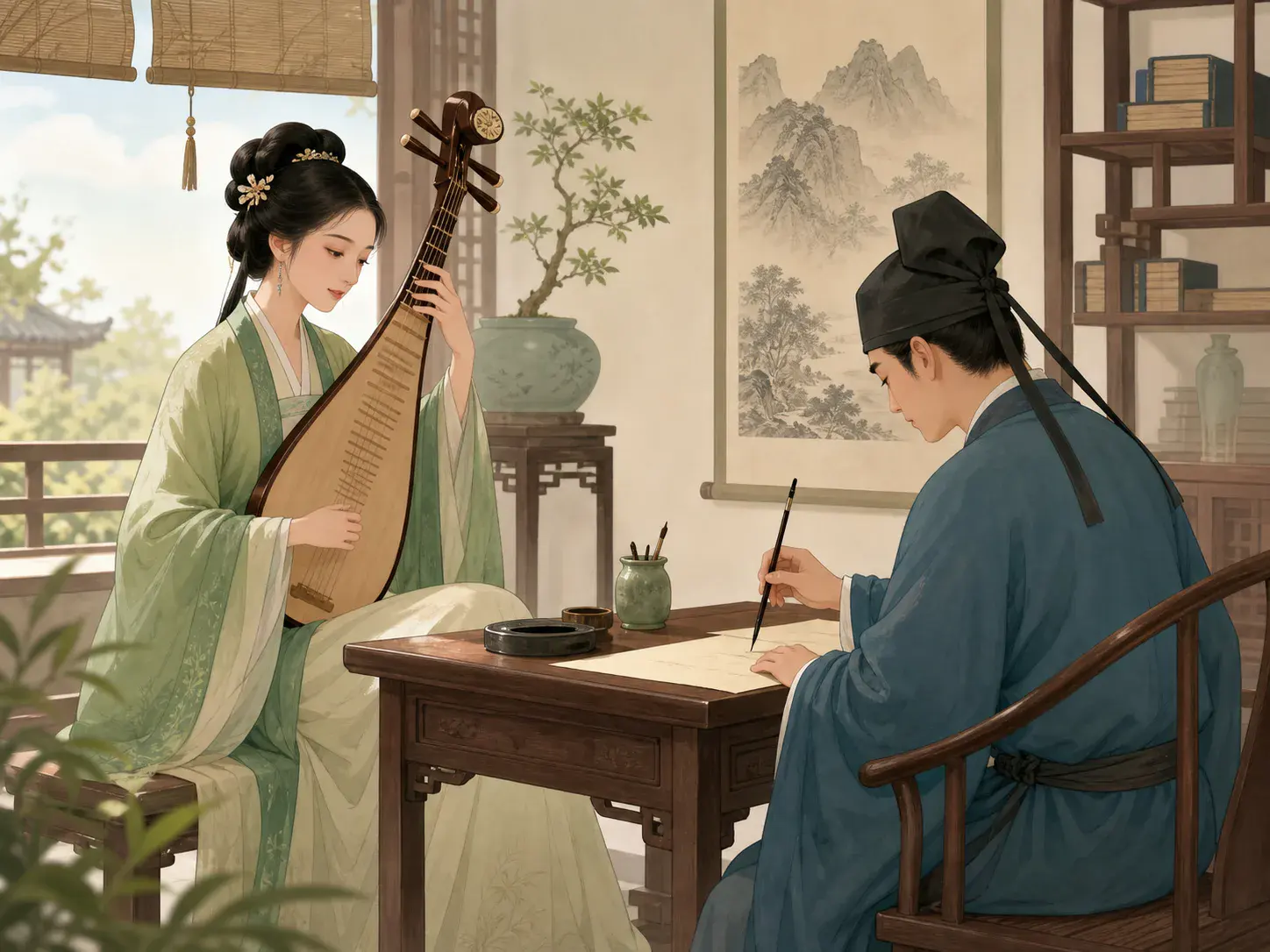
A musician plays the pipa while a writer adds words to the tune.
大约一千年前的Sòng cháo · 中国历史上从960年延续到1279年的朝代。,人们也喜欢听音乐、唱歌。有时,乐师会弹起一支大家熟悉的曲子,写词的人则为这支曲子配上新的文字。
这种跟着曲子写出来的文字,就叫“词”。音乐可以不变,唱的词却可以换成新的。
因为文字要跟着音乐走,有的句子很短,有的句子比较长。很多宋朝的曲子后来失传了,可写在纸上的词留了下来。
我们不需要背很多曲子的名字。先来看看Sū Shì · 宋代文学家和诗人,又叫苏东坡。怎样对着月亮想念弟弟,再看看Lǐ Qīngzhào · 宋代著名词人。的小船怎样闯进荷花丛。
About 1,000 years ago, during China's Sòng cháo · 宋朝 · The Chinese dynasty that lasted from 960 to 1279., people enjoyed music and songs. Sometimes a musician played a tune that everyone knew. A writer then gave the tune a new set of words.
These words were called ci. The music could stay the same while the words changed.
Because the words had to fit the music, some lines were short and others were long. Many Song tunes were later lost, but the words on the page survived.
We do not need to memorize a list of tune names. Let us meet Sū Shì · 苏轼 · A Song writer and poet also known as Su Dongpo. as he thinks of his brother under the moon. Then we will follow Lǐ Qīngzhào · 李清照 · A celebrated Song dynasty poet especially known for ci poetry.'s boat into the lotus flowers.
Page 2
一轮月亮,照着两兄弟
One Moon, Two Brothers
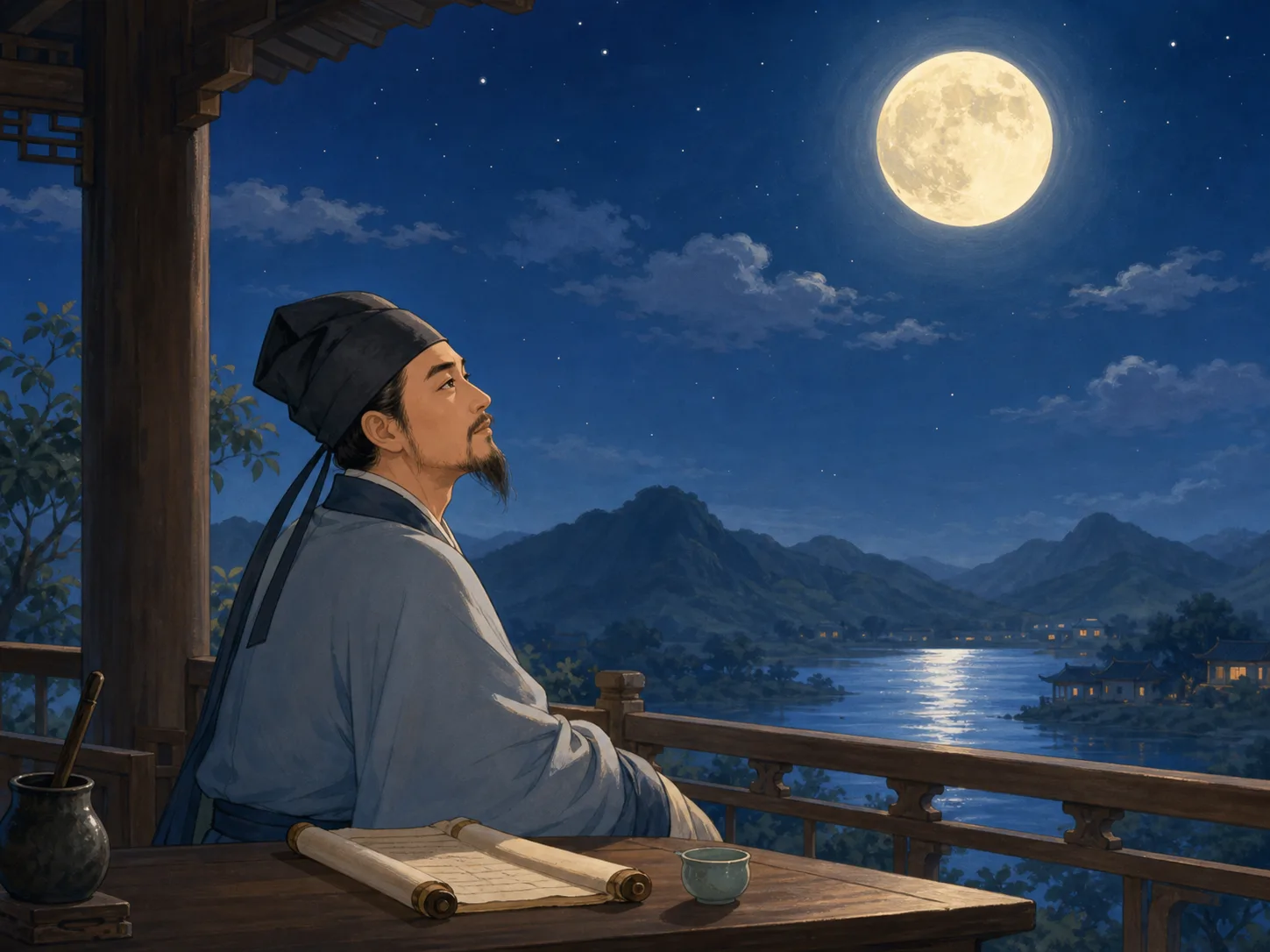
On a Mid-Autumn night, Su Shi watches the full moon and thinks of his faraway brother.
一个中秋夜,苏轼抬头望着满月。中秋本来是家人团聚的日子,可他的弟弟正在很远的地方,他们已经很久没有见面了。
苏轼想了很多,也问了一个谁都答不出的问题:
明月几时有?把酒问青天。
“这轮明亮的月亮,是什么时候出现的呢?”他举起酒杯,抬头问天。问着问着,他又想到:虽然弟弟不在身边,却也能看见同一轮月亮。
于是,他在词的最后写下一个愿望:
但愿人长久,千里共婵娟。
他希望自己和弟弟都能平安长久。哪怕相隔千里,他们仍能一起望着月亮。月亮没有把弟弟送回家,却让遥远的两个人感觉近了一点。
One Mid-Autumn night, Su Shi looked up at the full moon. Mid-Autumn was a time for families to be together, but his younger brother was far away. They had not seen each other for a long time.
Su Shi had many thoughts. He began with a question that no one could answer:
When did the bright moon first appear? I lift my cup and ask the sky.
As he looked up, another thought came to him. His brother was not beside him, but perhaps he could see the same moon.
So Su Shi ended with a wish:
May we both be safe and live long. Though far apart, may we share this beautiful moon.
The moon could not bring his brother home. But it made two people far apart feel a little closer.
Page 3
荷花丛里,快划!快划!
Lost in the Lotuses—Row! Row!

Li Qingzhao wrote about a lively lotus pond—and, years later, about quiet and lonely days.
另一位宋朝词人李清照,写过一次好玩的小船历险。那天,她在水边玩到太阳落山。回家时,小船竟然划错了方向,一头闯进密密的荷花里:兴尽晚回舟,误入藕花深处。
荷叶挤在船边,前面的路看不清了。船上的人赶紧用力划桨:争渡,争渡,惊起一滩鸥鹭。
“快划!快划!”船桨拍着水,躲在岸边的水鸟呼啦一下全飞了起来。刚才还安静的荷塘,突然到处都是水声、翅膀和笑声。
许多年后,李清照经历了战争和亲人的离去。那时,她写出的词安静了许多:寻寻觅觅,冷冷清清。 她找了又找,可四周冷冷清清。
看看图里的上下两幅画。同一个人,既记住了荷花丛里的热闹,也写下了一个人安静难过的时候。
Another Song writer, Li Qingzhao, wrote about a funny little boat adventure. One day, she stayed by the water until sunset. On the way home, the boat went the wrong way and slipped deep into the lotus flowers: We started home late and rowed straight into the lotuses.
Leaves crowded around the boat. The way out was hard to see. Everyone began to paddle: Row! Row! A whole flock of water birds bursts into the air.
Oars splashed. Wings flapped. A quiet pond suddenly filled with noise and laughter.
Many years later, war and the loss of people she loved made Li Qingzhao's life much sadder. Her words became quiet too: Searching and searching. Cold and empty.
Look at the two parts of the picture. The same writer remembered the noisy lotus pond and also wrote about days when she felt quiet and alone.
你听见哪一种声音?
Which Sound Can You Hear?
现在,你已经认识了Sòng cí · 按照曲调格式填写、在宋代特别兴盛的文学形式。:它是为曲子写下的文字。苏轼把对弟弟的思念送进月光里,李清照把小船划进荷花丛,也把后来的安静和忧伤写了下来。
那些古老的曲子也许听不到了,不过我们还可以把词读出来。月亮下面的句子,你想慢慢读吗?荷花丛里的“争渡,争渡”,你会不会越读越快?试一试吧。
Now you know what Song ci is: words written for a tune. Su Shi sent his love for his brother into the moonlight. Li Qingzhao rowed into the lotuses and later wrote about quiet, lonely days.
We may not be able to hear the old tunes, but we can still read the words aloud. Would you read the moon lines slowly? Would “Row! Row!” get faster? Try it.