
《山海经》:山海之间的奇兽
The Classic of Mountains and Seas: A World of Mythical Creatures
Page 1
《山海经》是一本什么书?
What Is the Classic of Mountains and Seas?
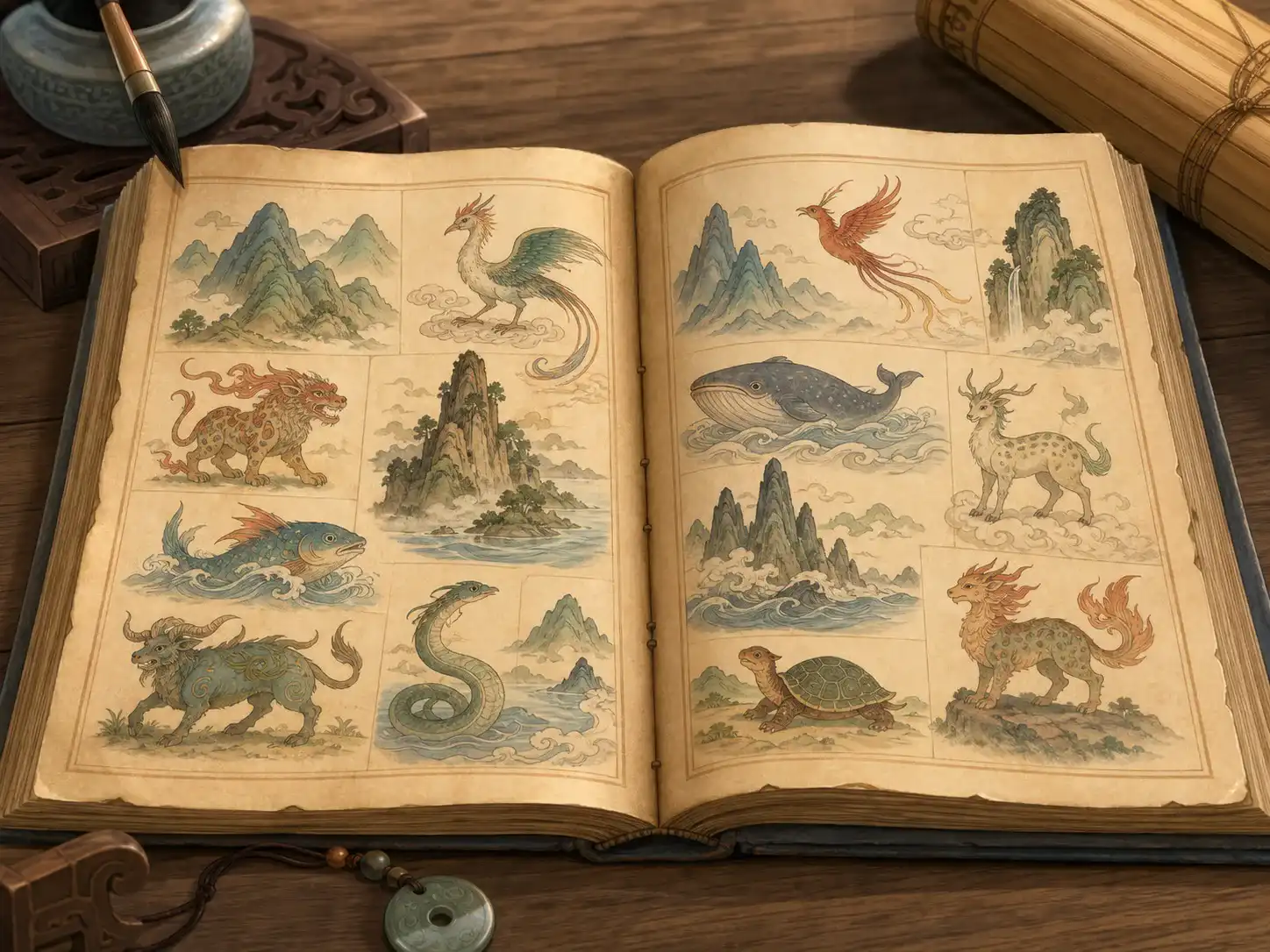
The wényáoyú, a winged fish from the Western Mountains chapter.
Shānhǎi Jīng · 全书共十八篇,其中五篇分别写南、西、北、东和中部的山。是一本中国古书,记着山川、草木、鸟兽,也收录了神灵、奇兽和传说。它不只写这些东西在哪里,还写它们的模样、声音和本领。图中长着翅膀的文鳐鱼,就是书里一种会在夜间飞行的鱼。
这本书在两千多年前就开始形成,经过许多代人的收集和整理。人们把远方的见闻、草木矿石的用途、神灵的故事和祭拜的方法记在一起。读这些内容,也是在了解古人怎样认识周围的世界。
今天的《山海经》共有十八篇。其中五篇合称《山经》:南山经、西山经、北山经、东山经和中山经。它们按方向介绍一座座山,也记下山间的河流、草木和动物。
另外十三篇通常合称《海经》,里面有《海外经》《海内经》和《大荒经》等篇章。这些篇章不只写海里的生物,还写远方的土地、那里的人们,以及神灵和传说。
打开《山海经》奇兽地图,选一个篇章,看看里面记载了哪些奇兽。它们的住处来自书中,连接这些地方的山水是我们想象的。
The Shānhǎi Jīng · 《山海经》 · The book has eighteen sections. Five focus on mountains in different directions. is an ancient Chinese book about mountains, rivers, plants, animals, gods, and mythical creatures. It describes where things were said to live and what made them special. The wényáoyú, the fish in this picture, has wings and flies at night.
The book began taking shape more than 2,000 years ago. Different people added to it over many generations. They gathered accounts of distant places, useful plants and minerals, stories about gods, and ways of honoring them. Reading it gives us a glimpse of how people understood the world around them.
The version we read today has eighteen chapters. Five make up the Mountain Classic: Southern, Western, Northern, Eastern, and Central Mountains. These chapters move from mountain to mountain, naming rivers and describing what lives or grows nearby.
The other thirteen are usually grouped as the Sea Classic. They include chapters called Within the Seas, Beyond the Seas, and the Great Wilderness. They explore much more than the sea: there are distant lands, the people said to live there, and stories about gods.
Explore our map of mythical creatures. Choose a chapter to meet the creatures described in that part of the book. Their homes come from the text, but we've imagined how the landscape fits together.
Page 2
奇兽预示着什么?
Signs of Good Fortune and Trouble
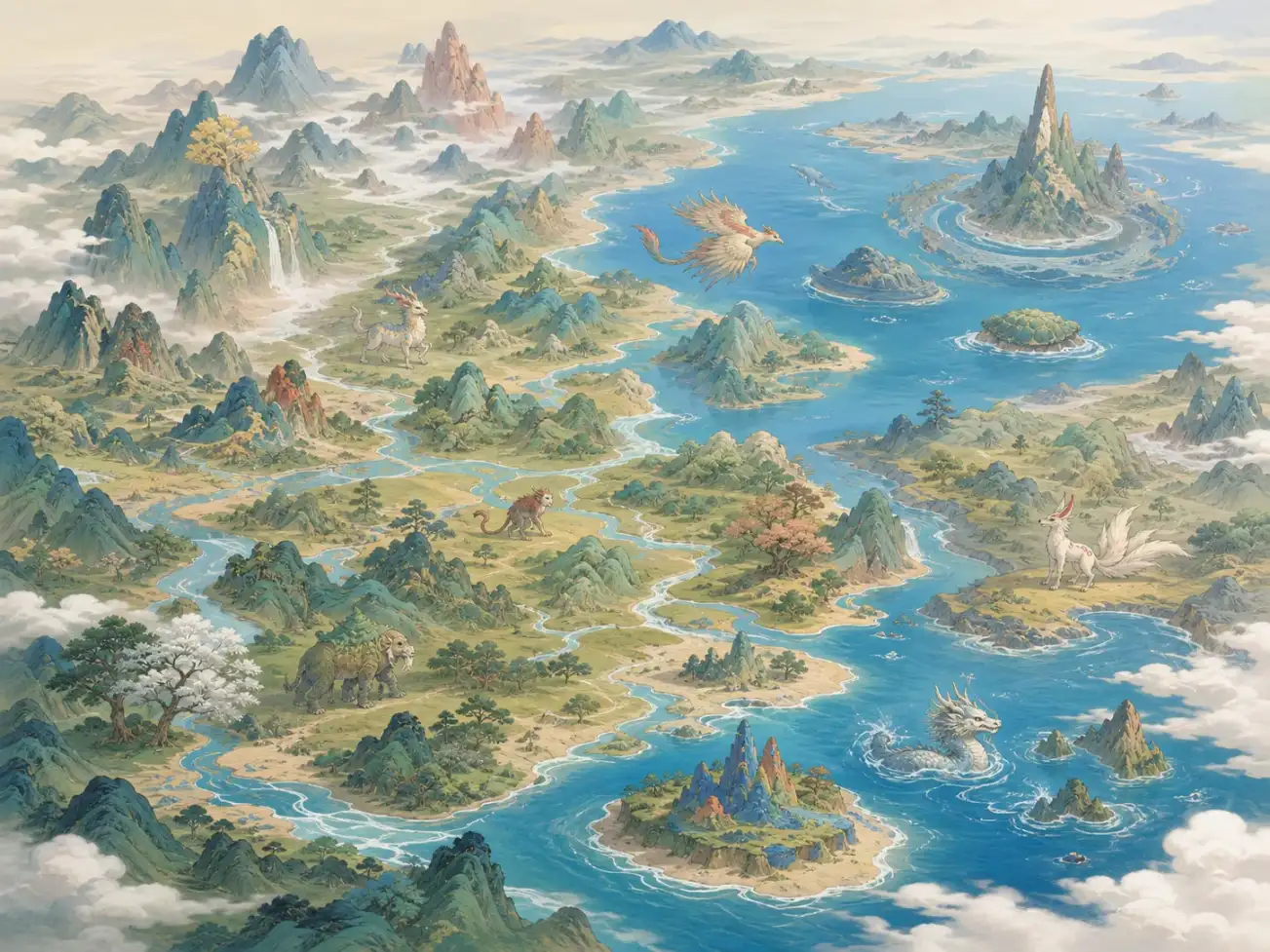
A singing lùshǔ, a bird-headed xuánguī, and a nine-tailed fox.
图里的三种奇兽都出自《南山经》。鹿蜀像马,身上有虎纹,拖着红尾巴,叫起来像人在唱歌。旋龟有龟的身体、鸟的脑袋和蛇一样的尾巴,叫声像木头被劈开。九尾狐不仅有九条尾巴,还会发出婴儿般的哭声。
书里除了写奇兽的样子,还常常写“看见它,意味着什么”。比如凤凰出现,预示天下安宁;长着獠牙、模样像猪的当康出现,预示庄稼丰收。它们带来的是人们盼望的好消息。
也有让人担忧的征兆。长右像一只长着四只耳朵的猴子,书里把它的出现与洪水联系在一起。同样是看见奇兽,可能想到平安,也可能想到危险。
为什么动物会和丰收、洪水连在一起?对种田的人家来说,雨水关系着一年的收成:太少,庄稼会枯;太多,又可能被冲走。每一种奇兽最初怎样被想象出来,今天未必能说清。但从这些记载中,我们能读出熟悉的愿望和担忧:有粮食吃,家园安全,日子太平。
The Southern Mountains chapter introduces the three creatures in this picture. The lùshǔ looks like a horse with tiger stripes and a red tail, but its call sounds like singing. The xuánguī has a turtle's body, a bird's head, and a snake-like tail. Its voice sounds like wood cracking. The nine-tailed fox cries like a baby.
Yet a creature's appearance was only part of its description. The book also tells readers what seeing it could mean. A fènghuáng, or Chinese phoenix, is a sign of peace. The pig-like dāngkāng, with its tusks, signals a plentiful harvest. Both are signs of good fortune.
Other creatures warn of trouble. The chángyòu, which looks like a monkey with four ears, is linked to floods. In these accounts, seeing a creature can be a reason to hope or to worry.
Why connect an animal with a harvest or a flood? For farming families, rain could make all the difference. Too little could leave crops dry; too much could wash them away. We do not know how every creature was first imagined. But these descriptions reveal familiar hopes and fears: enough food, a safe home, and peaceful days.
Page 3
精卫为什么要填海?
Jīngwèi and the Sea
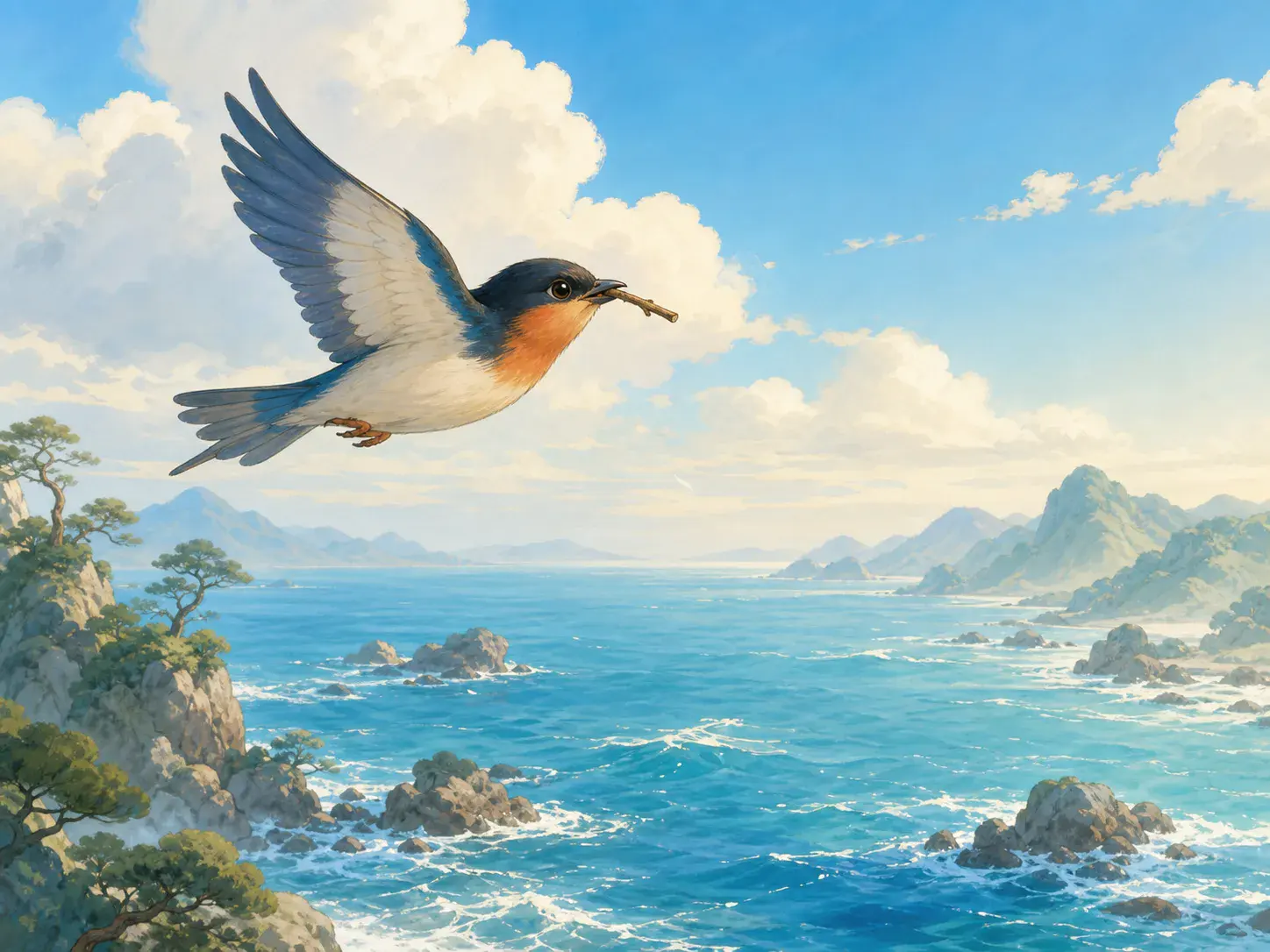
Jīngwèi carries a twig over the Eastern Sea.
《山海经》也留下了Jīngwèi · 神话中不停衔石填海的小鸟。这样的故事。她长得像乌鸦,头上有花纹,嘴是白色的,脚是红色的。她住的发鸠山,记在《北山经》里。
传说精卫原来是炎帝的小女儿。她到东海游玩时,不幸淹死,后来变成了一只鸟。变成鸟的精卫从西边的山上衔来树枝和石子,投进东海,想把海填平。
小鸟一次能带走的东西那么少,大海却那么大,她还是一趟趟地飞回来,继续衔木石去填海。她的住处在北方,故事却一直延伸到东海。
Some entries tell a story, too. One is about Jīngwèi · 精卫 · The little mythic bird that keeps carrying stones and twigs to fill the sea., a bird that looks like a crow, with a patterned head, a white beak, and red feet. Her home is Fājiū Mountain, in the Northern Mountains chapter.
According to the story, Jīngwèi was once the youngest daughter of the Flame Emperor. She drowned while visiting the Eastern Sea and became a bird. Then she began carrying twigs and stones from the western mountains to the Eastern Sea, trying to fill it in.
A bird can carry only a little at a time. The sea is enormous. Still, Jīngwèi keeps returning with more. Her home is in the north, but her story reaches all the way to the Eastern Sea.
Page 4
应龙与雨水
The Dragon and the Rain
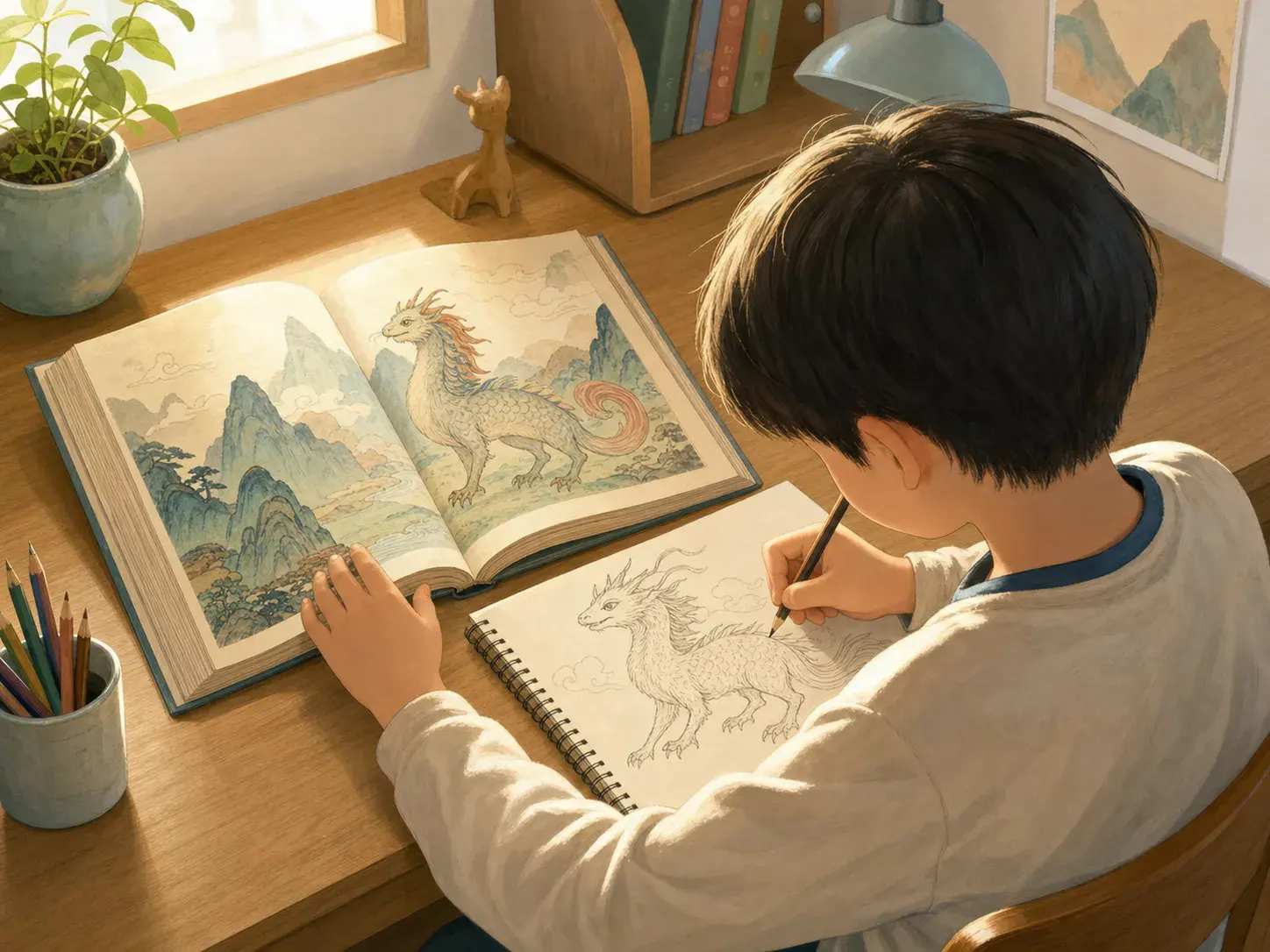
Drawing Yìnglóng, a Chinese dragon with wings.
图中的应龙,就与雨水有着密切的联系。《山海经》有一段记载说,应龙不能回到天上以后,人间常常干旱。人们做出应龙的形象,随后便下起了大雨。这个传说把龙的形象和求雨的愿望连在了一起。
有了雨,河里有水,田里的庄稼才能生长。人们盼着雨来,也是盼着田里有收成,一家人有粮食吃。
古代学者郭璞给《山海经》写注解时,把应龙解释为长着翅膀的龙。图里的小朋友也画出了这个特征:长长的龙身两旁,展开一对大翅膀。
许多读者都曾把这些奇兽画出来。四百多年前,就已有印着插图的《山海经》。今天,应龙也出现在绘本里、我们的地图上,或是孩子的画纸上。
Yìnglóng, the dragon in this picture, has a close connection with rain. In one passage, a drought follows when the dragon cannot return to the sky. People make a model of the dragon, and rain comes. The story connects a dragon's image with the hope of ending a drought.
Rain means water in the rivers and food growing in the fields. A story about bringing back the rain is also a story about having enough to eat.
A scholar named Guō Pú, who wrote notes explaining the book, described Yìnglóng as a dragon with wings. That detail helps us recognize it in the child's drawing.
Readers have pictured these creatures for centuries. Illustrated copies of the book were printed more than 400 years ago. Today, the same winged dragon can appear in a picture book, on our map, or in a child's sketchbook.