
《山海经》:山的那边住着什么?
Shan Hai Jing: What Lives Beyond the Next Mountain?
Page 1
打开古卷,先选一条进山的路
Open the Old Scroll and Choose a Mountain Road
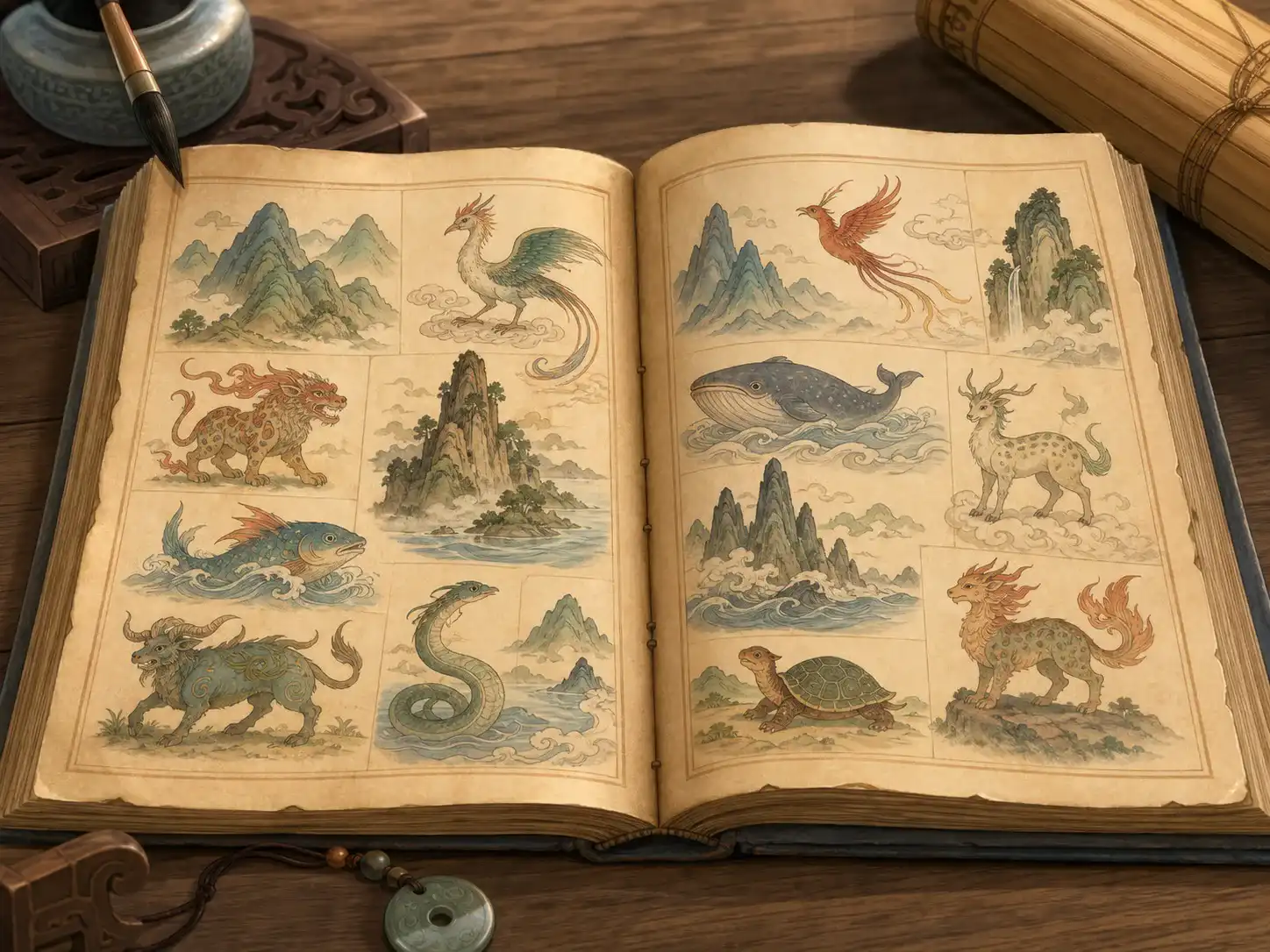
One road climbs toward a mountain and one river runs to the sea. The old scroll tells you where to go, but it does not promise an ordinary animal ahead.
假如有人把一卷两千多年前的古书放到你手里,上面没有写“从前有一个英雄”。它先说:从这座山出发,向东再走一段路,会到达下一座山。山上长着什么树?河水往哪里流?石头下面藏着什么动物?
这卷书就是Shānhǎi Jīng · 记录古代山川、物产、神话人物和奇异动物的古书。。它不是一个人坐下来一次写完的。许多人在很长的时间里,把山川、祭祀、传说和听来的怪事一层层放进去。最早写下这些话的人是谁,今天已经不知道了。
可是,名字不知道,路还在。你可以跟着书里的方向往前走。山顶可能有玉,山脚可能有铜,河里可能游着一条长翅膀的鱼。
再翻一页,路边传来像唱歌一样的叫声。那不是人在唱。有什么东西正从树林后面走出来。
Imagine that someone places a scroll more than two thousand years old in your hands. It does not begin, “Once there was a hero.” Instead, it gives you a road: start at this mountain, travel east, and you will reach another mountain. What trees grow there? Where does the river go? What animal hides behind the rocks?
This scroll is Shānhǎi Jīng · 《山海经》 · An ancient book filled with mountains, places, gods, and strange creatures., the Classic of Mountains and Seas. One person did not sit down and write it all at once. Over a long time, different people gathered descriptions of mountains, ceremonies, old tales, and strange reports. No one now knows the names of the first writers.
The names are lost, but the road remains. Follow the directions and you may find jade on a mountain, copper at its foot, or a fish with wings in the water.
Turn one more page. A call rises from the trees. It sounds almost like singing—but no person is there. Something is stepping out of the forest.
Page 2
往东走:会唱歌的鹿蜀、鸟头龟和九尾狐
Travel East: A Singing Beast, a Bird-Headed Turtle, and a Nine-Tailed Fox
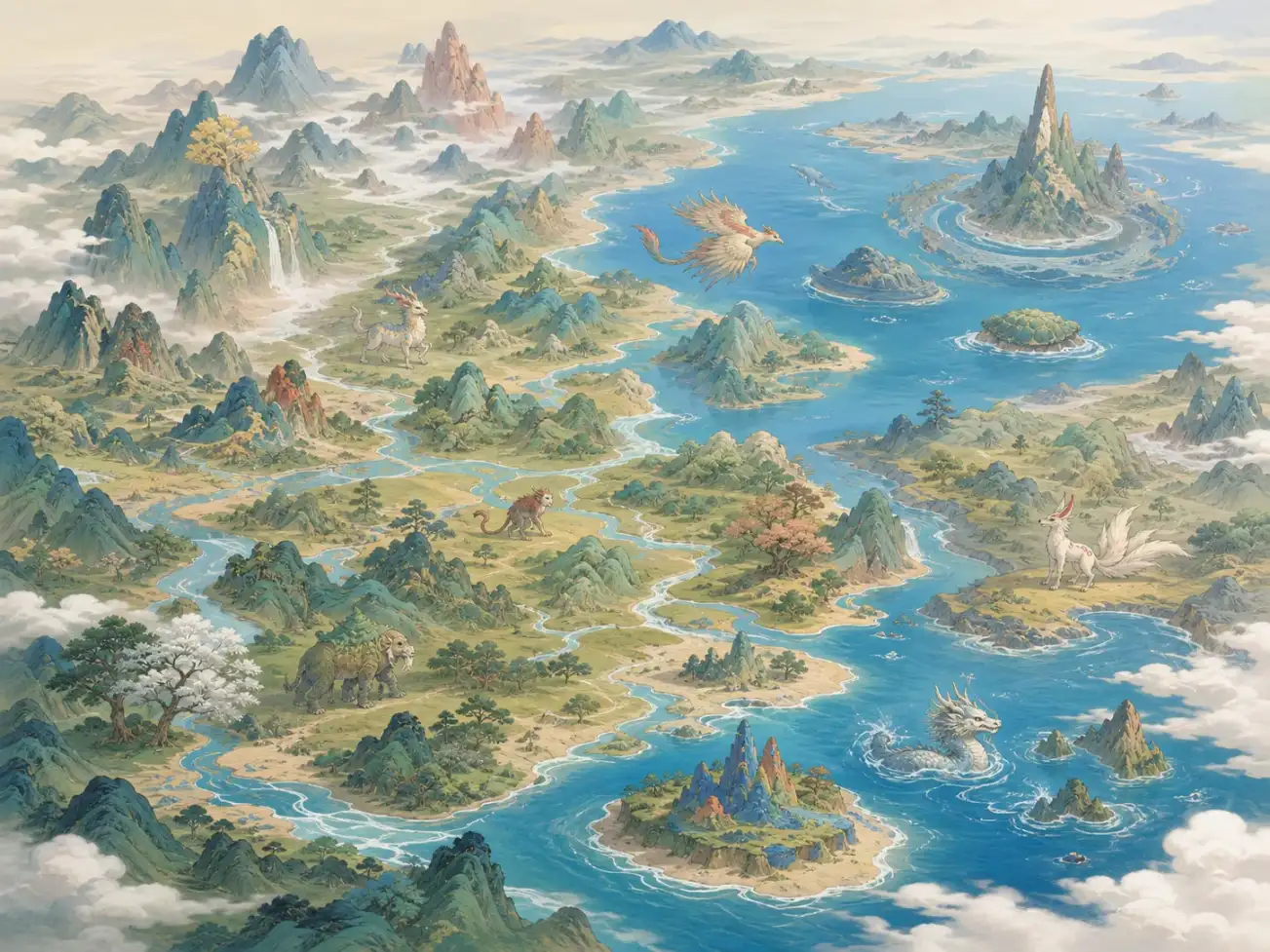
The Classic of the Southern Mountains reads like a very strange travel route. Beyond each mountain may wait an animal you have never seen.
先从南边的山出发。走到杻阳山,树林里出现一只叫鹿蜀的兽。它的身体像马,头是白色的,身上有老虎一样的条纹,尾巴却是红色的。刚才像歌声一样的叫声,就是它发出来的。
山里的怪水中还住着旋龟。它有乌龟的身体、鸟的脑袋和蛇一样的尾巴。它一开口,不像鸟叫,也不像乌龟叫,而像有人“咔嚓”一声劈开木头。
继续向东,来到青丘山。树林里突然传出婴儿般的哭声。可千万别以为有人把宝宝丢在山上了。声音来自一只狐狸。它转过身来,一条、两条、三条……身后竟然摆着九条尾巴。
《山海经》常常只用几句话说完一种动物,然后马上带你赶往下一座山。它没有告诉我们鹿蜀今天去了哪里,也没有解释九尾狐为什么长出九条尾巴。那一片空白,只好留给读者自己接着想。
Begin among the southern mountains. At Niuyang Mountain, a creature called the lushu steps from the trees. Its body looks like a horse. Its head is white, its body has tiger stripes, and its tail is bright red. The singing sound you heard belongs to this creature.
In the mountain river lives a xuangui, or whirling turtle. It has a turtle's body, a bird's head, and a tail like a snake. When it opens its mouth, it does not chirp like a bird. It sounds like a piece of wood splitting with a loud crack.
Keep traveling east until you reach Qingqiu Mountain. A baby's cry comes from the trees. Do not go looking for a lost baby. The sound belongs to a fox. It turns around, and behind it wave not one, not two, but nine long tails.
Shan Hai Jing often gives a creature only a few lines before hurrying toward the next mountain. It never tells us where the lushu went or why the fox grew nine tails. The empty space is left for the reader to fill.
Page 3
发鸠山上的小鸟,为什么每天飞向大海?
Why Does the Little Bird of Fajiu Mountain Fly Toward the Sea?
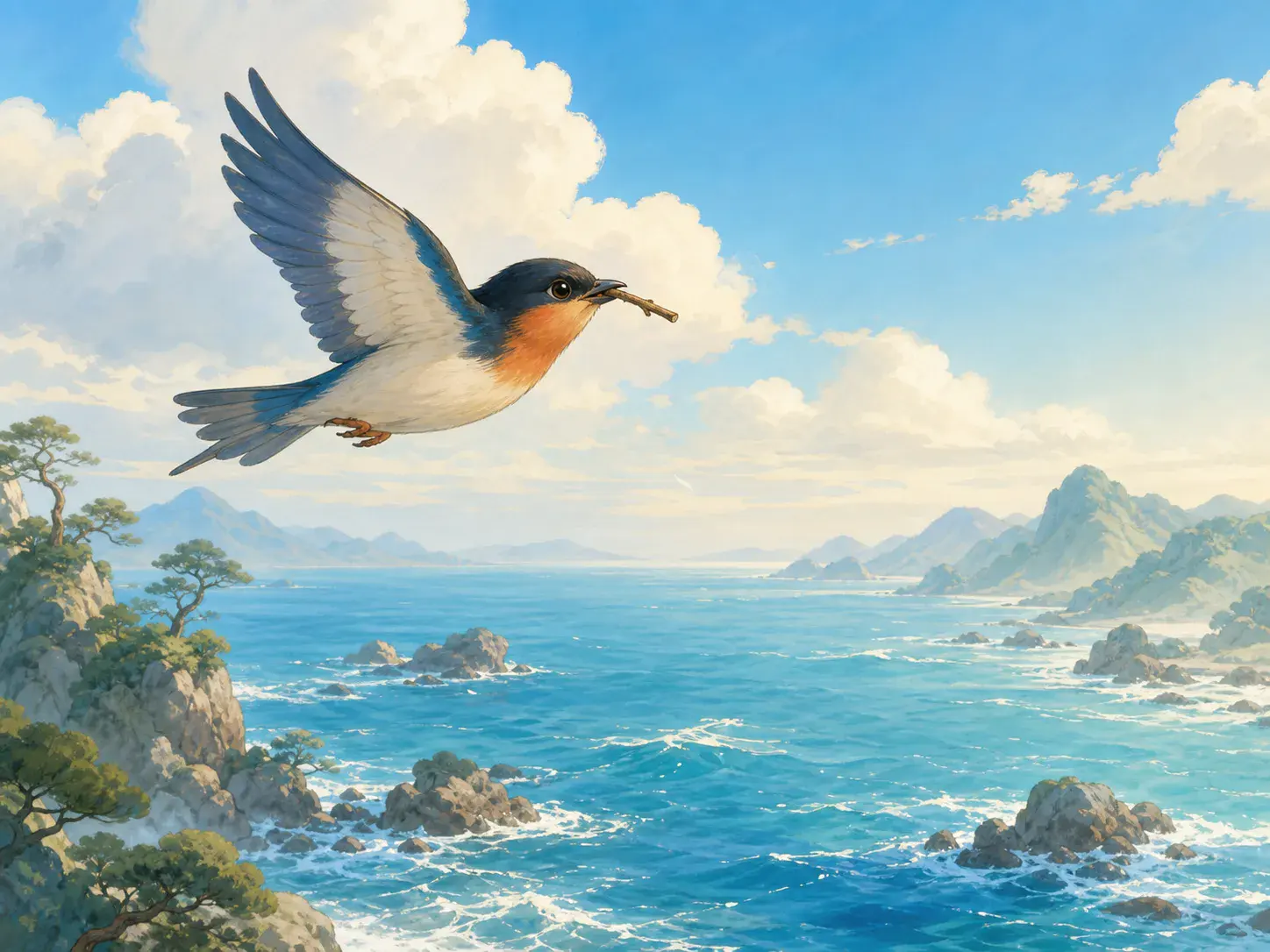
Jingwei carries stones and twigs from Fajiu Mountain to the Eastern Sea. She wants to fill the sea that took her life.
在北方的发鸠山上,住着一只乌鸦大小的小鸟。她有带花纹的脑袋、白色的嘴和红色的脚。飞过山谷时,她会叫出自己的名字:“Jīngwèi · 神话中不停衔石填海的小鸟。!精卫!”
精卫以前不是鸟。她原来名叫“女娃”,是炎帝的小女儿。有一天,她到东海游玩,却淹死在海里,再也没有回家。后来,她变成了这只小鸟。
每天,精卫从西边的山上衔起一小段树枝,或者叼起一颗小石子,再飞到东海上空,把它丢进浪里。她想把夺走自己生命的大海一点点填平。第二天,她又飞回山中,再找一颗。石子那么小,东海那么大,她还是没有停。
一颗石子落进浪里,马上看不见了。精卫转过身,再次飞向发鸠山。她的任务还没有完成,故事却在她一次又一次的飞行中停住了。
On northern Fajiu Mountain lives a bird about the size of a crow. She has a patterned head, a white beak, and red feet. As she flies over the valley, her call sounds like her own name: “Jīngwèi · 精卫 · The little mythic bird that keeps carrying stones and twigs to fill the sea.! Jingwei!”
Jingwei was not always a bird. She was once a young girl, the daughter of the Flame Emperor. One day she went to the Eastern Sea, drowned, and never returned home. Afterward, she became this little bird.
Every day, Jingwei picks up a twig or a small stone from the western mountains. Then she flies over the Eastern Sea and drops it into the waves. She means to fill the sea that took her life, one tiny piece at a time. The next day, she returns for one more. The stones are tiny and the sea is enormous, but she does not stop.
One stone disappears beneath the waves. Jingwei turns around and flies back toward Fajiu Mountain. Her task is not finished, but the story ends while she is still making the journey again and again.
Page 4
如果下一座山由你来画,那里会住着什么?
If You Drew the Next Mountain, What Would Live There?
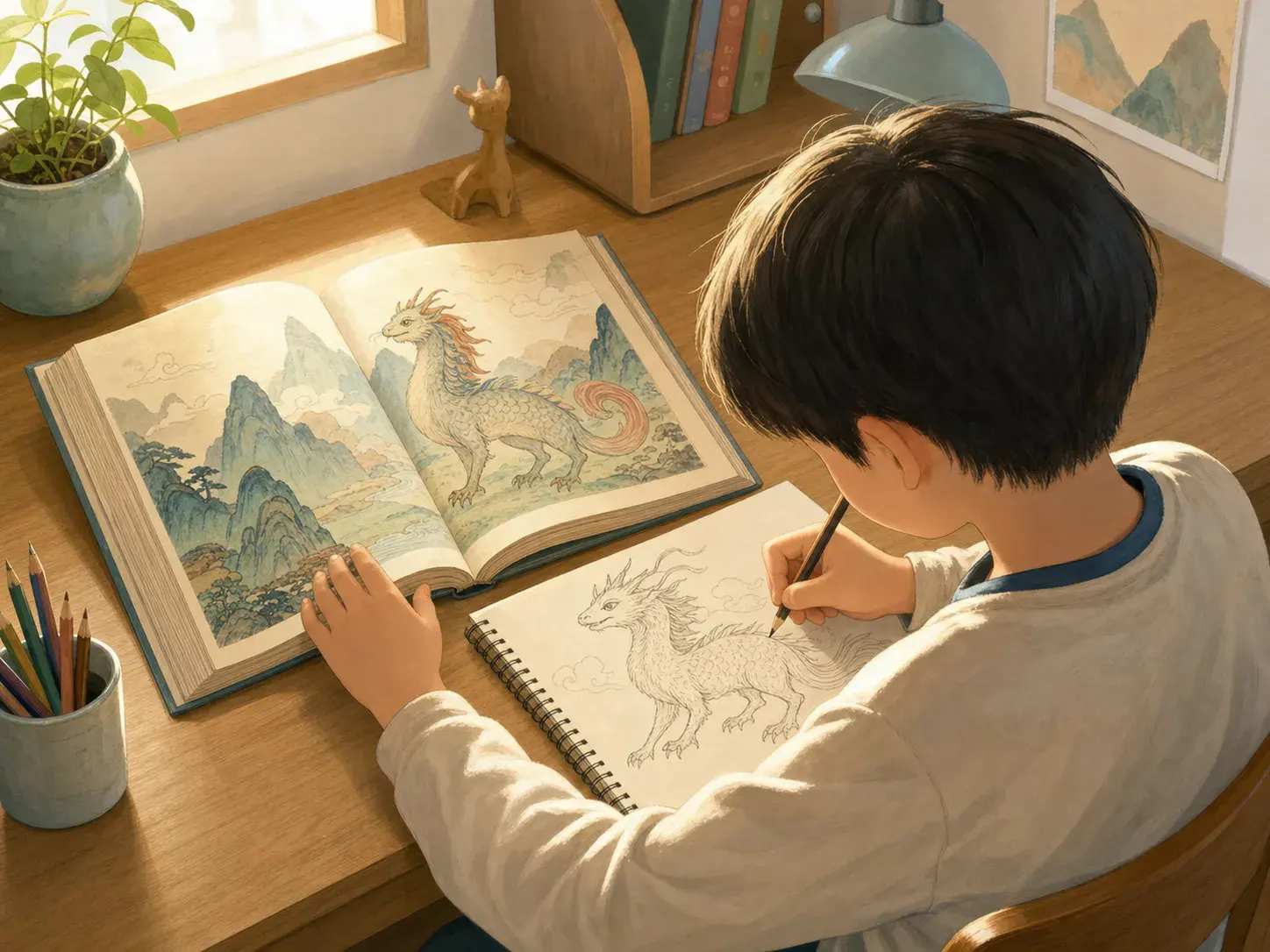
A boy studies a dragon-like creature in an illustrated book and sketches his own version.
读完九尾狐和精卫,一个男孩把《山海经》的图画书摊在桌上,又拿出自己的画本。书页上的群山之间,站着一只长角、有鳞片、四足和卷尾的怪兽,看起来有一点像龙。他仔细看了一会儿,也拿起笔来。
他先画出长长的脸和尖角,再添上披着鳞片的身体、四只带爪的脚和一条卷起来的尾巴。画本里的怪兽和书上那只很像,又不完全一样——他正在画出属于自己的新家伙。
这只怪兽不一定在原来的《山海经》里有名字。可它很像从那本书打开的门里走出来的。因为《山海经》里的怪兽常常也是这样出现:拿几种熟悉的东西拼在一起,再加上一种谁也没听过的声音和一件奇怪的本领。
现在,地图还空着一大片。下一座山可以是红色的,也可以漂在云上。山后面会出现什么,要等你把路继续画下去才知道。
After reading about the nine-tailed fox and Jingwei, a boy opens an illustrated book about Shan Hai Jing and places his own sketchbook beside it. Among the mountains on the open page stands a horned, scaly, four-legged creature with a curling tail. It looks a little like a dragon. He studies it for a moment and picks up his pencil.
He begins with a long face and pointed horns. Then he adds a scaled body, four clawed feet, and a curling tail. The creature in his sketchbook resembles the one in the book, but it is not exactly the same. He is giving his new creature a shape of its own.
This creature may not have a name in the old Shan Hai Jing. Yet it seems able to step through the door that the book opened. Many creatures in the ancient text appear in a similar way: familiar animals are joined together, then given a sound no one expects and one very strange ability.
A wide part of the map is still blank. The next mountain might be red, or it might float above the clouds. What waits behind it? You will not know until you keep drawing the road.