
长江和黄河:两条河为什么不一样?
The Yangtze and Yellow Rivers: Why Are They So Different?
Page 1
两滴水向东走
Two Drops Begin a Journey East
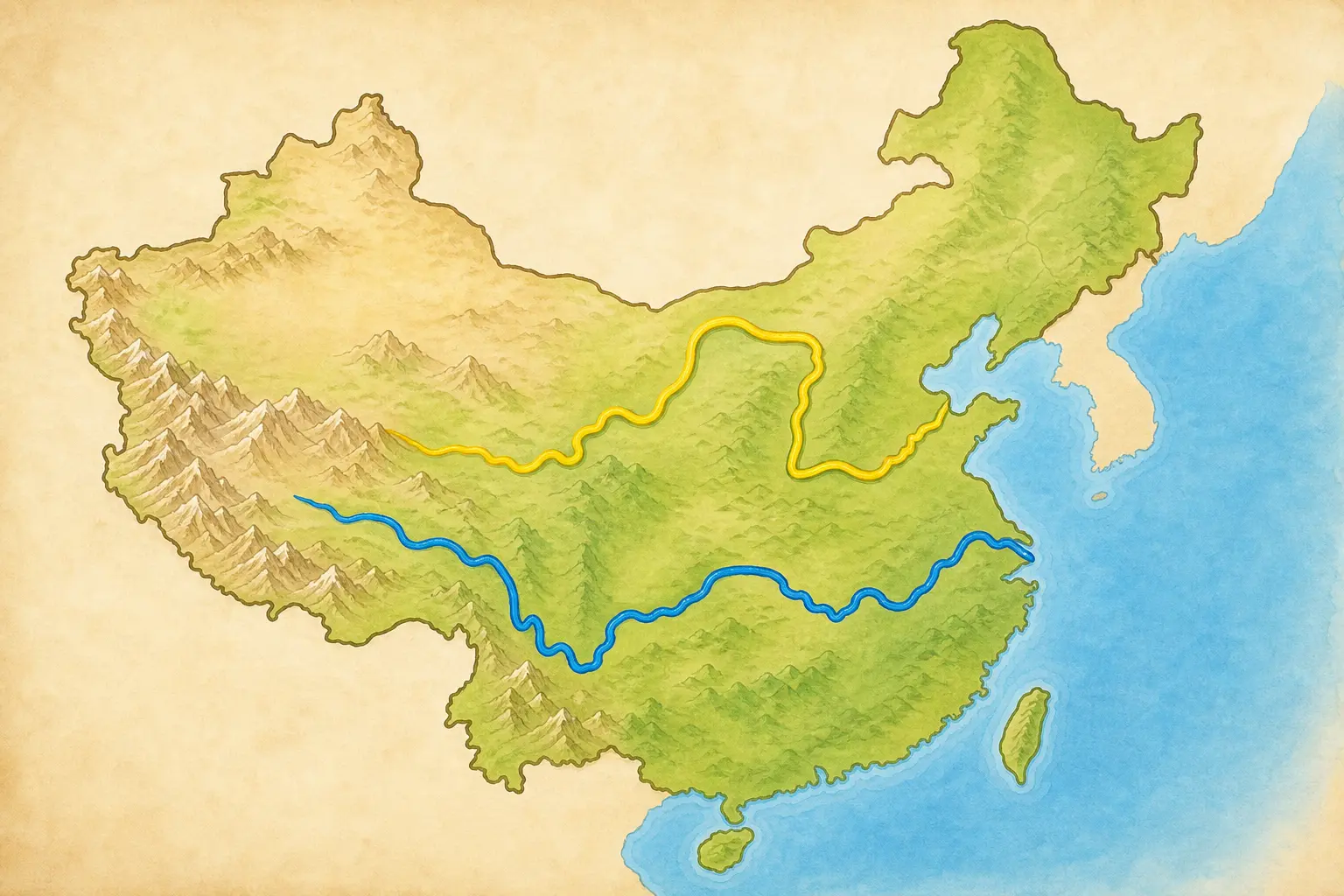
The Yangtze and Yellow Rivers both begin in the highlands of western China and flow east toward the sea.
想象两滴雪水落在中国西部的高山上。一滴加入Cháng Jiāng · 中国最长的河流。,一滴加入Huáng Hé · 流经中国北方、携带大量泥沙的大河。。它们都向东走,却开始了两段很不一样的旅程。
长江是中国最长的河,长约 4,000 英里,最后流入东海。黄河是中国第二长河,长约 3,400 英里,最后流入渤海。两条河都要穿过大半个中国。
千百年来,人们在河边取水、种田、捕鱼、坐船,也建起村庄和城市。长江和黄河因此常被称为中国的“母亲河”:它们的水养育了许许多多的人,也带着许许多多的故事流向大海。
Imagine two drops of melting snow high in western China. One joins the Cháng Jiāng · 长江 · China's longest river.. The other joins the Huáng Hé · 黄河 · The great northern Chinese river known for carrying large amounts of silt.. Both travel east, but their journeys are very different.
The Yangtze is China's longest river. It runs about 4,000 miles before reaching the East China Sea. The Yellow River is China's second longest. It travels about 3,400 miles to the Bohai Sea. Both cross a large part of China.
For thousands of years, people beside these rivers have collected water, grown food, caught fish, traveled by boat, and built towns and cities. That is why the Yangtze and Yellow Rivers are often called China's “mother rivers.” Their water has supported many lives and carried many stories toward the sea.
Page 2
黄河为什么是黄色的?
Why Is the Yellow River Yellow?
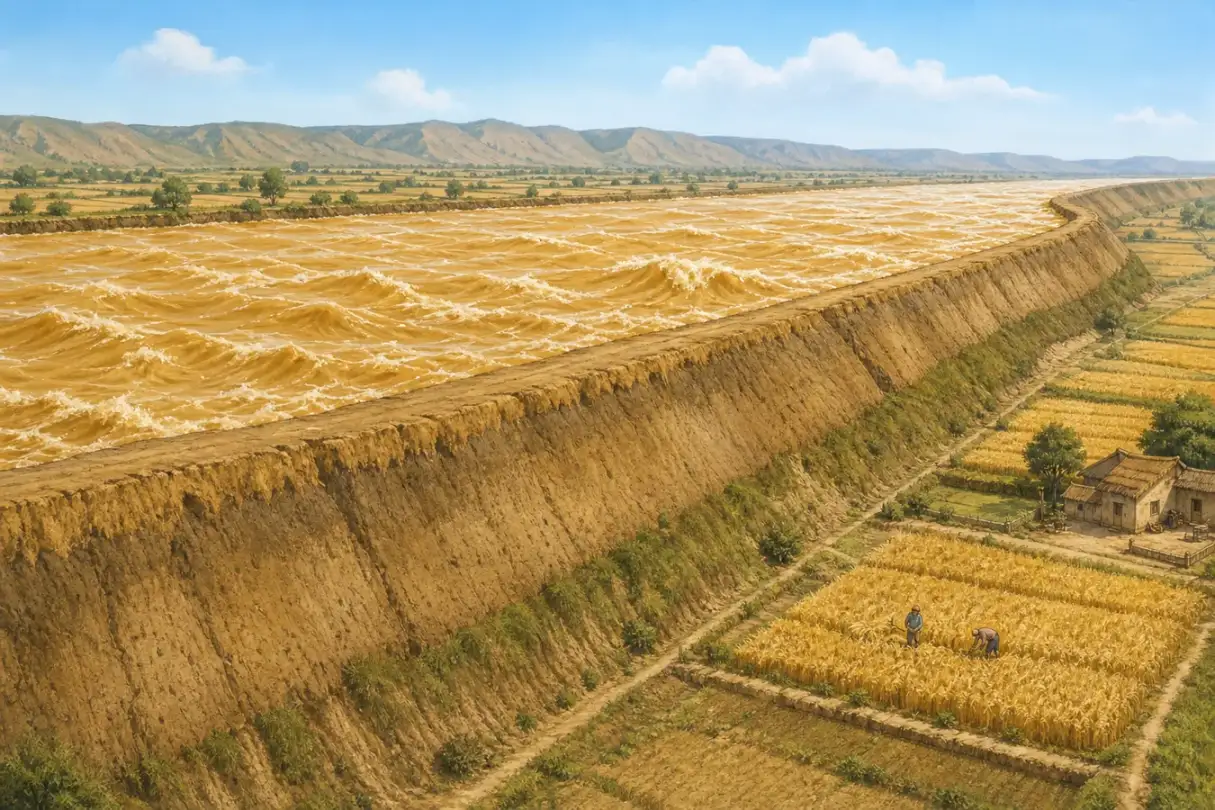
Mud carried by the Yellow River settles on the bottom. Between high earth walls, parts of the lower riverbed have slowly risen above the nearby land.
黄河经过中国北方一大片松软的黄土地。下大雨时,泥土很容易被冲进河里。无数细小的泥沙跟着水向前走,把河水染成黄褐色。黄河的名字,就是从这种颜色来的。
到了平坦的下游,河水流得慢一些,泥沙也开始沉到河底。为了挡住洪水,人们在两岸修起高高的土墙。泥沙年年堆积,有些地方的河床竟然慢慢升到附近土地的上方,像一条被两堵墙托起来的河。
黄河带来的泥土可以让农田变得肥沃,洪水却也可能冲进村庄。住在河边的人修土墙、种树护土,也使用水库控制一部分河水。这些工作一直要做,因为河水每年都会带来新的泥沙。
The Yellow River crosses a wide part of northern China covered with soft, yellow-brown soil. During heavy rain, the soil washes easily into the river. Countless tiny bits of earth travel downstream and turn the water muddy yellow. That is how the Yellow River got its name.
When the river reaches flatter land, it slows down and drops some of its mud on the bottom. To hold back floods, people built high walls of packed earth along both banks. As mud piled up year after year, parts of the riverbed rose above the nearby land, almost like a river held up between two walls.
Soil carried by the Yellow River can make farmland rich, but floods can also rush into villages. People near the river maintain the earth walls, plant trees to keep soil in place, and use reservoirs to hold some of the water. The work must continue because the river brings fresh mud every year.
Page 3
长江穿过三道大峡谷
The Yangtze Passes Through Three Great Gorges
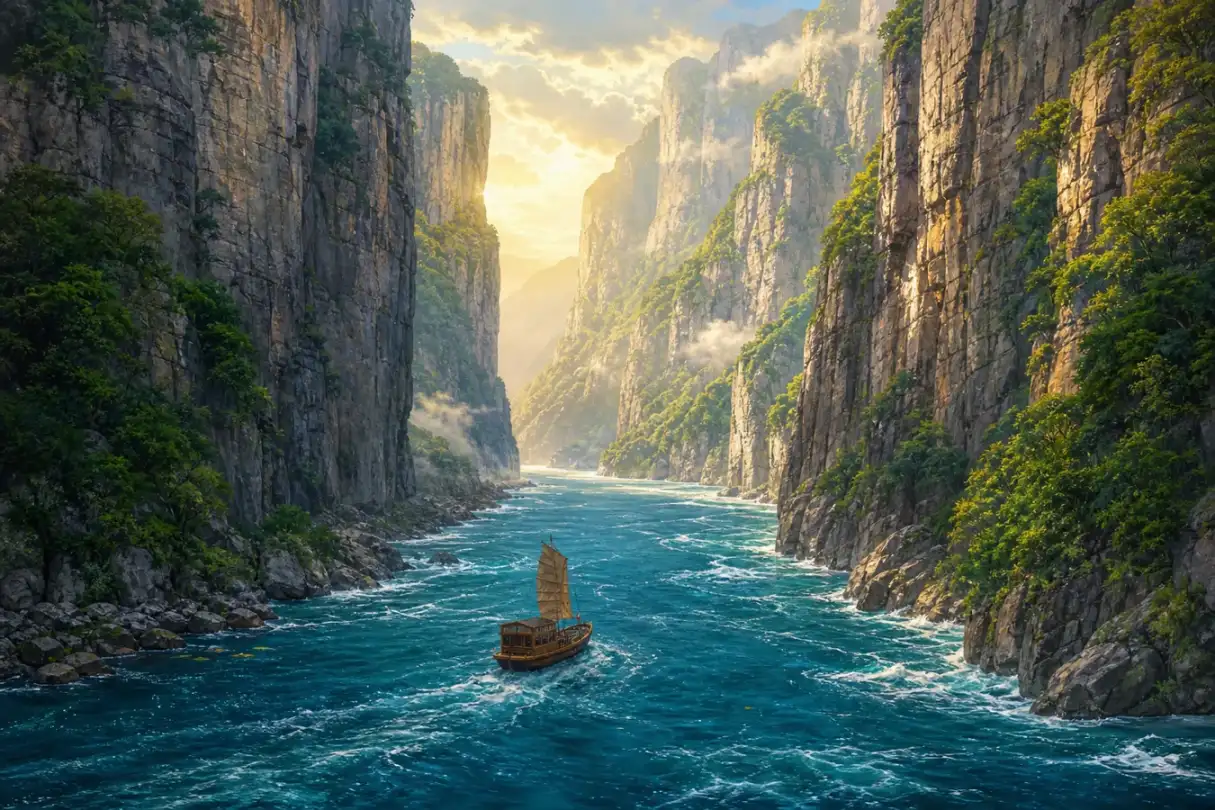
The Three Gorges are three narrow parts of the Yangtze, where steep mountains rise on both sides of the river.
长江刚从高原出发时,河道狭窄,水从山间飞快地冲下来。后来,它穿过三段相连的大峡谷。它们合在一起,就叫“三峡”。两岸山峰高高耸立,船走在中间,像从一扇扇巨大的石门下穿过。
一千多年前,诗人Lǐ Bái · 唐代诗人,以豪放的想象和月亮、旅行等题材闻名。也曾乘船经过这里。他写道:“轻舟已过万重山。”小船顺水向前,两岸的山峰一座接一座退到身后。短短七个字,就让人感觉船快得像要飞起来。
出了三峡,长江来到较平坦的地方,接上湖泊和许多支流。江面越来越宽,船也越来越多。等它穿过南京、Shànghǎi · 中国东部沿海的大城市。附近,已经是一条繁忙的大河,载着货物和旅客奔向大海。
Near its beginning, the Yangtze rushes down from high land through narrow mountain channels. Later, it enters three great gorges joined together. They are called the Three Gorges. Steep peaks rise on both sides, and a boat seems to pass through one enormous stone doorway after another.
More than 1,000 years ago, the poet Lǐ Bái · 李白 · A Tang poet known for bold imagination, moonlight, and travel. traveled through this area by boat. He wrote, “My light boat has passed ten thousand mountains.” Peak after peak slipped behind him as the current carried his boat forward. In just one short line, he made the boat feel as if it were flying.
After leaving the gorges, the Yangtze reaches flatter land and joins lakes and many smaller rivers. The water grows wider, and more boats appear. By the time the river passes near Nanjing and Shànghǎi · 上海 · A major city on China's eastern coast., it is a busy waterway carrying goods and passengers toward the sea.
Page 4
三峡水电站到底有多大?
How Big Is the Three Gorges Power Station?
今天,三峡中有一座巨大的水坝横跨长江。江水从水坝里的机器旁流过,推动巨大的水轮旋转。这些机器把流水的力量变成电,再把电送往很远的地方。
三峡水电站是世界上最大的正在运行的水力发电站。这里的“最大”,是说它全部开动时,可以同时产生的电力比任何其他正在运行的水电站都多。每年真正发出多少电,还会受到当年水量的影响。
水坝还能在雨季留下大量河水,帮助减轻下游洪水。不过,水坝两边的水面一高一低,船不能直接翻过这堵高墙。它要先开进旁边一个巨大的水池,后面的门关上。水池加水,船就跟着升高;水池放水,船就跟着降低。等水面和下一段河道一样高,前面的门才会打开。三峡的大船要这样连续通过几级水池,才能到达水坝的另一边。这就是船闸。
Today, a huge dam crosses the Yangtze at the Three Gorges. River water spins enormous machines inside the dam. The machines turn the force of the moving water into electricity, which can then travel far away.
The Three Gorges station is the largest operating hydroelectric power station in the world. Here, “largest” means that it can make more electricity at one time than any other operating hydropower station. The amount it actually makes in a whole year still changes with the amount of water in the river.
The dam can also hold a great amount of water during the rainy season, helping to reduce floods downstream. But the water is much higher on one side of the dam than on the other, and a ship cannot sail over the wall. Instead, it enters a huge pool beside the dam, and a gate closes behind it. Water flows in to lift the ship or flows out to lower it. When the pool reaches the same height as the next part of the river, the front gate opens. At Three Gorges, large ships repeat these steps through several pools to reach the other side. This system is called a ship lock.
Page 5
两条河,两种河边生活
Two Rivers, Two Kinds of Life
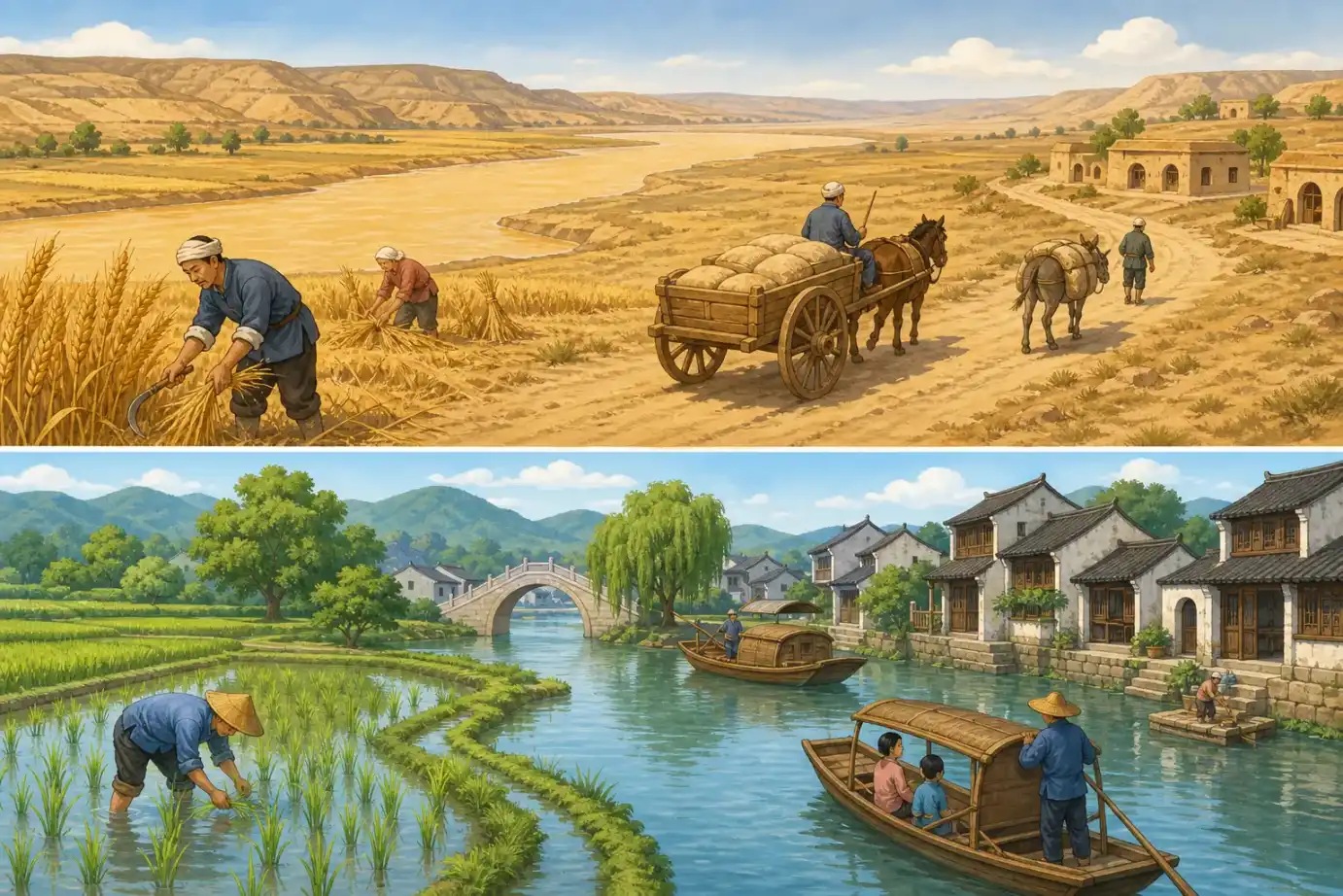
Many places in the Yellow River basin are dry and grow wheat. Much of the Yangtze basin is warm and wet, with rice fields and busy waterways.
在黄河流域的许多地方,雨水较少,冬天也更冷。农田里常见小麦。面条、馒头和饺子也成了许多北方家庭熟悉的食物。黄河带着大量泥沙,行船并不总是容易,过去人们常在陆地上用马车运送粮食。
长江流域的许多地方温暖湿润,稻田需要的水比较充足。河流、湖泊和水渠连在一起,小船可以穿过村庄,大船则在宽阔的江面上运货。米饭、鱼和水乡生活常常出现在这里的故事里。
今天,无论住在哪里,人们都可能吃米饭,也可能吃面条。不过,两条河流过不同的土地,带来了不同的农田、交通和生活方式。那两滴从高山出发的雪水,最后都到了大海,却一路看见了完全不同的中国。
Many places in the Yellow River basin receive less rain and have colder winters. Wheat is common in the fields. Noodles, steamed buns, and dumplings became familiar foods in many northern homes. Because the Yellow River carries so much mud, boat travel has not always been easy. In the past, people often moved grain over land in carts.
Much of the Yangtze basin is warm and wet, with plenty of water for rice fields. Rivers, lakes, and canals connect with one another. Small boats can pass through villages, while large ships carry goods along the broad river. Rice, fish, and life beside the water often appear in stories from this region.
Today, people everywhere may eat both rice and noodles. Still, the two rivers cross different lands and have shaped different farms, travel, and ways of life. The two drops of snowmelt both reach the sea, but along the way, they see two very different sides of China.