中国菜是什么味道?
What Does Chinese Food Taste Like?
Page 1
一个国家,许多厨房
One Country, Many Kitchens
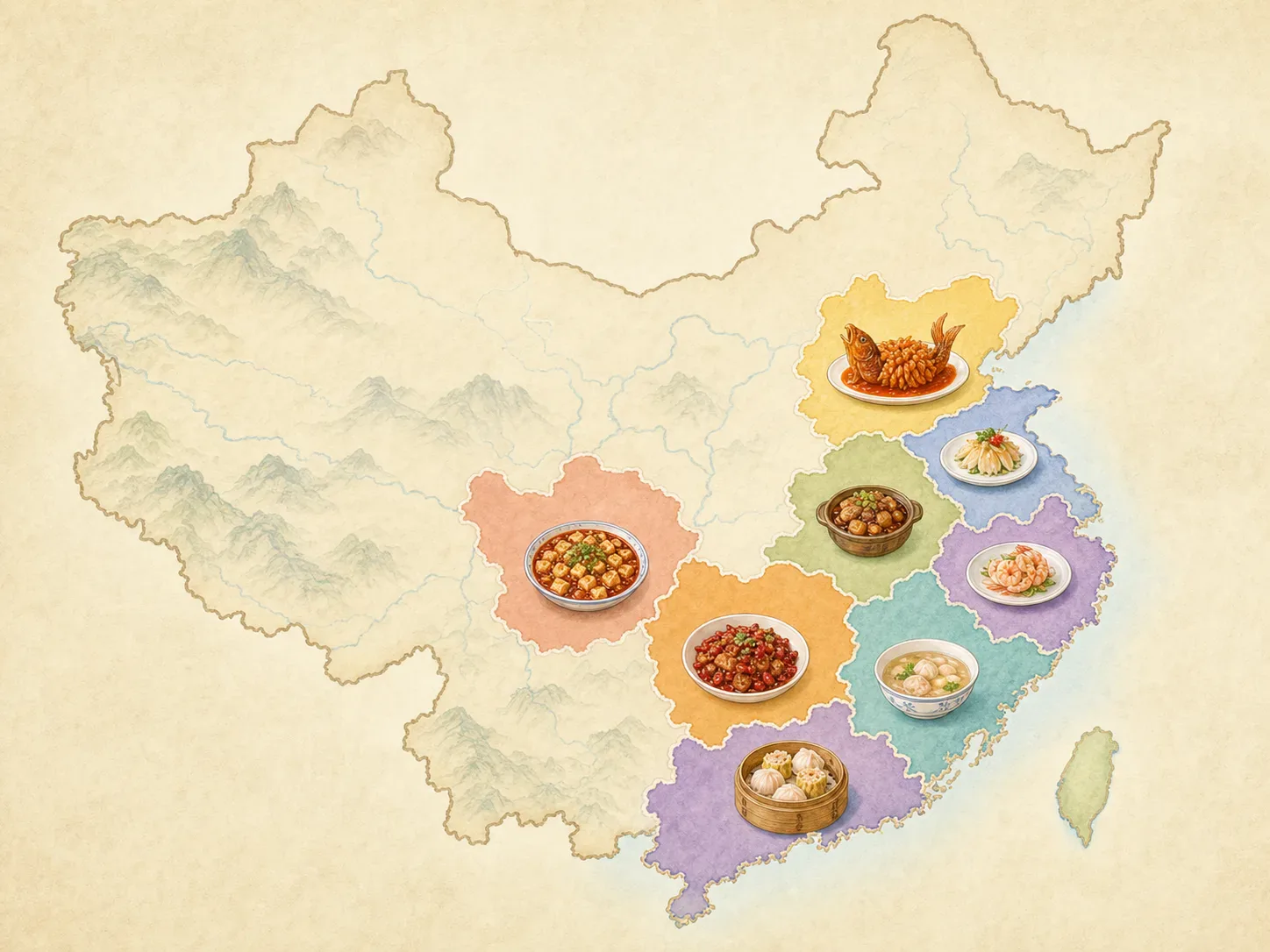
The eight colors show the often-named “Eight Great Cuisines,” but many other local food traditions do not appear on this map.
如果有人问:“中国菜是什么味道?”你可能会想到米饭、面条、饺子,也可能想到一盘红红的辣菜。可是中国很大,一顿饭不可能让我们尝到所有中国菜。
靠海的厨房容易买到鲜鱼和虾;盛产小麦的地方常做面条、馒头和饼;山里、草原上和大城市里,又会有完全不同的食材。人搬到新地方,也会把自己熟悉的味道一起带走。
人们常用“八大菜系”来介绍中国菜。这种分法可以帮助我们先认识几个地方,却会漏掉许多食物。地图上没有涂颜色的地方也一样有人做饭,每个城镇和家庭还可能有自己的做法。
If someone asks, “What does Chinese food taste like?” you might think of rice, noodles, dumplings, or a bright red bowl of something spicy. But China is huge. No single meal can show us all of its food.
Kitchens near the sea can cook with fresh fish and shrimp. Places that grow plenty of wheat often make noodles, steamed buns, and flatbreads. Mountains, grasslands, and busy cities offer different ingredients again. When people move, they carry favorite flavors with them.
People sometimes sort Chinese food into eight large cooking traditions, often called the “Eight Great Cuisines.” This can help us learn about a few regions, but it leaves out many foods. Every town and family may have its own way of cooking too.
Page 2
麻,不是辣
Tingly Is Not the Same as Hot
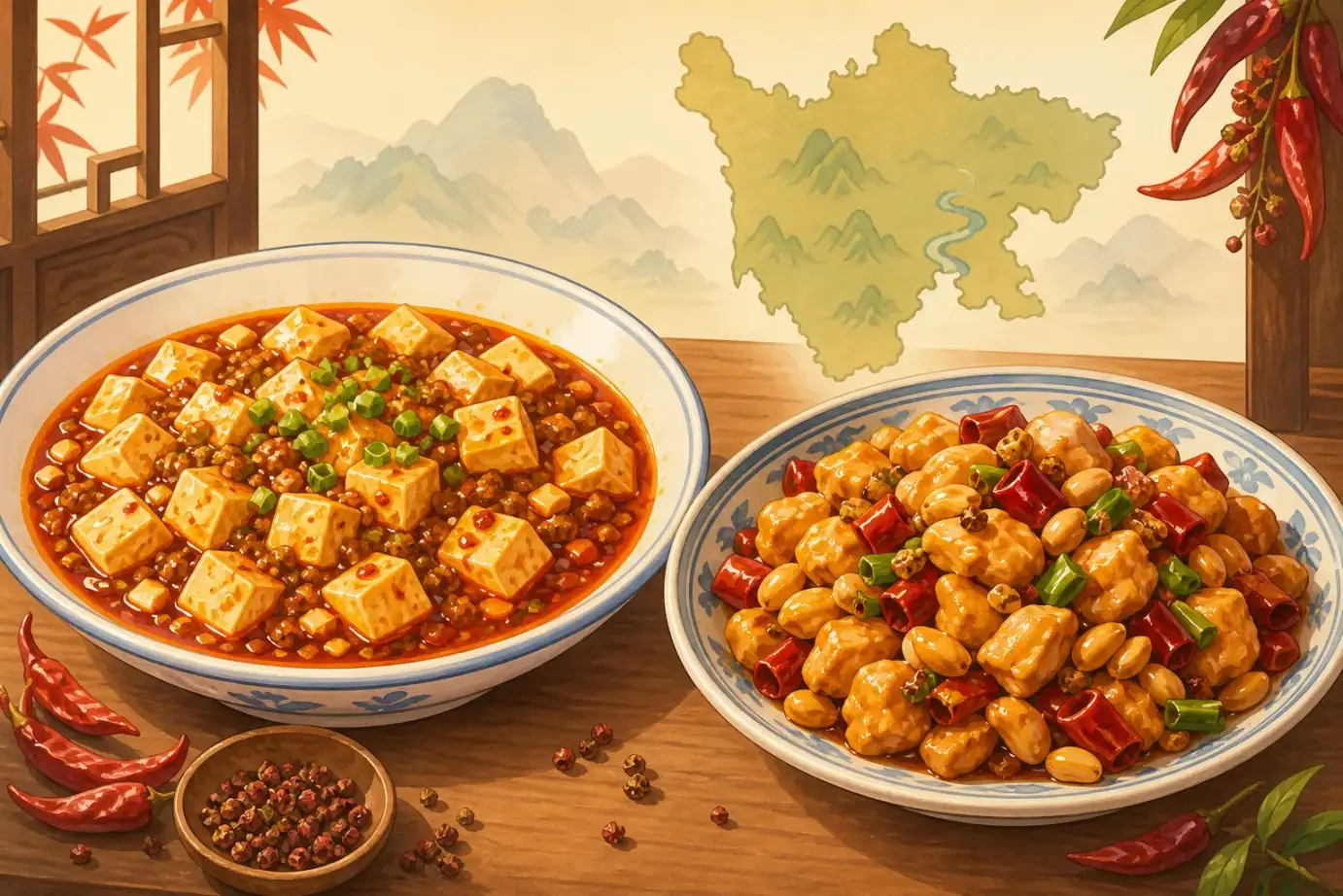
Chilies bring heat, while Sichuan pepper makes the lips tingle. Sichuan cooks often bring the two feelings together.
看看这桌Sìchuān · 中国西南省份,拥有大面积的大熊猫山林栖息地。菜。红辣椒会让嘴里觉得热,花椒却带来一种麻麻的、像小气泡跳动的感觉。四川人把“麻”和“辣”配在一起,做出了麻婆豆腐等许多有名的菜。不过,川菜并不是每一道都辣。
关于麻婆豆腐名字的来历,有几种不同的说法。流传最广的一种,要从大约一百六十年前讲起。Chéngdū · 四川省省会,也是重要的大熊猫保护和研究中心。一家小饭馆的陈老板娘做豆腐出了名。客人因为她脸上有小麻痕,给她起了“陈麻婆”这个外号,她做的豆腐也就有了“陈麻婆豆腐”这个名字。二十世纪初的一本成都指南,已经把这道菜列入当地名食。
还有一个惊喜:一千年前的四川厨师根本没有见过辣椒。辣椒原来生长在美洲,直到十六世纪后期,也就是大约四百五十年前,才来到中国。在那以前,厨师已经会用姜、蒜和花椒做出有刺激感的味道。
辣椒来到以后,厨师慢慢学会了怎样把它和原来的调料搭配,也知道了不同的菜该放多少。经过许多年,这些做法才变成今天人们熟悉的一部分川味。
Look at this Sìchuān · 四川 · A southwestern Chinese province containing extensive mountain habitat for giant pandas. meal. Red chilies make the mouth feel hot. Sichuan pepper brings a different feeling—a tingle that can make the lips seem to buzz. Sichuan cooks often put the two together in dishes such as mapo tofu. Still, not every Sichuan dish is spicy.
People tell several stories about how mapo tofu got its name. The best-known one begins about 160 years ago, when a woman named Mrs. Chen ran a small food shop in Chéngdū · 成都 · The capital of Sichuan and an important center for giant-panda conservation and research., a city in Sichuan. Customers gave her the nickname Chen Mapo because she had small marks on her face. Her tofu became so popular that people called it “Chen Mapo's tofu.” A Chengdu guide from the early 1900s lists the dish among the city's famous foods.
Here is another surprise: a cook in Sichuan one thousand years ago had never seen a chili pepper. Chilies first grew in the Americas and reached China in the late 1500s, about 450 years ago. Before then, cooks made lively flavors with ginger, garlic, and Sichuan pepper.
After chilies arrived, cooks slowly learned how to use them with older seasonings and how much each dish needed. Over many years, those choices helped create some of the Sichuan flavors people know today.
Page 3
掀开一笼点心
Lift the Lid on Dim Sum
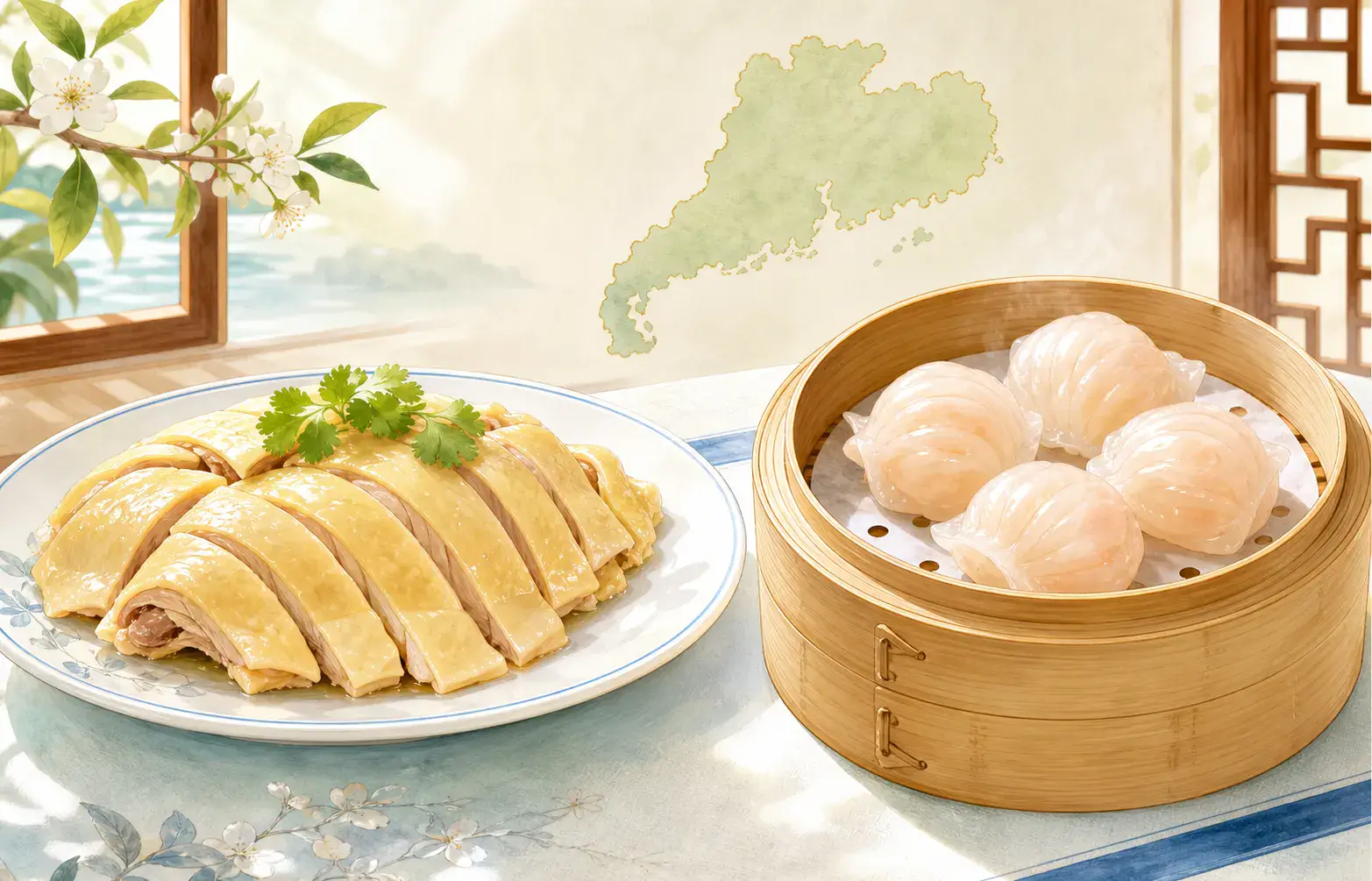
Shrimp dumplings and white-cut chicken are familiar Cantonese examples, but Guangdong holds many other local food traditions.
一只竹蒸笼端上桌,盖子刚掀开,热气就跑了出来。里面可能有晶莹的虾饺、上面开口的烧卖,或者这家茶楼刚刚想出的新点心。“点心”不是一道菜,而是一大群配着茶、装在小盘和小蒸笼里的食物。
很多人把广东菜叫作“粤菜”,可是广东人并不都吃同样的东西。不同的城镇和家庭,有自己的材料和做法。有人爱清蒸鱼和慢慢煲出的汤,也有人喜欢烧肉、砂锅和味道浓浓的酱汁。
所以,一只虾饺不能代表所有粤菜。它只是一个好吃的例子,后面还有许多别的菜。
A bamboo steamer reaches the table. The lid lifts, and out rushes a warm cloud of steam. Inside might be a shiny shrimp dumpling, an open-topped dumpling called siu mai, or something new invented by that teahouse. Dim sum is not one dish. It is a whole family of small foods served with tea.
People often use “Cantonese food” to talk about cooking from Guangdong, but everyone in Guangdong does not cook the same way. Different towns and families have their own ingredients and traditions. One cook may steam fish or simmer soup slowly. Another may prepare roast meat, a clay-pot dish, or a rich sauce.
One shrimp dumpling cannot explain all of Cantonese food. It is one tasty example, with many more dishes still to try.
Page 4
一边是海,一边是麦田
The Sea on One Side, Wheat Fields on the Other
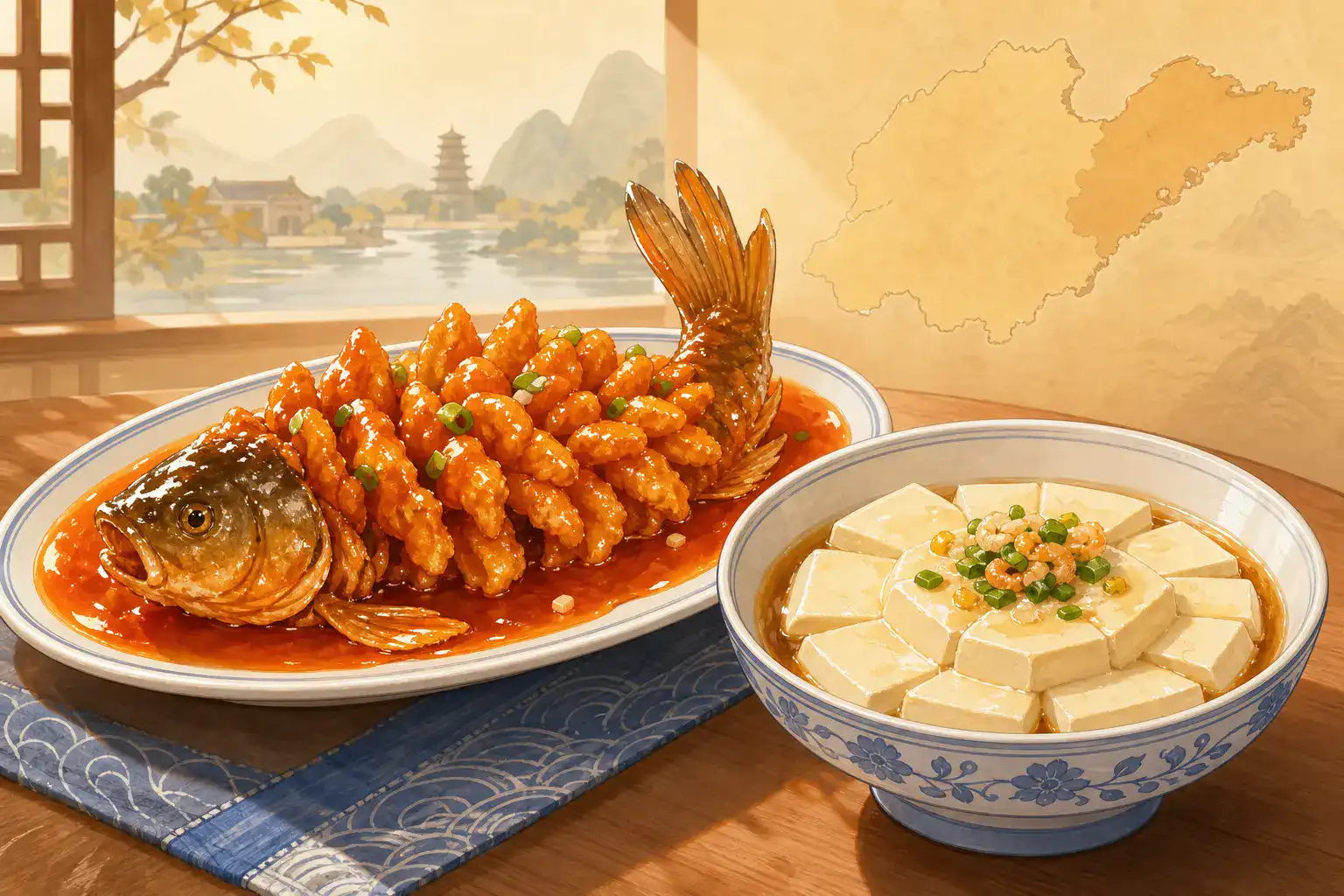
Shandong has a long coast and wide farmland, so fish, tofu, noodles, and steamed buns can all find a place at the table.
Shāndōng · 中国东部沿海省份。有一大片土地伸进海里,也有宽阔的平原。住在海边的人容易买到鱼、虾和贝类;往内陆走,小麦田越来越多,面条、馒头和饼也常常上桌。
图里的糖醋鲤鱼弯着身子,像要从盘子里跳起来。它很适合宴席,却不是每个山东家庭每天都吃的饭。旁边的豆腐看起来普通,厨师却能用汤、火候和刀工把它做出许多样子。
一个地方可以同时有海的味道、麦田的味道和家常厨房的味道。只记住一道名菜,就像只读了一本书的封面。
Part of Shāndōng · 山东 · A coastal province in eastern China. reaches into the sea, with water on three sides. Farther inland are wide, flat fields. Families near the coast can cook with fish, shrimp, and shellfish. Travel toward the wheat fields and you will also find noodles, steamed buns, and flatbreads on the table.
The sweet-and-sour carp in the picture curves as if it might leap right off the plate. It may appear at a special meal, but it is not everyday food in every Shandong home. The tofu beside it looks simple, yet broth, heat, and careful cutting can make it taste quite different.
One place can hold the flavors of the sea, the wheat fields, and an ordinary family kitchen. Remembering only one famous dish is like reading only the cover of a book.
Page 5
鱼、茶叶,还有一个意外
Fish, Tea Leaves, and a Surprise
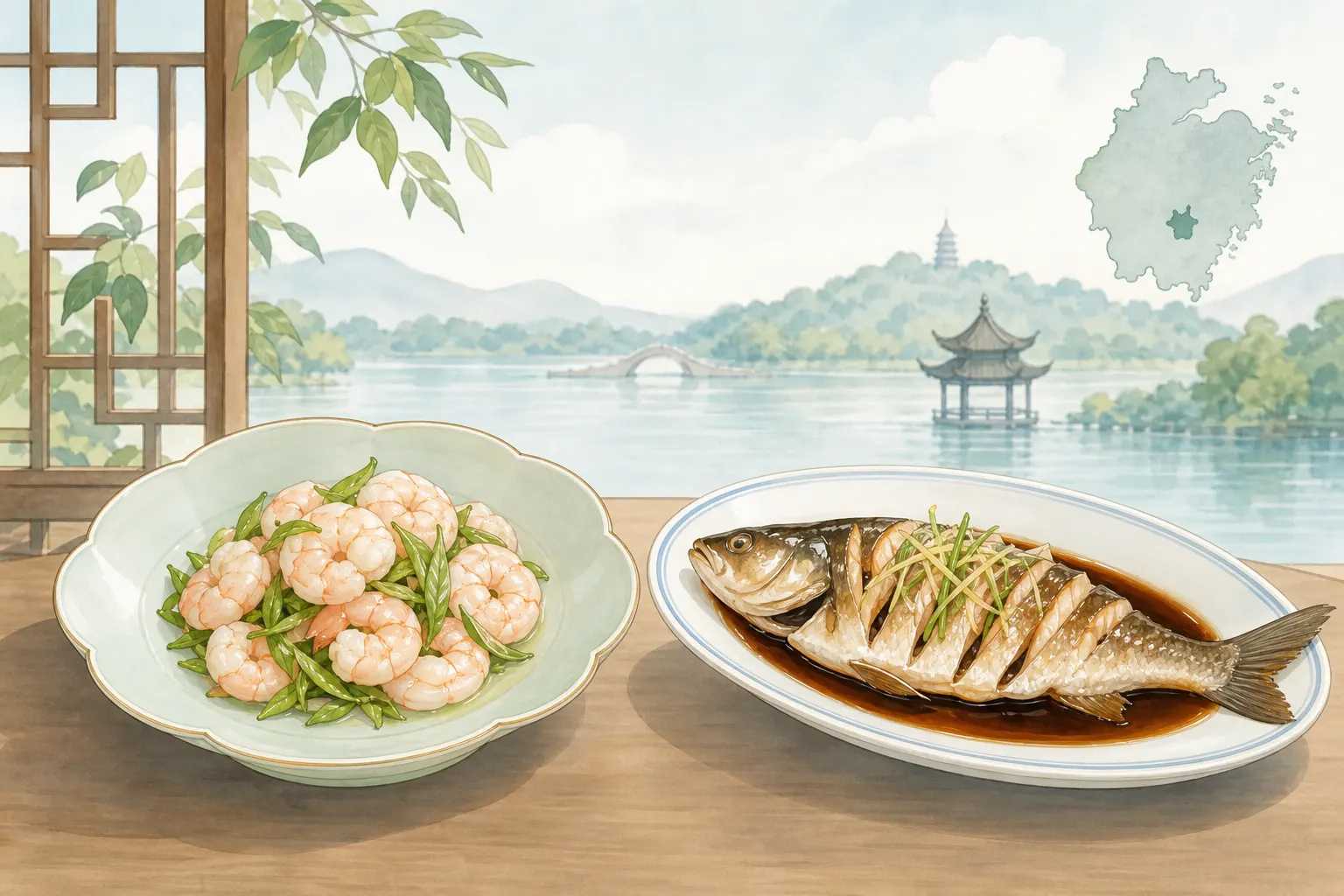
Zhejiang has rivers, lakes, a coast, and tea fields. Fish, shrimp, and tea leaves are only a few clues to its food.
浙江有河流、湖泊和海岸,也有一片片茶园。Hángzhōu · 浙江省省会,西湖和龙井茶都与这里关系密切。的厨师会把嫩虾仁和当地的Xīhú Lóngjǐng · 杭州西湖一带以扁平叶形闻名的绿茶。绿茶叶放在一起;别的地方会用海鱼、竹笋、黄酒和当季蔬菜。春天和冬天的餐桌,也可能很不一样。
这里还有一个小意外:中国很早的一些辣椒文字记录,就出现在浙江一带。可是今天说到浙江菜,人们通常不会先想到火辣。一个新食材最早在哪里出现,不代表那里一定会最爱吃它。
浙江有河流、湖泊、大海和茶园,所以鱼虾、茶叶和竹笋比较容易来到当地的市场。不过,买什么、怎样做,还是由人决定。家里的习惯和当天市场里有什么,都会让每顿饭不太一样。
Zhejiang has rivers, lakes, a coastline, and hills covered with tea plants. In Hángzhōu · 杭州 · The capital of Zhejiang, closely associated with West Lake and Dragon Well tea., cooks pair tender shrimp with local Dragon Well green tea leaves. Elsewhere, a meal might feature sea fish, bamboo shoots, rice wine, or vegetables that have just come into season.
Zhejiang also holds a surprise. Some of China's earliest written records of chili peppers come from this coastal area. Yet Zhejiang food today is not famous for fiery heat. The first place to meet an ingredient does not always become the place that loves it most.
Zhejiang's rivers, lakes, coast, and tea fields make fish, shrimp, tea, and bamboo shoots easier to find in local markets. But people still choose what to buy and how to cook it. Family habits and whatever is fresh that day can make each meal different.
同一道菜,两种做法
One Dish, Two Family Recipes
可以试一个小游戏。选一道熟悉的菜,比如炒饭、面条或饺子,再分别问两个不同家庭的人:“你家怎么做?”你可能会听到两个不同的答案。有人在炒饭里放豌豆,有人放鸡蛋;有人喜欢多一点酱汁,有人几乎不放。
这并不表示其中一家做错了。人们学会一道菜,按照手边的材料和家人的口味改一改,再教给下一个人。许多年以后,你最记得的那一种,也许正是自己家里做的味道。
Try a small food game. Choose a familiar dish, such as fried rice, noodles, or dumplings, and ask two people from different families, “How does your family make this?” You may hear two different answers. One family adds peas to fried rice, while another adds eggs. One likes more sauce; another uses almost none.
That does not mean one family is wrong. People learn a recipe, change it to fit the ingredients they have and the flavors they enjoy, and then teach it to someone else. Years from now, the version you remember best may be the one made in your own kitchen.