声东击西
Make Noise Here, Move There
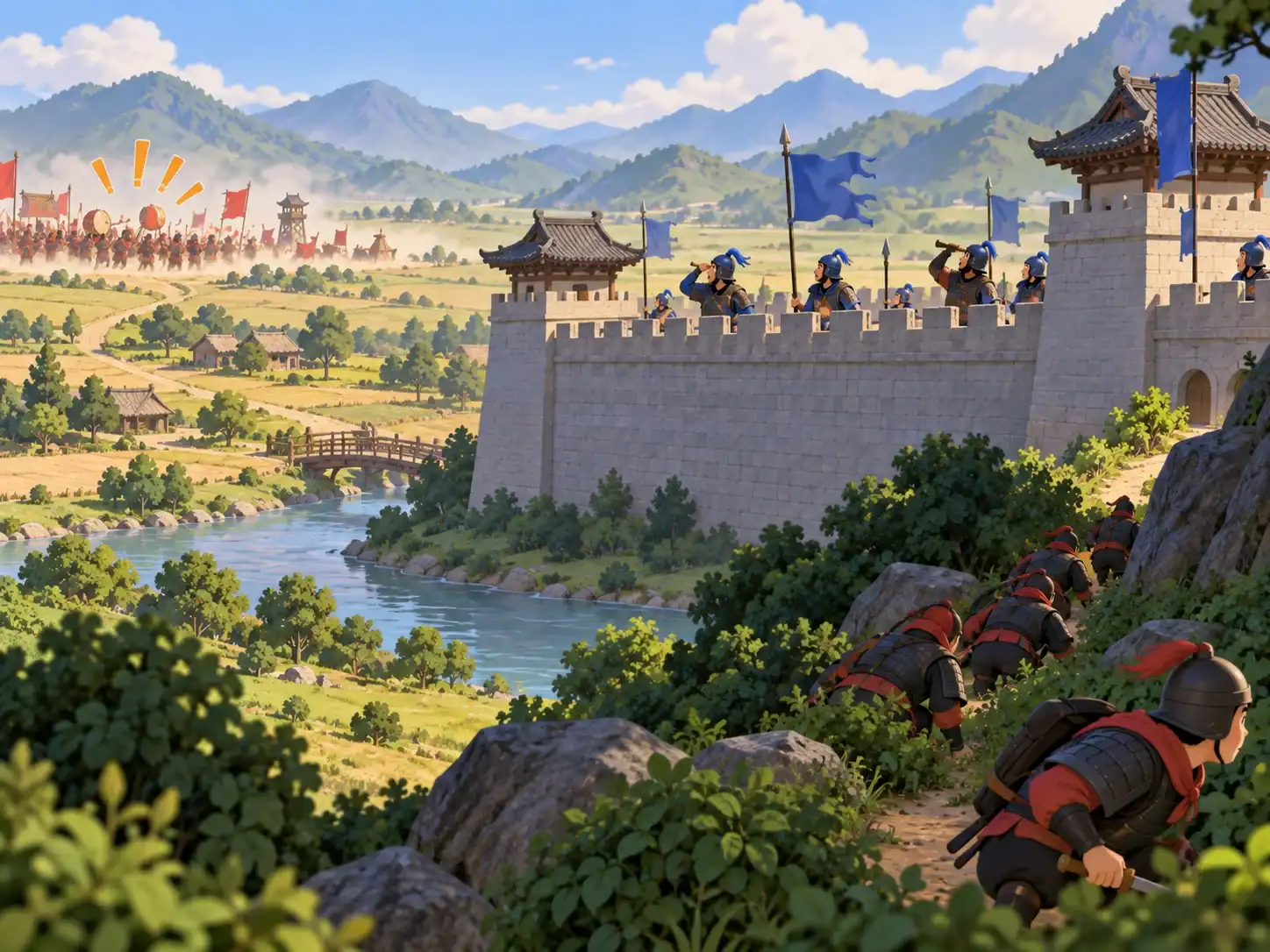
Drums draw the defenders to one side while Zhu Jun's other soldiers quietly move toward the lightly guarded side.
很久以前,有一位将领叫朱儁。他带着军队来到一座城外,想办法攻进城去。城里的守军一直紧紧盯着他们。军队从哪一边来,他们就会赶到哪一边防守。于是,朱儁决定先让他们看错地方。他让士兵在城墙的一边敲起战鼓,摆出马上就要进攻的样子。咚!咚!咚!守军听见鼓声,果然纷纷赶了过去。这正是朱儁想要的。就在大家都盯着那一边的时候,他悄悄带着另一队士兵绕到城的另一边。那里的守军已经少多了。等城里的人发现自己看错了地方时,朱儁的士兵已经找到了机会。后来,人们把这样的办法叫作“声东击西”。“声东击西”字面上是说:在东边制造声势,却去攻西边。不过,“东”和“西”并不一定真的是这两个方向。真正的意思其实很简单:让大家都看这里,真正要做的事,却在那里。
Long ago, a commander named Zhu Jun was trying to enter a walled town. The people defending the town were watching carefully. If his soldiers came from one side, they would hurry there to stop them. So Zhu Jun gave them something very noisy to watch. On one side of the wall, his soldiers beat drums and made it look as if an attack was about to begin. Boom! Boom! Boom! The defenders heard the drums and rushed toward the noise. That was exactly what Zhu Jun wanted. While everyone was looking one way, he quietly led another group of soldiers around to the other side of the town. That side was now lightly guarded. Before the defenders realized what had happened, Zhu Jun’s soldiers had found their way in. This kind of trick became known as shēng dōng jī xī—literally, “make noise in the east, strike in the west.” The words “east” and “west” do not have to mean those exact directions. The idea is simple: Make people look here. Then do what you really planned over there.