清明节:在春天思念祖先
Qingming Festival: Remembering Our Ancestors in Spring
Page 1
清明为什么总在春天?
Why Does Qingming Always Come in Spring?
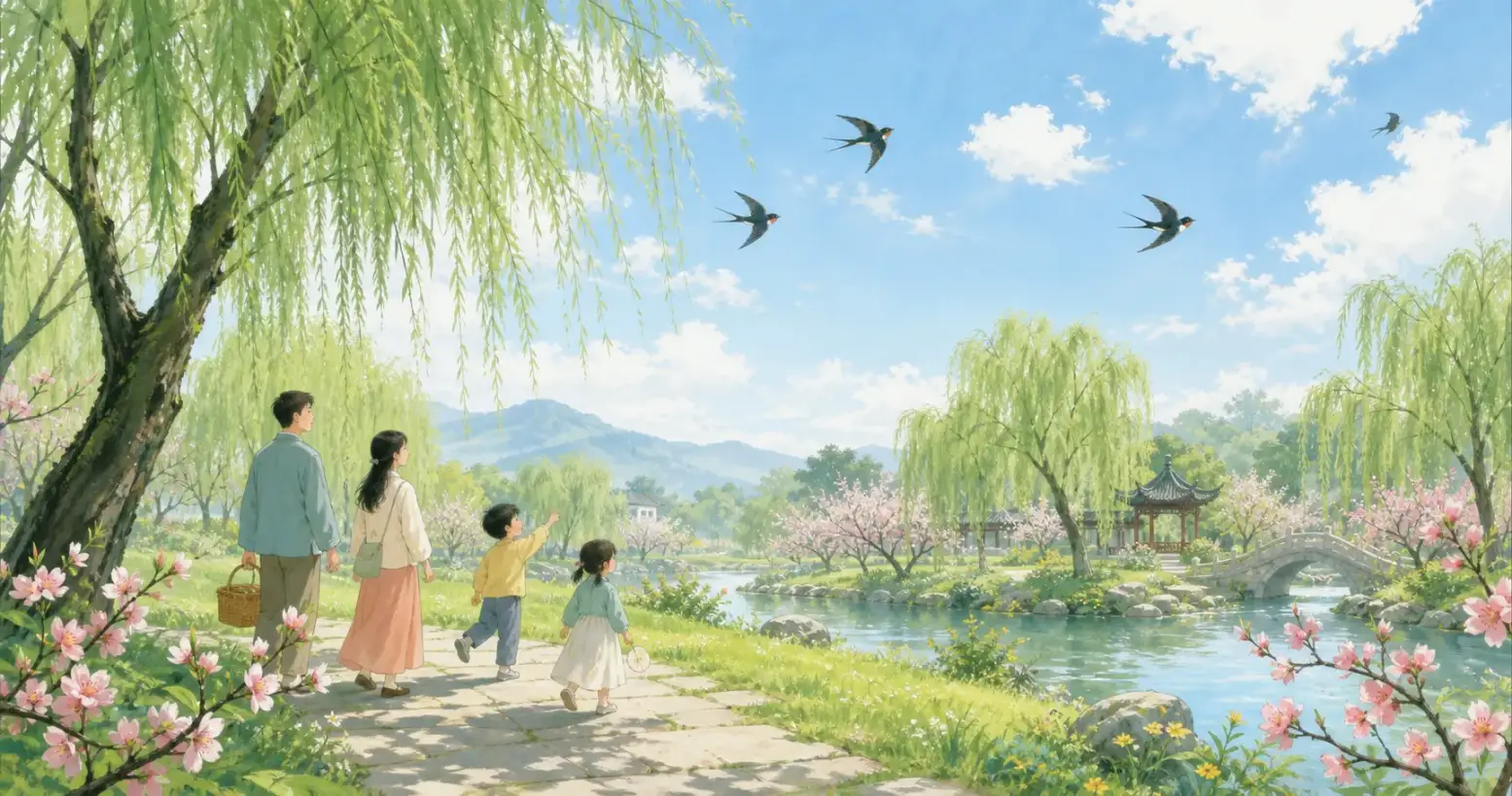
Around Qingming, warmer days bring new leaves and spring flowers.
许多中国节日跟着月亮走,所以每年在普通日历上的日期会变很多。Qīngmíng Jié · 春天祭扫祖先、也会踏青的传统节日。却不一样。它既是节日,也是二十四节气之一,跟着太阳和季节走,通常在四月初到来。
这时候,天气暖了,雨水多了,嫩叶和春花一起出现。过去的农民看见这些变化,就知道春耕越来越忙了。
“清明”有清亮、明净的意思。这个名字听起来,就像雨后刚刚洗过的春天。
Many Chinese holidays follow the moon, so their dates move widely on an everyday calendar. Qīngmíng Jié · 清明节 · A spring festival associated with visiting ancestors' graves and enjoying the outdoors. is different. It is both a festival and one of twenty-four dates that divide the year by season. It follows the sun, usually arriving in early April.
By then, the air is warmer, more rain is falling, and new leaves and flowers are appearing. For farmers long ago, these changes meant that the busy spring growing season had arrived.
The name Qingming Festival suggests something clear and bright. It sounds like spring just after the rain.
Page 2
带一束花去看望家人
Bringing Flowers to Remember Family
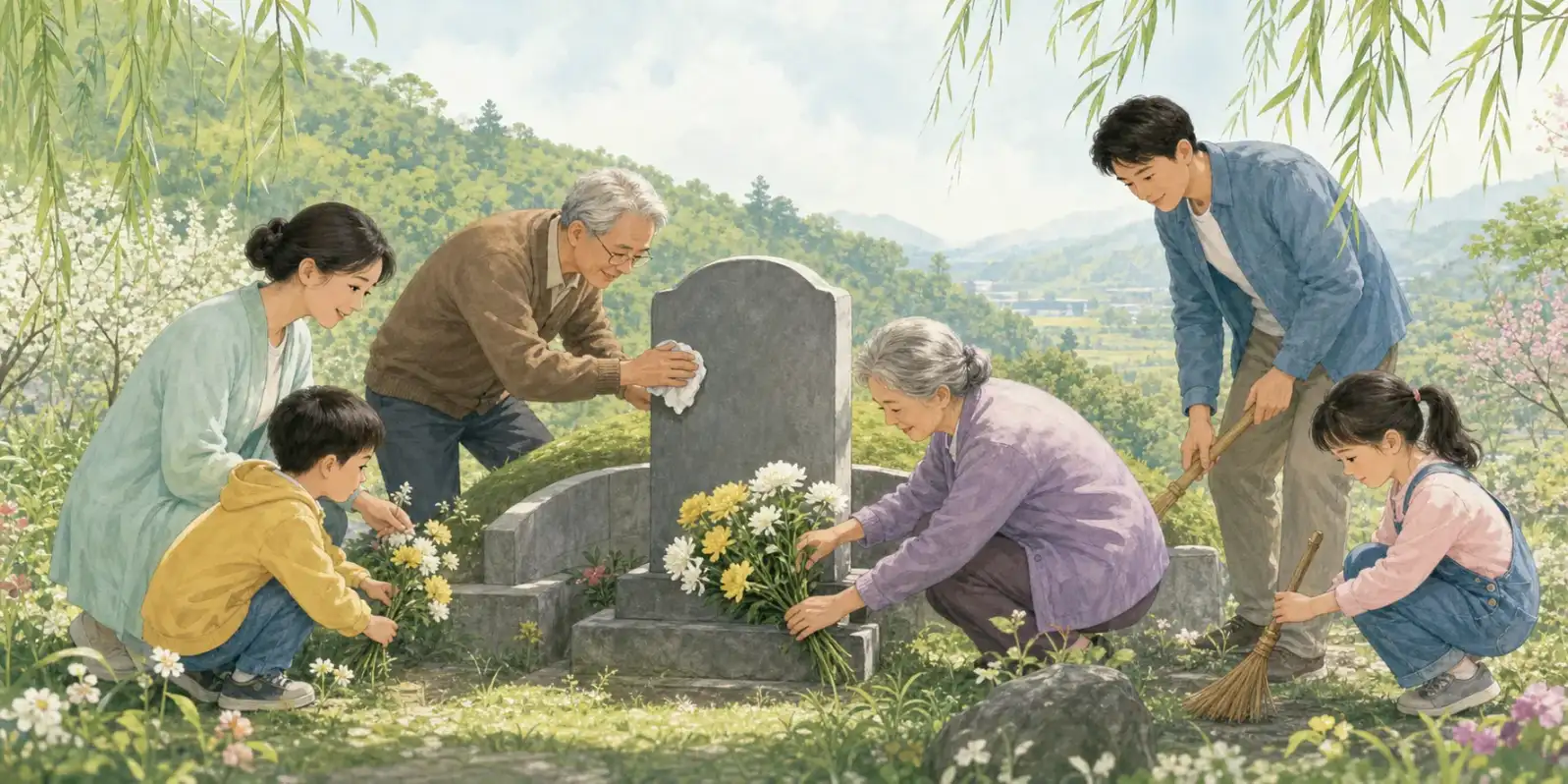
At Qingming, many families tidy graves and leave flowers as they remember loved ones who have died.
清明一开始只是一个告诉人们春天到了的节气。清明前一两天,古人还有一个叫“寒食节”的日子。那时候,人们已经会在春天去亲人的墓前祭拜。寒食和清明挨得很近,大家常常连着过。一千二百多年前的Táng cháo · 618年至907年的中国朝代。,皇帝还正式准许人们在这几天去扫墓。后来,寒食节渐渐不再单独庆祝,扫墓便成了清明的重要习俗。
今天,许多家庭会在清明祭扫已经离世亲人的墓地。他们清理落叶和杂草,擦一擦墓碑,再放上一束花。
孩子也许从来没有见过长眠在这里的家人。于是,大人会讲起过去:太爷爷喜欢唱什么歌,奶奶小时候住在哪里,谁做的面条最好吃。听完这些故事,孩子也能知道这位家人从前是什么样的人。
Qingming began as a date that marked the arrival of spring. A day called the Cold Food Festival came just before it. Long ago, families were already visiting their ancestors' graves at that time of year. The two days were so close that people began to observe them together. More than 1,200 years ago, during the Táng cháo · 唐朝 · The Chinese dynasty that lasted from 618 to 907., the emperor officially allowed families to visit graves during these spring holidays. Over time, the Cold Food Festival became less important on its own, and tomb sweeping became part of Qingming.
Today, many families visit the graves of loved ones at Qingming. They clear away leaves and weeds, wipe the gravestone, and leave flowers.
A child may never have met the family member buried there. So the adults share stories: which songs a great-grandfather loved, where Grandma lived as a girl, or who made the best noodles. After hearing the stories, the child knows a little about what that family member was like.
Page 3
安静之后,去踏青
After Remembering, a Spring Walk
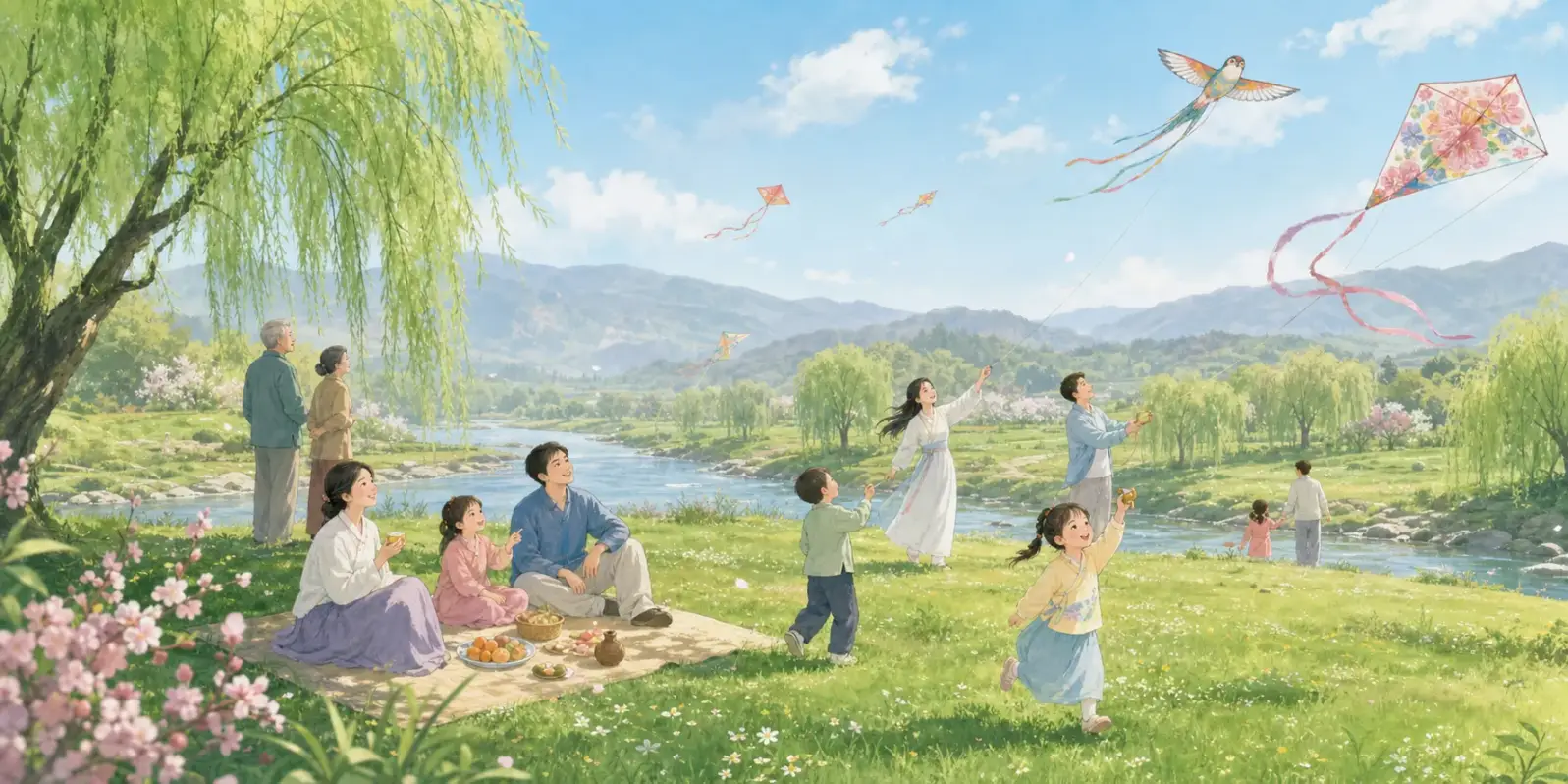
After remembering family, people may walk into the spring fields, where children run and fly kites among new grass, willows, and flowers.
清明还有一个看起来很不一样的习俗:tàqīng · 春天到郊外散步、游玩的传统活动。,也就是到户外走一走,看看春天。
为什么纪念亲人的日子里还有春游?因为清明本来就落在万物生长的季节。家人祭扫以后,常常顺路走进田野,看看新草、柳树和花,也让孩子们跑一跑、放放风筝。
春风本来看不见,可一只风筝升起来,拉紧长线,忽高忽低,风好像忽然有了形状。
过去有些地方流传着一个习俗:人们会剪断风筝线,让烦恼跟着风筝飞远。今天可不能随便这样做,掉下来的风筝和线可能缠住树木或伤到动物。
让风筝平安回到手里更好。回家的路上,一家人还可以继续讲刚刚在墓前想起的老故事。思念和春天并不冲突:一个让人记得从前,一个提醒人们新的生命还在长出来。
Qingming has another custom that may seem very different: tàqīng · 踏青 · A spring outing or walk outdoors to enjoy the new season., a walk outdoors to enjoy spring.
Why take a spring outing on a day for remembering loved ones? Qingming arrives just as the world is growing again. After visiting a grave, families may walk through fields, look at new grass, willow trees, and flowers, and give children room to run and fly kites.
Wind is invisible, but when a kite climbs, pulls its string tight, and swoops through the air, the wind suddenly seems to have a shape.
In the past, some people followed a custom of cutting the string and letting their worries fly away with the kite. Today, that is not a safe idea. Loose kites and strings can tangle in trees or hurt animals.
It is better to bring the kite safely home. On the walk back, the family can keep telling the old story they remembered at the graveside. Remembering and springtime can belong to the same day: one looks back at the people who came before us, while the other shows new life growing all around us.
Page 4
青团为什么是绿色的?
Why Is Qingtuan Green?
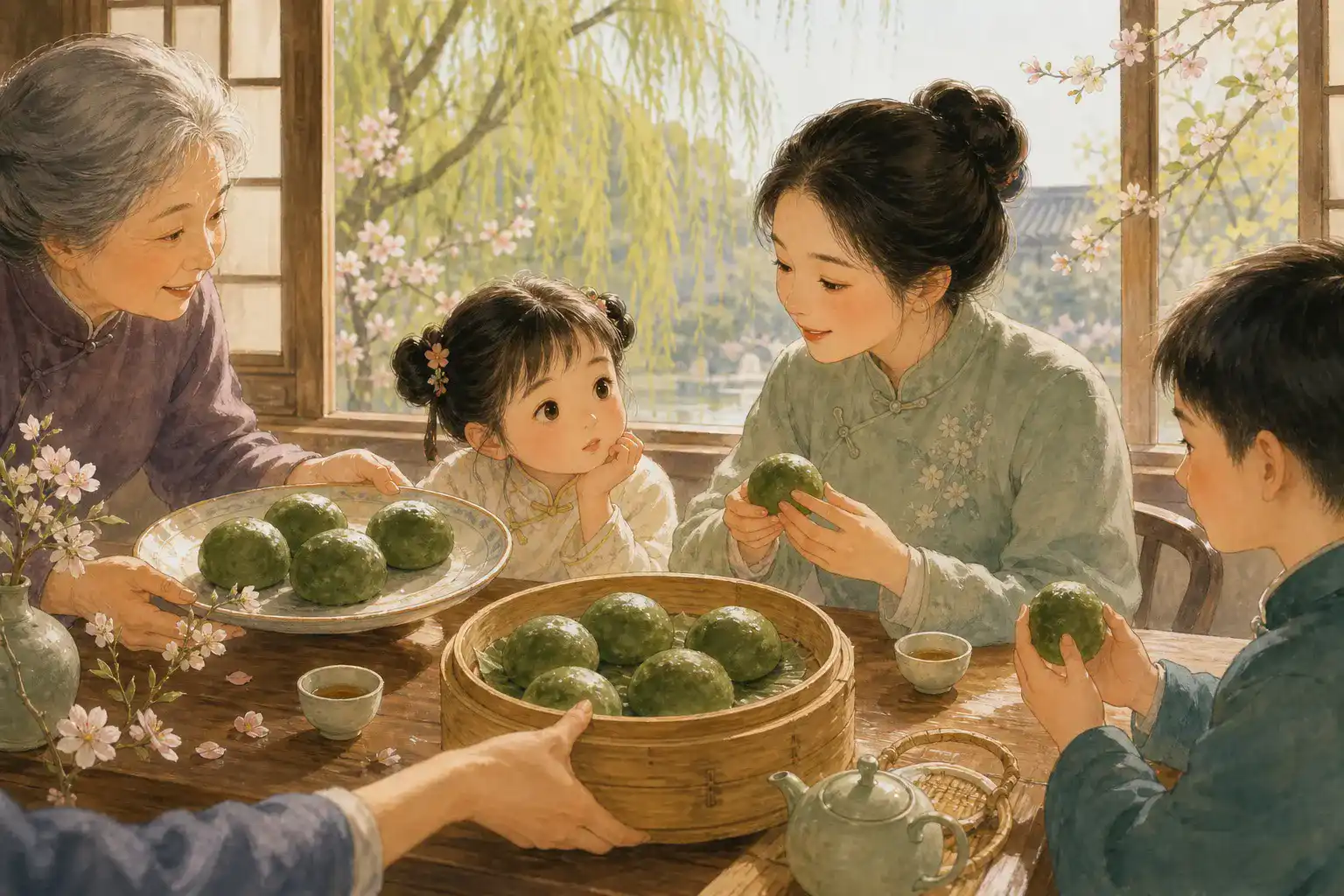
Qingtuan dough is colored with juice from green spring plants, then wrapped around sweet or savory filling.
踏青回家以后,清明还会把春色带到餐桌上。在Cháng Jiāng · 中国最长的河流。下游的一些地方,清明前后会出现一种像小绿球的点心,叫qīngtuán · 清明前后常见的绿色糯米点心。。
它的外皮用糯米粉做成。人们把艾草等春天植物的汁揉进面团,所以它不是在外面涂了绿色颜料,而是从里到外都带着春天的颜色和淡淡草香。
青团可以包红豆沙,也可以包咸蛋黄、肉松或别的馅。过去它还曾被用来祭祖;今天,许多人把它当作只有春天才特别想吃的点心。
After the spring outing, Qingming brings the season to the table, too. In parts of eastern China, a snack shaped like a little green ball appears around Qingming. It is called qīngtuán · 青团 · A green glutinous-rice treat often eaten around Qingming..
Its soft wrapper is made with sticky rice flour. Juice from spring plants such as mugwort is mixed into the dough. The green is not painted on the outside—the whole wrapper carries the color and light herbal smell of spring.
qingtuan may be filled with sweet red bean paste, salted egg yolk, savory meat, or other fillings. Long ago, it was also used as an offering to ancestors. Today, many people enjoy it as a treat that belongs especially to spring.