
郑和与七次远航
Zheng He and the Seven Great Voyages
Page 1
皇帝选中了郑和
The Emperor Chose Zheng He
六百多年前,中国还在Míng cháo · 1368年至1644年的中国朝代。的时候,许多水手和商船已经在印度洋上来来往往。Zhèng Hé · 明代率领船队七次远航的航海家。不是第一个驶过这片大海的人。他出名,是因为他带领皇帝的大船队,完成了七次漫长的海上旅行。
郑和站上大船的甲板以前,皇帝已经认识他很多年。皇帝看过他在军队里做事,也看过他接下难办的任务,在危险中保持冷静。他知道自己可以信任郑和。
所以,皇帝决定派一支大船队穿过海洋时,选择了郑和来带领它。这是一份巨大的任务:带着成千上万人远离家乡,再把他们平安带回来。
前面的事情和郑和从前做过的都不一样。它会从一个铺满船帆的港口开始。
More than six hundred years ago, during China's Míng cháo · 明朝 · The Chinese dynasty that lasted from 1368 to 1644., sailors and trading ships were already crossing the Indian Ocean. Zhèng Hé · 郑和 · The Ming admiral who led seven great voyages across the Indian Ocean. was not the first person to sail those waters. He became famous because he led the emperor's great fleet on seven long voyages.
Before Zheng He ever stood on the deck of a great ship, the emperor had known him for years. He had watched Zheng He serve in the army, take on hard jobs, and stay calm in danger. He knew he could trust him.
So when the emperor decided to send a great fleet across the ocean, he chose Zheng He to lead it. It was a huge job: lead thousands of people far from home and bring them safely back again.
The work ahead was unlike anything Zheng He had done before. It would begin in a harbor filled with sails.
Page 2
港口升起无数船帆
The Day the Harbor Filled with Sails
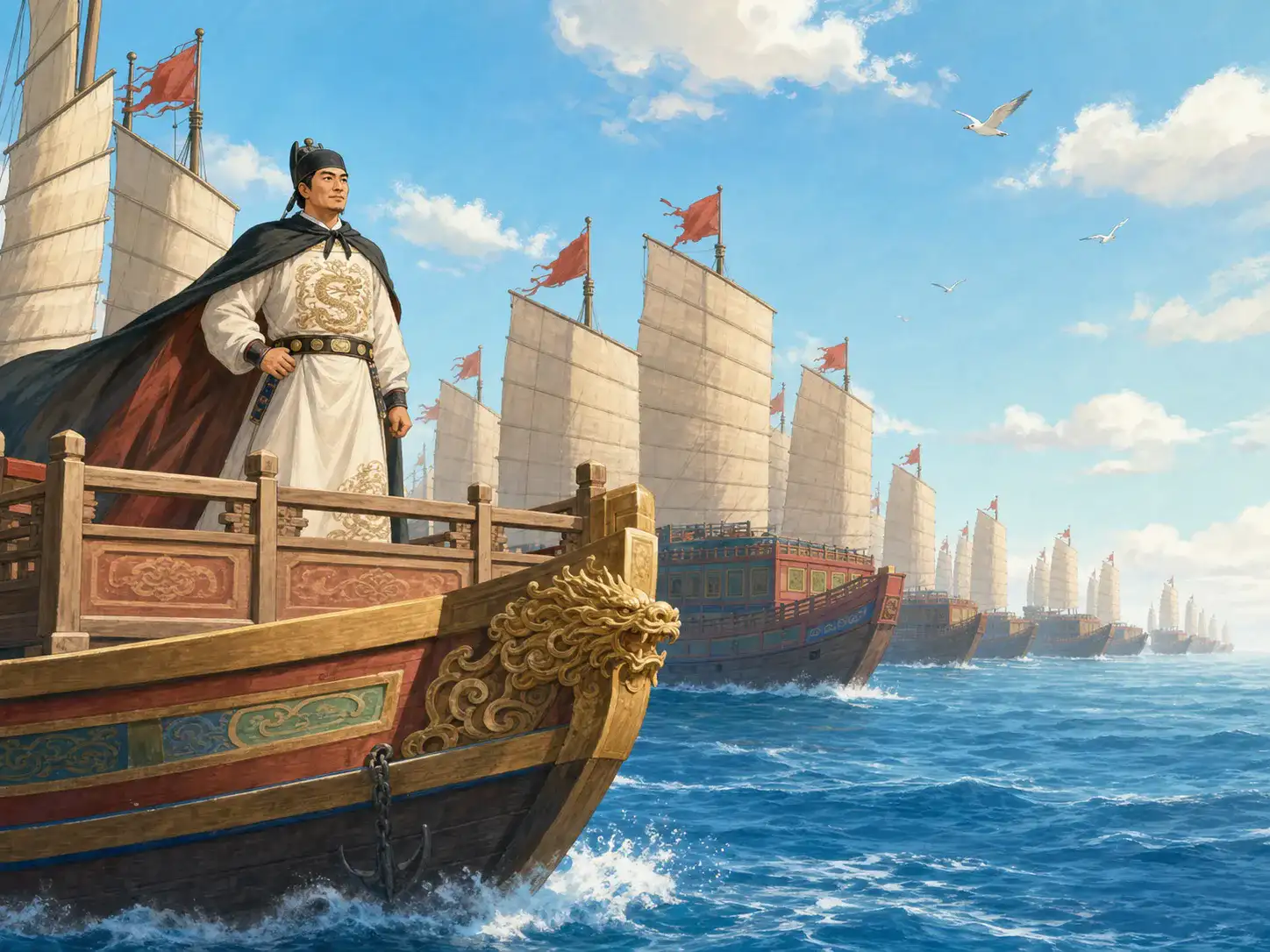
Sail after sail rises as Zheng He's fleet prepares to leave.
出发的日子终于到了。船队还没有动,港口里已经到处是声音。水手们拉紧绳子,工人把一袋袋米、一罐罐淡水、工具和礼物搬上船。一张船帆升起来,接着又是一张。很快,船帆仿佛铺满了整个港口。
这些船并不全都一样。有的装粮食和水,有的运送马匹和礼物,有的载着士兵,还有的带着修船的工具和工人。它们合在一起,就像一座漂在海上的城。
郑和后来一共带领了七次海上长路。船队到达一个又一个繁忙的港口,那里早已有水手和商船来来往往。大海不是一块等着郑和去“发现”的空地方。它早就是一条路,只不过,这条路是用水铺成的。
At last, the day came to leave. The fleet had not moved yet, but the harbor was already full of noise. Sailors pulled ropes tight. Workers carried sacks of rice, jars of fresh water, tools, and gifts onto the ships. One sail rose, then another, and another. Soon, sails seemed to fill the whole harbor.
The ships were not all the same. Some carried food and water. Some carried horses and gifts. Some carried soldiers. Other ships carried tools and workers who could fix whatever broke. Together, they were like a town floating on the sea.
Zheng He would lead seven great journeys. His fleet sailed into one busy port after another, where sailors and trading ships were already coming and going. The ocean was not an empty place waiting for Zheng He to “discover” it. It was already a road—only this road was made of water.
Page 3
大海上没有路
No Roads on the Ocean
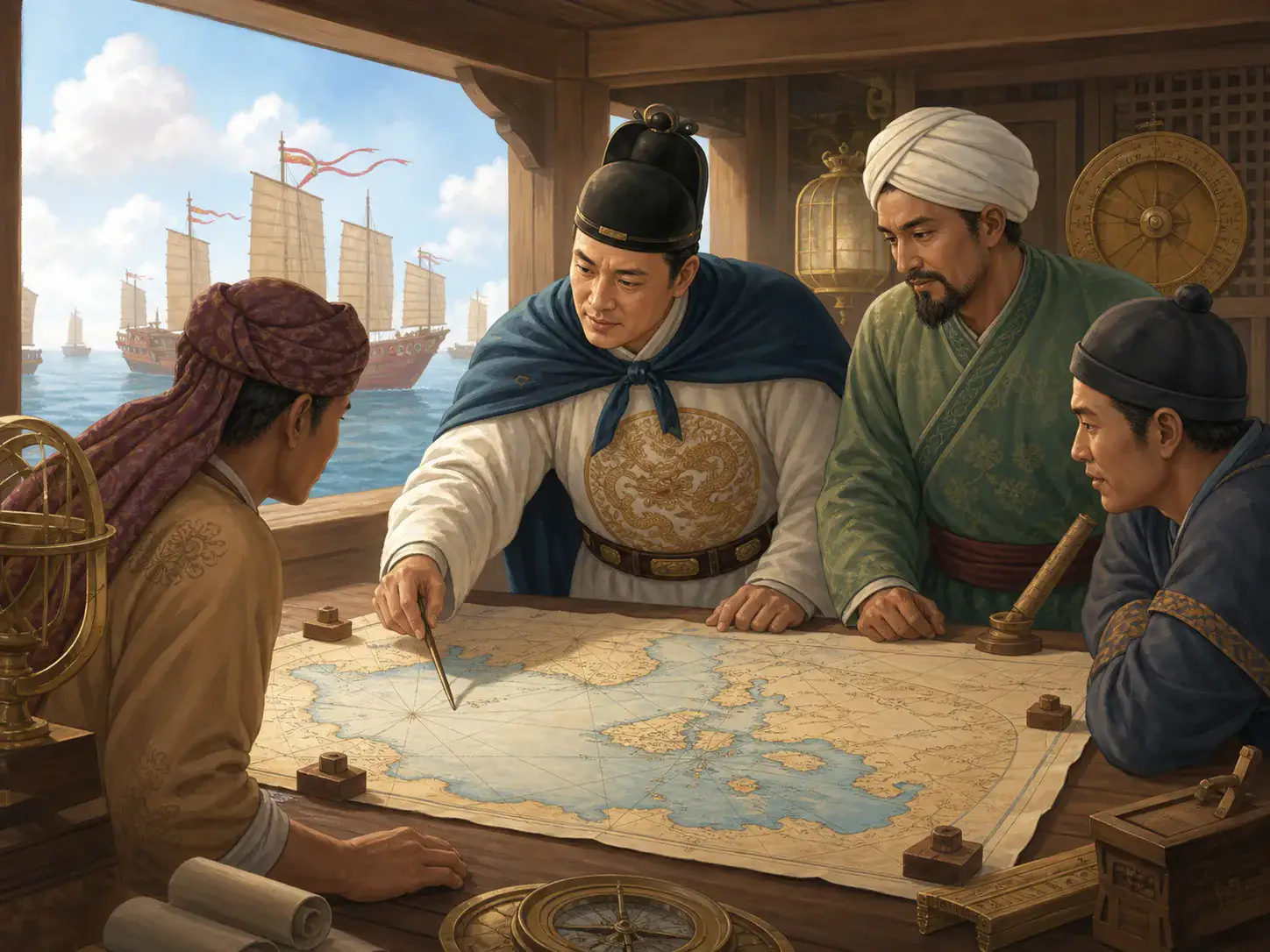
Zheng He and his crew plan the long journey ahead.
陆地消失在身后以后,前面只剩下海和天。大海上没有道路,也没有写着“这边走”的牌子。
有时,风正好把船帆吹得鼓鼓的;有时,风却把船往错误的方向推。船员靠近陆地时观察海岸,到了远海就用指南针认方向。他们还要测量水深,请熟悉附近海面的水手帮忙。
认路还只是一种麻烦。几万人每天都要吃饭、喝水。水手可能生病,船帆可能破,船板也可能漏水。一场风暴还可能把船吹散。要让这么多船平安回家,需要成千上万的人一起做事。
有人负责认路,有人会说不同的语言,有人照顾病人或修补船帆。还有人做饭、拉绳子、守在船头寻找陆地。郑和带领船队,可他从来不是一个人在大海上航行。
Once the land disappeared behind them, there was only sea and sky. The ocean had no roads and no signs that said, “This way.”
Some days, the wind filled the sails and pushed the ships forward. On other days, it tried to send them the wrong way. Near land, the crews watched the coast. Farther out, they used compasses to find their way. They checked how deep the water was and listened to sailors who knew the nearby seas.
Finding the way was only one problem. Thousands of people needed food and water every day. Sailors could become sick. Sails could tear. Ships could leak. A storm could scatter the fleet. Bringing so many ships home took thousands of people working together.
Some found the way. Some spoke other languages. Some cared for the sick or fixed torn sails. Others cooked meals, pulled ropes, and watched for land. Zheng He led the fleet, but he never sailed alone.
Page 4
让所有人抬头的长颈鹿
The Giraffe That Made Everyone Look Up
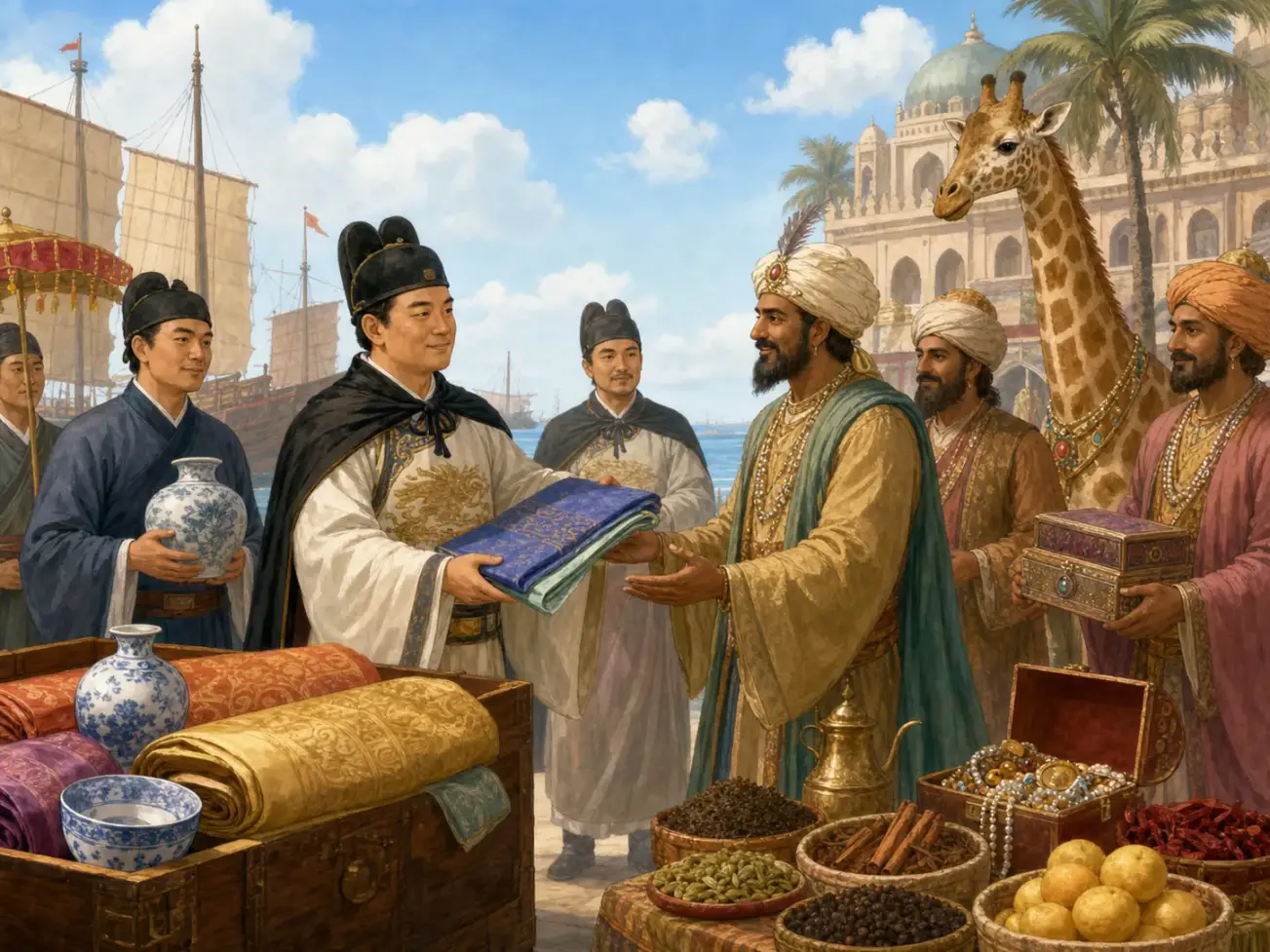
The fleet carried gifts abroad and brought new things home.
每到一个港口,码头上都会响起不同的语言,市场里也有从未见过的东西。船队带去丝绸、漂亮的碗和杯子,还有许多礼物;回家时,又带回香料、宝石和远方的动物。
最让人吃惊的一件礼物,是一只长颈鹿。它一走进人群,大家全都抬起了头。其实也不是所有人都要抬头——长颈鹿自己就不用。
皇宫里有些人把它和古老故事里的麒麟联系在一起。长颈鹿当然没有变成另一种动物。人们只是用自己熟悉的故事,去认识眼前从未见过的东西。
可是,并不是每一次见面都很快乐。船队也带着武器和士兵。郑和有时会使用武力,还有人被抓回中国。对岸上的人来说,远处出现的大片船帆可能带来礼物和新朋友,也可能带来危险。
At every port, different languages filled the docks, and the markets were full of things the sailors had never seen. The fleet carried silk, fine bowls and cups, and other gifts. It came home with spices, jewels, and animals from faraway places.
One gift made everyone look up: a giraffe. As it walked through the crowd, its long neck rose above every head. Well, almost everyone had to look up. The giraffe did not.
At the Chinese palace, some people said the animal reminded them of the qilin, a lucky creature from old stories. The giraffe had not turned into a storybook animal. People were using a story they knew to understand something they had never seen before.
But not every meeting was peaceful. The fleet also carried weapons and soldiers. Zheng He sometimes used force, and people were taken back to China as prisoners. To someone watching from shore, those faraway sails might bring gifts and new friends. They might also bring danger.
Page 5
大船帆消失以后
When the Great Sails Disappeared
郑和一次又一次穿过大海,又一次又一次回到家。可是,第七次海上长路以后,这样巨大的船队不再出发了。
造那么多船、准备那么多粮食,还要让几万人一起出发,需要花很多钱,也需要很多人工作。后来的皇帝有了别的计划,把更多心思放在北方的战争和家门口的问题上。
Again and again, Zheng He crossed the ocean and came home. But after the seventh journey, giant fleets like his did not sail again.
Building so many ships, gathering so much food, and sending thousands of people to sea cost a great deal. Later emperors had other plans. They turned more of their attention to wars in the north and problems closer to home.
水铺成的路还在
The Road Made of Water Remained
巨大的船帆慢慢从海面上消失了。可是,海上的生活没有停下来。商船和渔船仍然从一个港口驶向另一个港口,水手们也继续出海。
皇帝的大船队结束了。那条用水铺成的路,却一直都在。
The great sails slowly disappeared from view, but life on the ocean did not stop. Trading ships and fishing boats still traveled from port to port. Sailors kept going to sea.
The emperor's great fleet was gone. The road made of water remained.