
李时珍和那本写了二十七年的大书
Li Shizhen and the Book That Took Twenty-Seven Years
Page 1
书上写的,就一定对吗?
What If the Book Was Wrong?
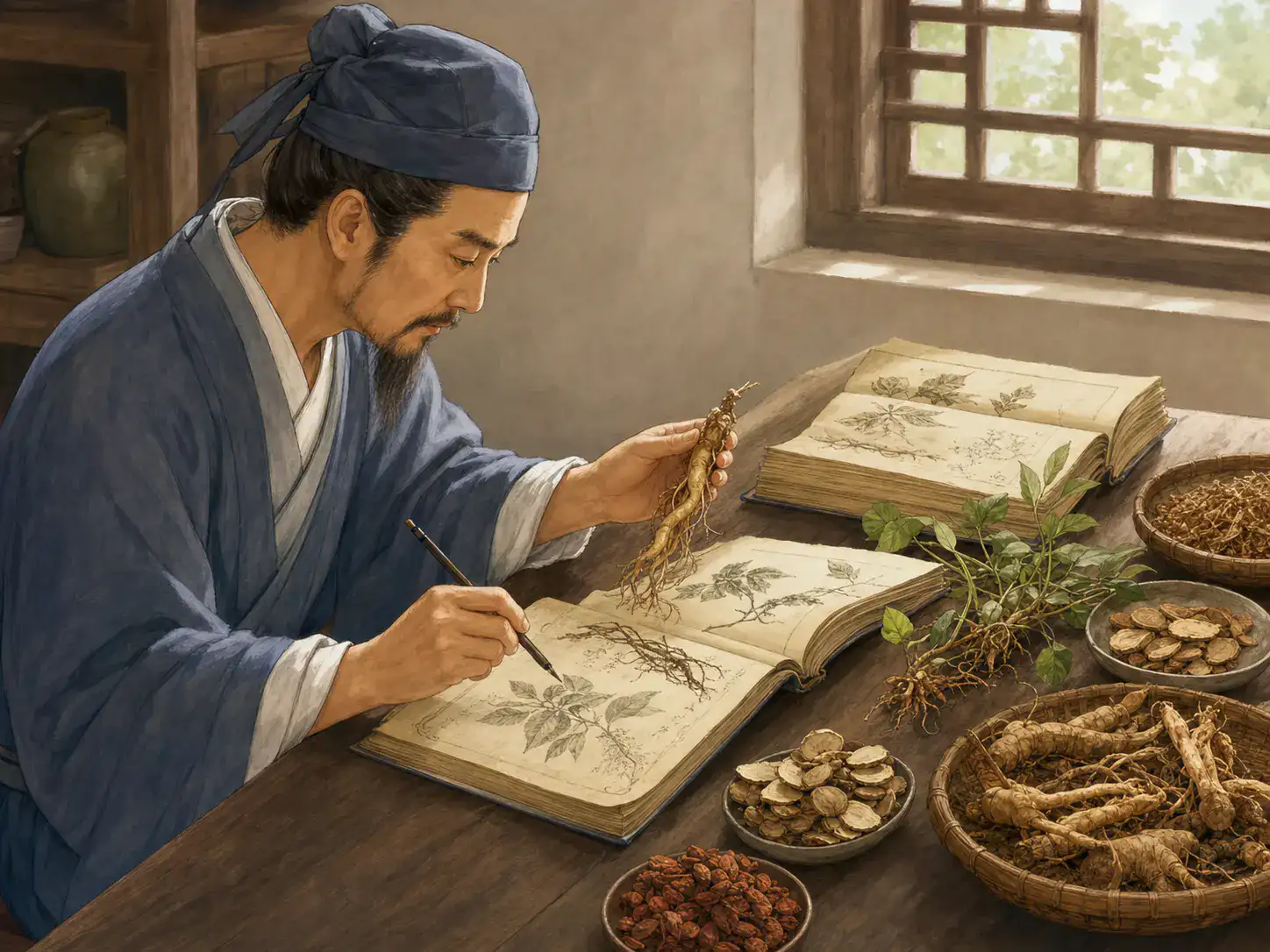
Li Shizhen compares a plant with the pictures in his books.
Lǐ Shízhēn · 明代医药学家,《本草纲目》的作者。在医生家庭里长大。小时候,他常常看见父亲帮助生病的人,也读了许多讲药的书。
可是,书看得越多,他发现的问题也越多。同一种东西,有时在两本书里用了不同的名字;有些图画和文字对不上;还有一些说法,已经传了很久,却不一定正确。
书上白纸黑字写着,难道也会错吗?
李时珍的答案很简单:会。所以,他决定再查一遍。
Lǐ Shízhēn · 李时珍 · The Ming medical scholar who compiled the Bencao Gangmu. grew up in a family of doctors. As a boy, he watched his father help sick people. He also read many books about medicine.
The more Li read, the more problems he found. Two books might use different names for the same thing. A picture might not match the words beside it. Some ideas had been copied for years without anyone stopping to ask whether they were right.
Could a book be wrong even when the words were written neatly in black ink?
Li Shizhen's answer was simple: yes. So he decided to check again.
Page 2
考试没有带他走上那条路
The Exams Led Somewhere Else
李时珍年轻时也参加过考试,希望得到一份受人尊敬的工作。他第一次考试通过了,后来却接连三次没有成功。
失败当然不好受,可它也把李时珍带回了自己最熟悉的地方。他跟着父亲学习,开始为病人看病,也花越来越多的时间仔细查看那些让他不放心的旧书。
有些人遇到三次失败,会觉得门已经关上了。李时珍却换了一条路。那条路最后通向了一本非常大的书。
As a young man, Li Shizhen took exams and hoped to earn a respected job. He passed the first exam, but he failed the next level three times.
Failure did not feel good, but it led Li back to the work he knew best. He studied with his father, began caring for patients, and spent more and more time looking into the old books that troubled him.
Some people might see three failures and think every door had closed. Li Shizhen chose another road. It led to a very large book.
Page 3
他出门寻找答案
He Went Looking for Answers

Li Shizhen carries a basket as he looks closely at plants.
有些问题,坐在书桌前怎么也找不到答案。李时珍去看真正的植物和其他做药的东西,也去问采药的人和熟悉土地的农民。
同一种植物,在不同地方可能有不同的名字。药铺里的一段干根,也可能和书上的图完全不像。李时珍把它们放在一起比较,再问几个问题,然后回去修改笔记。
一年又一年,他的笔记越堆越高。每找到一个答案,好像又会冒出一种没见过的东西、一本没读过的旧书,或者一个新的问题。
Some puzzles could not be solved at a desk. Li went to look at real plants and other things people used as medicine. He talked to people who gathered plants and to farmers who knew the land.
The same plant might have different names in different places. A dried root in a medicine shop might look nothing like the picture in a book. Li compared them, asked more questions, and then went back to change his notes.
Year after year, his notes grew into taller stacks. Every answer seemed to bring one more unfamiliar thing, one more old book, or one more question.
Page 4
将近一千九百种东西
Almost 1,900 Things
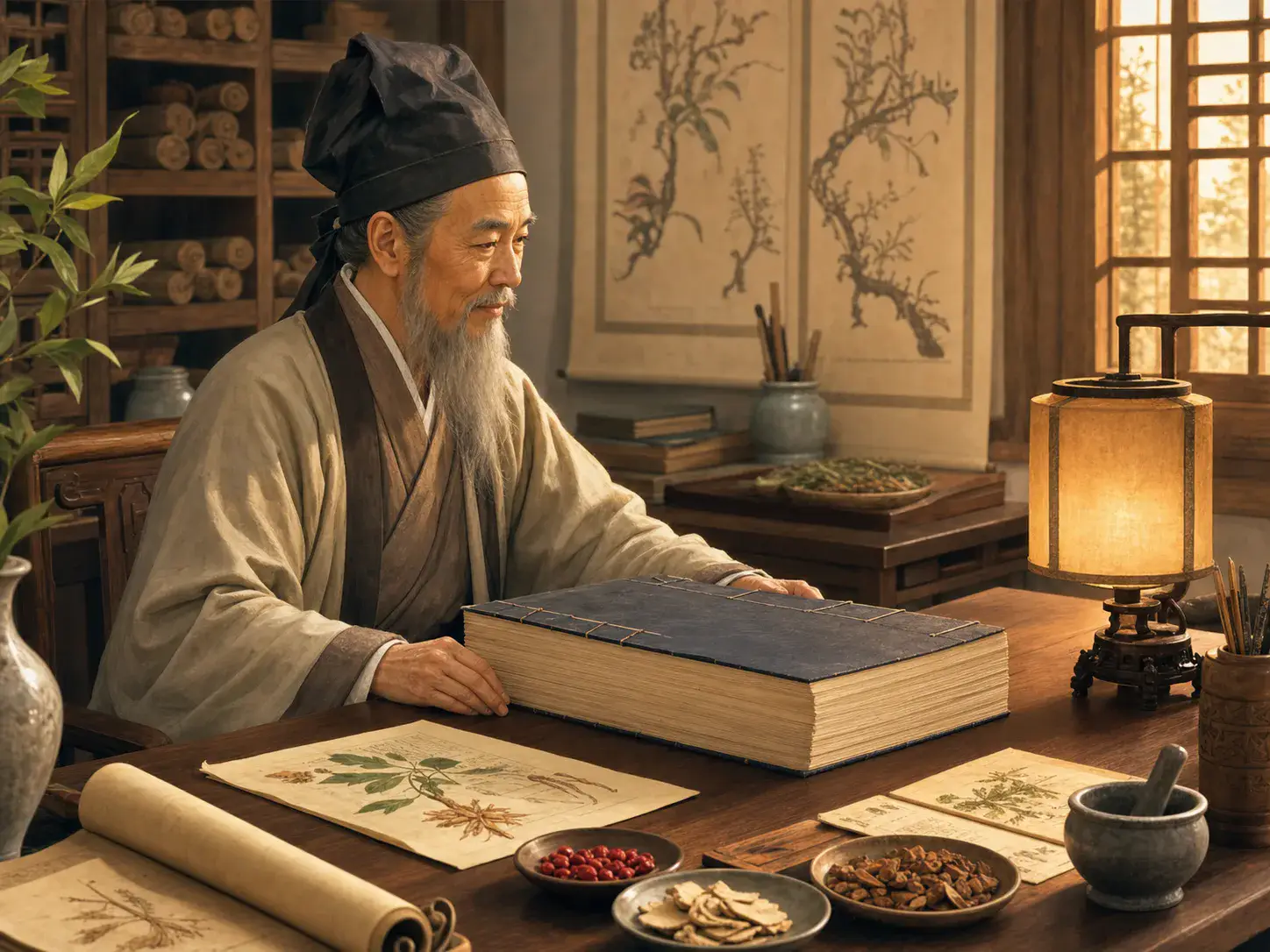
Li Shizhen spent years turning his growing notes into a whole set of books.
大约二十七年以后,李时珍终于写完了这部大书的第一版。他把它叫作《本草纲目》。书名只有四个字,里面却有将近一千九百项内容。
树根和叶子只是开头,后面还有动物、贝壳、石头、金属、食物和其他材料。每一项都要回答一长串问题:它叫什么?长什么样?以前的书怎么说?那些书有没有互相打架?
李时珍把找到的答案分门别类,写满了许多册。二十七年过去,书终于写完了——可是,想让别人读到它,还有一件很难的事没有完成。
After about twenty-seven years, Li finally finished the first version of his enormous work. He called it Bencao Gangmu. The title was only four Chinese characters long, but inside were almost 1,900 entries.
Roots and leaves were only the beginning. Its pages also held animals, shells, stones, metals, foods, and many other materials. Each entry tried to answer a long list of questions: What is it called? What does it look like? What did older books say? Did those books disagree?
Li sorted the answers into a whole set of books. After twenty-seven years, the writing was finally done—but one very difficult job still stood between the book and its readers.
Page 5
写完了,还没有做完
Written—but Not Yet Printed
那时没有按一下按钮就能吐出书页的机器。工匠要把一页页文字刻在木板上,刷上墨,再把纸压上去。这样大的一套书,需要有人愿意花许多时间和钱来印。
李时珍找了很多年,终于有一位南京的出版者开始刻印。可是书还没有印好,李时珍就在1593年去世了。他的家人继续完成这件事。他的几个儿子参与准备书里的图画,其中一个儿子后来把印好的书送到了朝廷。
1596年,李时珍去世三年以后,第一版终于印了出来。后来,它传到日本,又在更晚的时候传到欧洲。新的读者翻译它、加上笔记,也争论书里的说法。这部大书再也没有安静地待在一个书架上。
There were no machines that could spit out pages at the push of a button. Workers carved each page into a wooden block, brushed it with ink, and pressed paper onto it. A set this large needed a printer willing to spend a great deal of time and money.
Li searched for years before a publisher in Nanjing began the job. But Li died in 1593, before the printing was finished. His family kept the project moving. Several of his sons helped prepare the pictures, and one son later carried a printed copy to the emperor's court.
In 1596, three years after Li's death, the first edition finally appeared. It later traveled to Japan and, much later, to Europe. New readers translated it, added notes, and argued with its ideas. The enormous book did not stay quietly on one shelf.
他没有拿到的书
The Book He Never Held
李时珍从没有把印好的《本草纲目》拿在手里。
可是1596年,有人第一次翻开了它。接着,又有一个人翻开它。四百多年以后,仍然有人在翻开它。
Li Shizhen never held the finished, printed book in his hands.
But in 1596, someone opened it for the first time. Then someone else did. More than four hundred years later, people are still opening it.