
唐代长安:远方的东西来到这里以后
Tang Chang'an: When New Ideas Came to Town
Page 1
从远方来的音乐
A Tune from Far Away
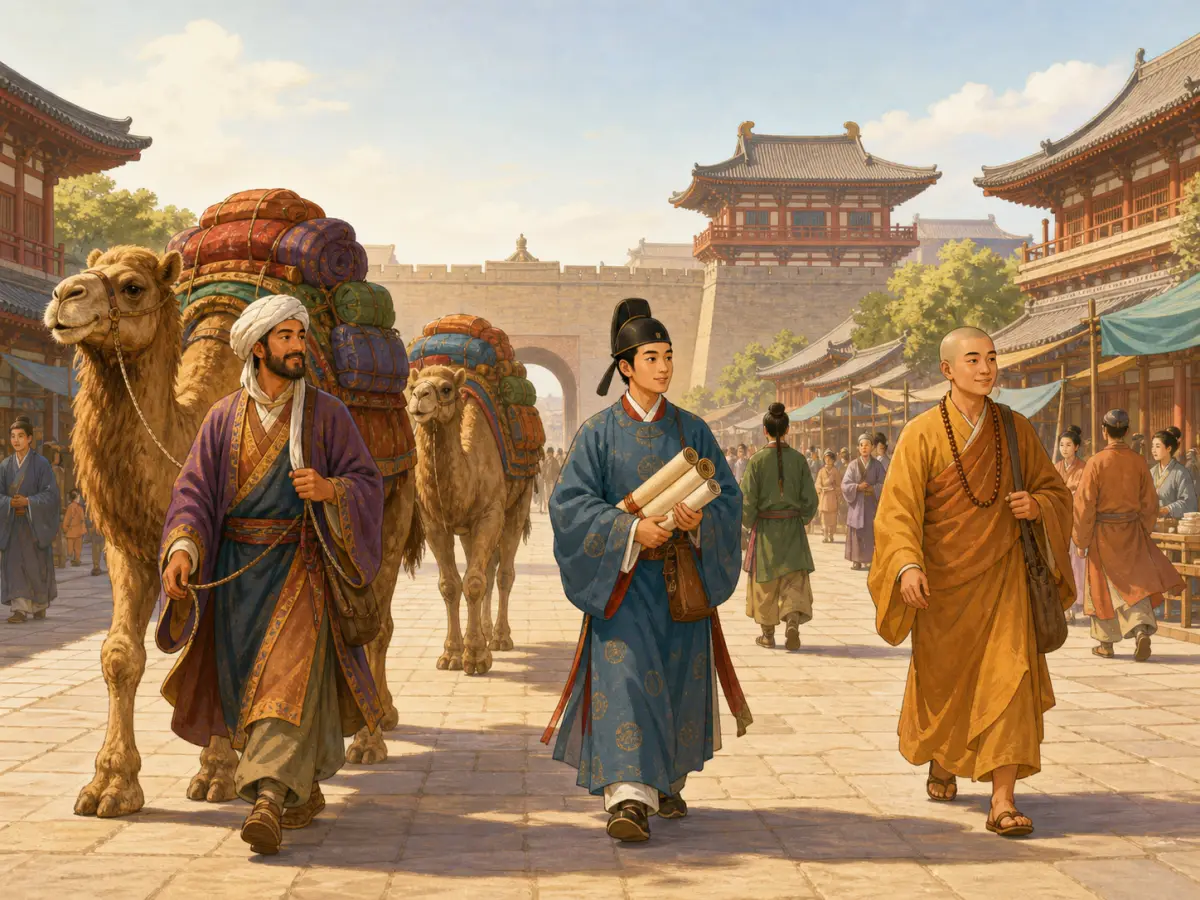
Travelers from different places enter a Chang'an street with camels and bundles.
大约一千三百年前,Cháng'ān · 中国古代都城,位置在今天的西安。是Táng cháo · 618年至907年的中国朝代。的都城,也是当时世界上最大的城市之一。来自中亚的商人、从印度和西域来的僧人,还有朝鲜半岛和日本的使者、学生,都曾来到这里。
他们带来的不只是货物,还有语言、音乐、衣服、游戏、宗教和各种做东西的方法。
音乐就是最容易听见的变化之一。唐代的人很喜欢来自中亚的乐曲和舞蹈。有一种著名的“胡旋舞”,舞者会快速旋转。远方来的音乐和舞蹈进入宫廷和贵族生活以后,渐渐变成唐代人熟悉的娱乐。
一样东西从很远的地方来到长安,时间久了,就不一定还让人觉得“陌生”。它已经进入了唐人的生活。
About 1,300 years ago, Cháng'ān · 长安 · An ancient Chinese capital located in present-day Xi'an. was the capital of the Táng cháo · 唐朝 · The Chinese dynasty that lasted from 618 to 907. and one of the largest cities in the world. People came there from many directions: merchants from Central Asia, monks from India, envoys and students from Korea and Japan, and travelers from lands even farther west.
They did not arrive empty-handed. Some brought goods. Others brought languages, music, clothes, games, religious beliefs, and ways of making things.
One of the easiest places to notice this was music. Tang people became fascinated by tunes and dances from Central Asia. The famous Sogdian whirling dance spun dancers rapidly around the floor. New musical styles and instruments became fashionable at court and among wealthy families.
After a while, something that had arrived from far away did not always feel so far away anymore. It had become part of Tang life.
Page 2
靴子、马球和一只新样子的杯子
Boots, Polo, and a New Kind of Cup

A merchant from afar shows Chang'an shoppers vessels in different shapes and patterns.
变化不只发生在音乐里。唐代一些男女喜欢穿方便骑马的高靴和窄袖衣服,这些时尚受到中亚和更西边地区的影响。骑在马上挥杆追球的马球也非常流行。这个游戏有远方的来历,可到了唐代,中国人已经玩得非常热闹。
连一只喝酒的杯子,也能讲这样的故事。中亚的粟特商人很会做长途生意,也帮助葡萄酒和新的饮酒习惯在唐代流行起来。中国工匠看到来自粟特地区的器物以后,也做出了带有相似形状的金银杯,有的杯身鼓鼓的,旁边还带着一个圆环形把手。
工匠并不是把远方的东西原封不动地复制一遍。他们会用自己的材料和手艺,再做出新的样子。
这就是唐代最有意思的地方之一。一个新的想法进入城市以后,会发生一点变化,最后看起来既熟悉,又新鲜。
Music was not the only thing changing. Tang men and women wore high riding boots and short, close-fitting clothes influenced by fashions from Central and Western Asia. Polo, a fast game played on horseback, became popular too. A rider galloping after a ball may have been playing a game with distant roots, but by the Tang period it had found an enthusiastic home in China.
Even a cup could tell the same story. Sogdian merchants from Central Asia were famous travelers and traders. They helped make grape wine and new drinking customs fashionable in Tang China. Chinese craftspeople began making cups inspired by shapes seen on Sogdian vessels—rounded bodies, curved sides, and ring handles that looked different from older Chinese cups.
The craftspeople did not simply copy every object that arrived. They made new versions using Chinese materials and techniques.
That is what makes the Tang period so interesting. A new idea could enter the city, change a little, and come out looking both familiar and new.
Page 3
新的信仰,也要找到新的词
New Beliefs Needed New Words
跟着旅行者来到长安的,还有各种信仰。佛教早已随着僧人和商路在中国、印度和中亚之间传播。唐代时,还有一些来自更西方的宗教群体出现在长安。
今天Xī'ān · 中国著名古都,古代长安所在地。碑林里保存着一块很特别的石碑。它立于781年,讲的是唐代被称作Jǐngjiào · 唐代中国对东方教会基督教传统的一种称呼。的东方基督教传统。
石碑上绝大部分文字是中文,可中文之间还刻着叙利亚文姓名,碑顶还能看到十字架。
一个从几千里外传来的宗教到了中国以后,人们需要用中文来讲它、写它。远方来的东西,就这样在新的地方有了新的表达方式。
People also brought beliefs with them. Buddhist monks had already traveled between China, Central Asia, and India for centuries. During the Tang period, other religious communities from farther west also appeared in Chang'an.
One of the clearest pieces of evidence is a tall stone monument made in 781. It tells the story of a Christian tradition known in Tang China as Jǐngjiào · 景教 · A Tang Chinese name for the Church of the East Christian tradition., the Church of the East.
Most of the long inscription is written in Chinese. But among the Chinese characters are names written in Syriac, a language used by Christian communities far to the west. At the top of the stone is a cross.
Think about what had happened. A belief that had traveled thousands of miles had reached China, and people now had to explain it using Chinese words. The journey had changed more than where the religion was practiced. It had changed how its ideas were spoken and written.
Page 4
有人又把东西带了出去
Some Visitors Took Ideas Home
长安并不只是一个“东西进来的地方”。从七世纪开始,日本朝廷多次派遣使团渡海来到唐朝。使团中有官员、僧人、学生和其他随行人员。他们来到中国学习制度、佛教、文字和艺术,再把学到的东西带回去。
日本古都奈良的城市布局,就明显受到隋唐都城的影响。不过,日本人并没有把长安原封不动搬回去,而是按照自己的土地和需要重新安排。佛教、艺术和其他知识也是一样,到了新的地方以后,又继续发生变化。
一个想法到达新的地方,并不一定是旅程的结束。
有时候,那才是下一段故事的开始。
Chang'an did not only receive things from other places. Ideas left the city too. Beginning in the seventh century, Japanese rulers repeatedly sent official missions across the sea to Tang China. The ships carried envoys, monks, students, officials, and other travelers. They came to learn about government, Buddhism, writing, art, and many other parts of Tang life.
When travelers returned home, they did not simply rebuild Chang'an piece by piece. Japan's ancient capital of Nara, for example, was strongly influenced by the great grid of Tang Chang'an, but Japanese planners changed the design to fit their own city. Buddhist teachings and artistic ideas traveled too, then continued developing in new ways after they arrived.
The journey did not end when an idea reached a new place.
That was often where its next story began.
Page 5
一座不断有新东西到来的城市
A City Full of Arrivals
再想象一下唐代的长安。一段乐曲可能带着中亚的声音;一个骑马的人穿着流行的高靴,在球场上追着马球;一位中国工匠正在做一只受到远方器物启发的银杯;城市的另一个地方,一块石碑上同时出现了中文和叙利亚文姓名。
与此同时,又有人准备渡过大海,把在唐朝学到的东西带回自己的家乡。长安最有意思的地方,并不只是“有很多外国人来过”。远方的东西来到这里以后,会被人学习、改变,慢慢变成唐代生活的一部分;然后,它们还可能带着新的样子,再走向别的地方。
So imagine Chang'an again. A tune heard at a Tang gathering may have roots in Central Asia. A fashionable rider may be wearing high boots and chasing a polo ball. A Chinese craftsperson may be shaping a silver cup after seeing objects brought from the west. Somewhere else in the city, a stone is being carved with Chinese characters and Syriac names.
And across the sea, another group of travelers is preparing to carry things they learned in Tang China back home. That is what made Chang'an remarkable. The city did not simply collect things from distant places. It changed them, used them, and sent new versions of them out into the world again.