皇帝为什么穿黄色?
Why Did Chinese Emperors Wear Yellow?
Page 1
为什么偏偏是黄色?
Why Yellow?
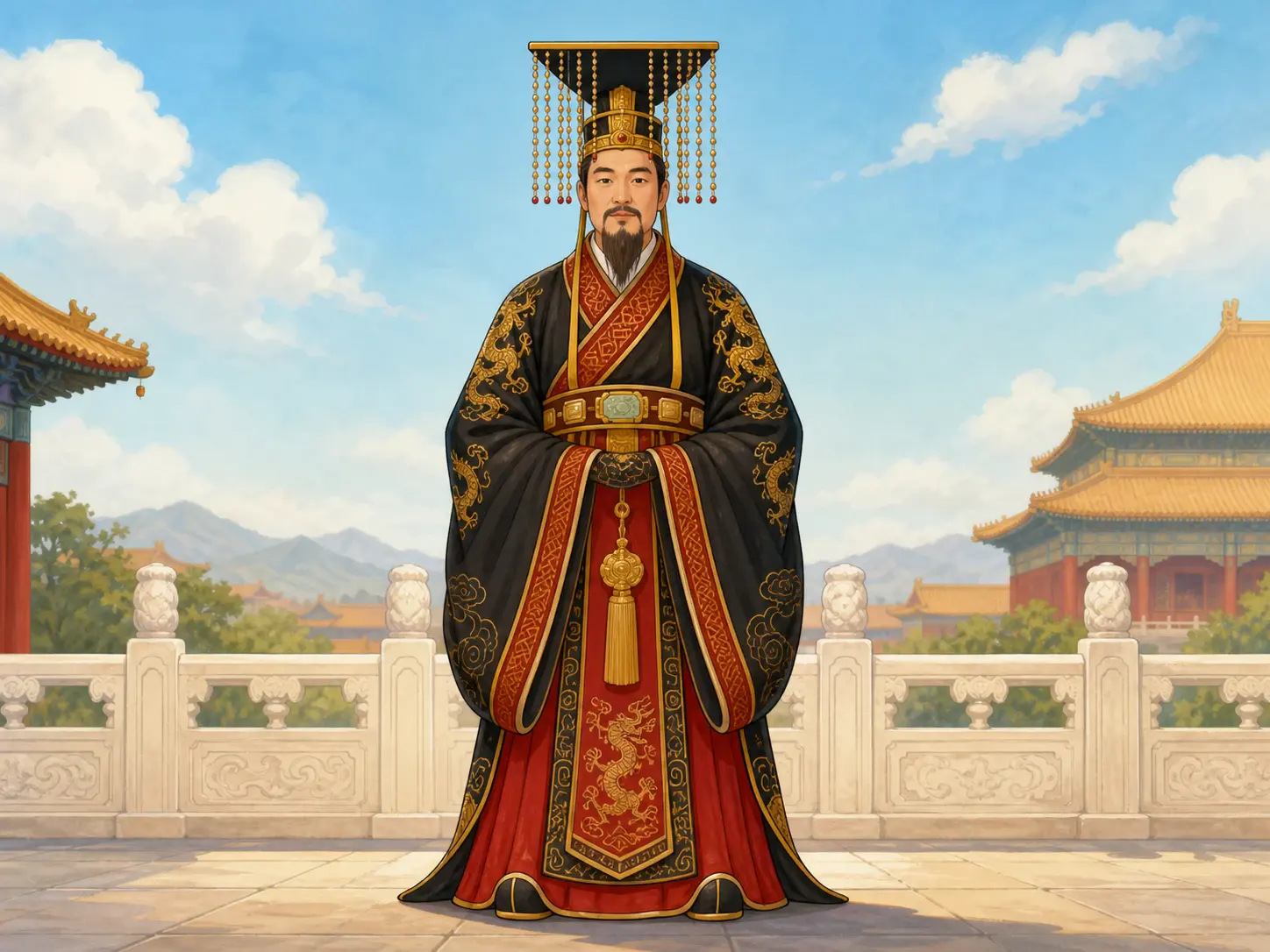
A Ming emperor sits in the palace wearing a bright yellow dragon robe.
一说到中国皇帝,很多人马上会想到一件金灿灿的黄袍。可是,古代皇帝并不是从早到晚都穿黄色,也不是每个朝代都有同样的规定。
明黄色的确很显眼,但这不是它成为皇室颜色的主要原因。古人常把颜色和大自然连在一起。黄色让人想到土地,也被看作“中央”的颜色。皇帝被放在国家权力的中心,统治着脚下的土地。因此,宫廷觉得黄色很适合代表皇帝。
这个习惯不是一天形成的。一千多年前,Táng cháo · 618年至907年的中国朝代。皇帝把一种偏红的黄色用在自己的袍服上。后来,宫廷一次次使用黄色,又规定哪些人可以穿,黄色和皇权的关系就越来越紧密。到了Qīng cháo · 1644年至1912年的中国最后一个帝制王朝。,明黄色已经成了皇宫里地位很高的颜色。皇帝可以穿,皇后和皇太后——宫里地位最高的女性——在规定的场合也可以穿。
不过,皇帝并不是从早到晚都穿黄色。不同的朝代和不同的场合,都有不同的穿衣规定。
When many people picture a Chinese emperor, they see a shining yellow robe. But emperors did not wear yellow all day, and the rules were not the same in every period of Chinese history.
Bright yellow is easy to notice, but that was not the main reason it became an imperial color. There was an older idea behind it. In an old Chinese way of organizing colors, yellow belonged to earth and to the center. The emperor was placed at the center of the state and ruled its land. That made yellow a powerful match for the emperor.
This did not happen in one day. More than 1,000 years ago, Tang emperors wore robes in a reddish shade of yellow. Over time, the court used yellow again and again and made rules about who could wear it. The link between yellow and imperial power grew stronger. By the Qīng cháo · 清朝 · China's last imperial dynasty, lasting from 1644 to 1912., bright yellow had become one of the highest-ranking palace colors. The empress and empress dowager—two of the highest-ranking women in the palace—could wear it too on certain occasions.
Even then, the emperor did not wear yellow all day. Different times and different ceremonies had different clothing rules.
Page 2
为什么偏偏是龙?
Why a Dragon?
颜色不是唯一的线索。皇帝的袍服上还常常出现龙。为什么不用老虎、狮子或fènghuáng · 中国传统文化中的吉祥神鸟。呢?
龙是中国古代故事中最有神通的动物之一。它能飞上天空,也能潜入水中,还和云、雨以及天空相连。Hàn cháo · 从公元前206年延续到公元220年的中国重要朝代。以后,人们越来越常用龙代表地位最高的君王。后来,皇帝甚至被称为“真龙天子”。把龙绣在袍子上,就是把这种强大而神奇的皇权画在了衣服上。
清朝皇帝在节日和喜庆场合穿的一种龙袍上,通常有九条金龙,有时一条会藏在衣襟里面。不过,皇帝并不是唯一能在衣服上使用龙纹的人。清朝的一些皇室成员也可以使用五爪龙。要认出一件真正的皇帝袍服,还要看它的年代、颜色、样式和其他图案。
Color was not the only sign. Dragons often appeared on imperial robes too. But why a dragon instead of a tiger, a lion, or a phoenix?
In old Chinese stories, dragons were among the most powerful creatures anyone could imagine. They could soar into the sky, dive under the water, and bring clouds and rain. From the Hàn cháo · 汉朝 · A major Chinese dynasty that lasted from 206 BCE to 220 CE. onward, dragons became closely linked with the most powerful ruler. Emperors were later called “true dragons” and “Sons of Heaven.” A dragon on a robe turned the emperor's claimed power into a picture everyone could see.
At festivals and other celebrations, a Qing emperor wore one kind of robe with nine golden dragons. Sometimes one dragon was hidden inside the front flap. However, the emperor was not the only person allowed to wear dragons. Some members of the Qing imperial family could wear five-clawed dragons too. To identify an emperor's robe, we also need to know when it was made, how it was shaped, and what other pictures appeared on it.
Page 3
一件袍子里的天空和大地
The Sky and Earth on One Robe
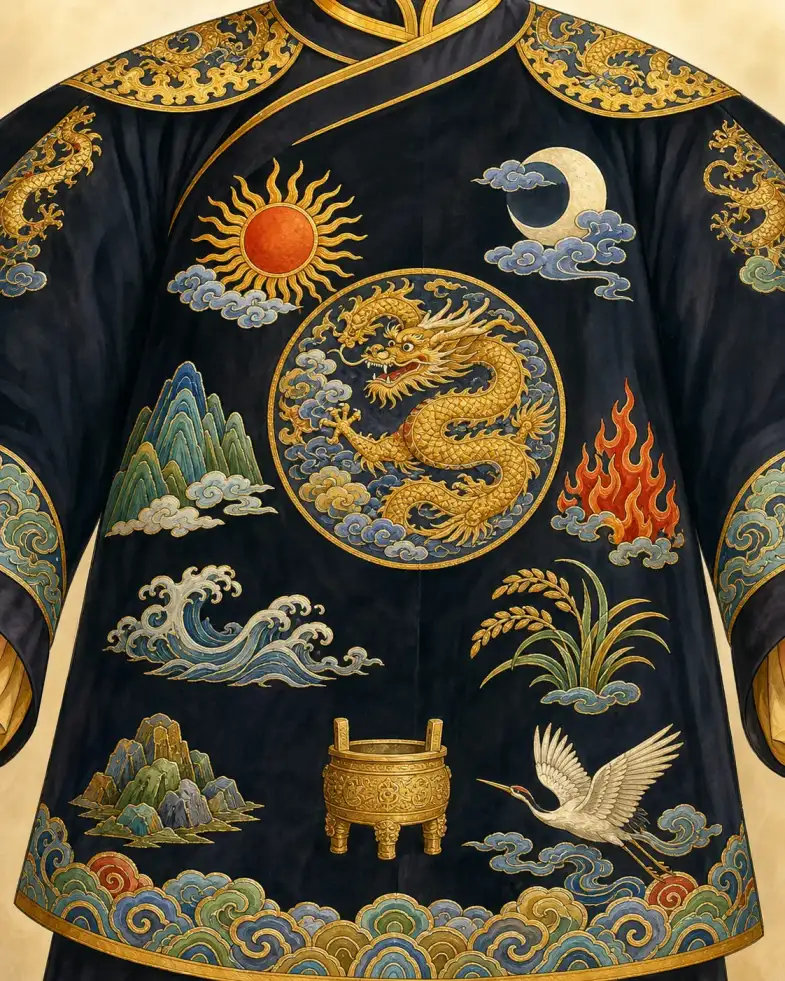
The sun, moon, mountains, dragon, fire, and grain show part of the Twelve Symbols; their arrangement does not copy one ancient robe.
有些皇帝礼服上还有一组古老的图案,叫作“十二章”。袍子上可以看到太阳、月亮、星星、山、龙、火和谷物,还有其他图案。
这些图案把天空、大地和人们赖以生活的食物都放在了衣服上。它们不只是装饰,也在提醒人们:皇帝拥有很大的权力,也要为整个国家负责。
不同朝代会把这些图案放在不同的位置。博物馆里的实物告诉我们,皇帝的衣服并不是一套几百年都不改变的制服。
Some of the emperor's most formal robes carried an old group of pictures called the Twelve Symbols. A robe might show the sun, moon, stars, mountains, a dragon, fire, grain, and other pictures.
The pictures placed the sky, the land, and the food people needed right on the robe. They were more than decoration. They showed that the emperor held great power and was responsible for the whole country.
Different periods arranged the symbols in different ways. Robes kept in museums show us that imperial clothing was never one uniform that stayed unchanged for hundreds of years.
Page 4
皇帝不只有一套衣服
An Emperor Needed More Than One Outfit
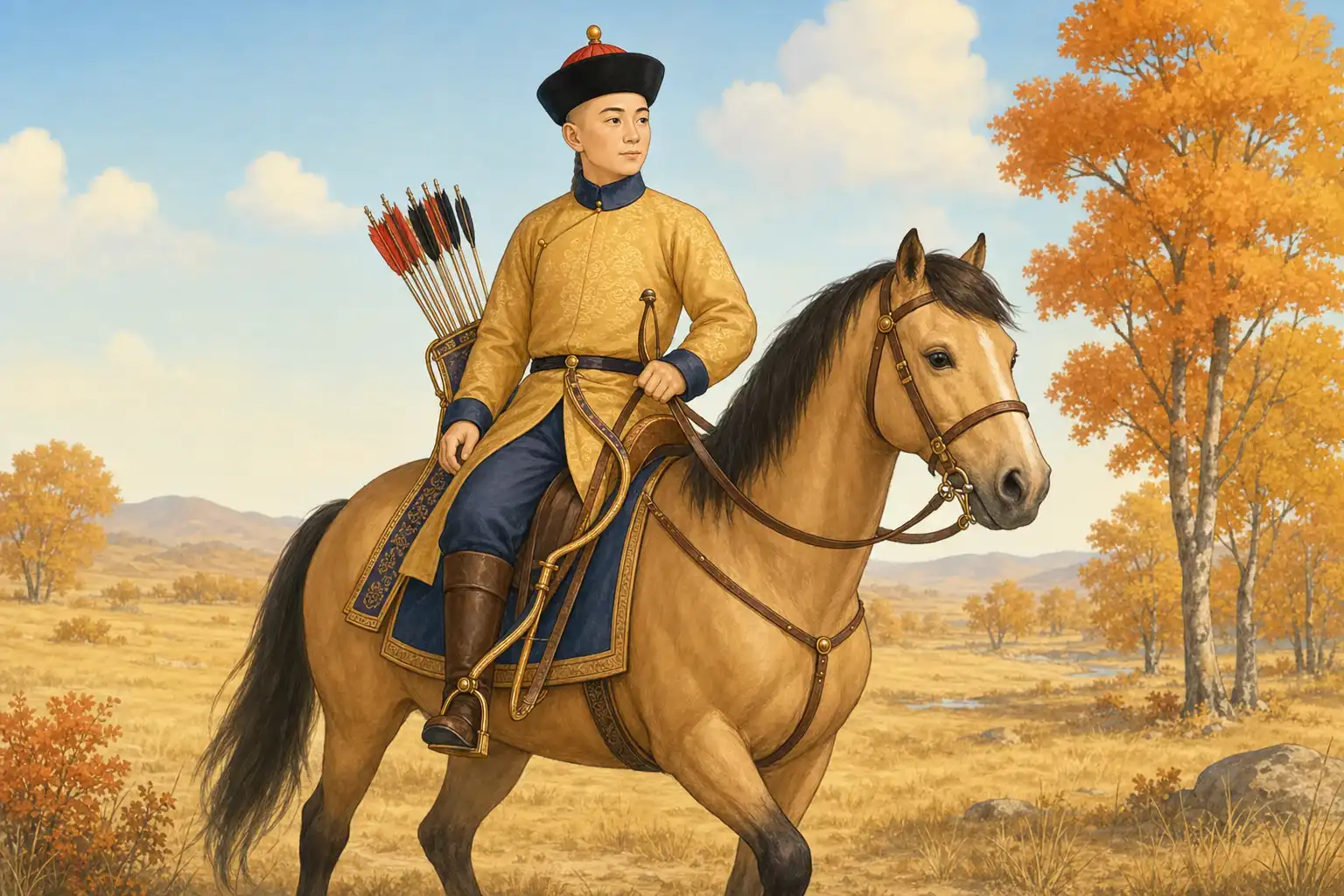
The Qing rider's narrow sleeves allow easier movement on horseback than wide ceremonial robes would.
电视剧里的皇帝可能整天穿着同一件华丽龙袍。真正的皇帝却需要一整个衣柜。
参加重要典礼时,他会穿宽大、庄重的礼服。庆祝节日或参加宴会时,他会换上另一种衣服。下雨有雨服,出门有旅行服。骑马射箭时,衣袖要窄一些,因为宽大的袖子会妨碍拉弓。
这些衣服不一定都是黄色。清朝皇帝参加不同仪式时,也可能穿蓝色、红色或很浅的月白色。颜色、图案和样式放在一起,才告诉别人这是什么场合。
On television, an emperor may spend all day in the same splendid dragon robe. A real emperor needed a whole wardrobe.
For an important ceremony, he wore wide, formal robes. For a celebration or banquet, he changed into something else. He had rain clothes for wet weather and travel clothes for journeys. When he rode a horse or practiced archery, he wore narrower sleeves because wide ones could get in the way of drawing a bow.
These outfits were not always yellow. A Qing emperor might wear blue, red, or very pale blue for certain ceremonies. Color, pictures, and shape worked together to tell everyone what kind of event was taking place.
Page 5
谁做出了皇帝的衣服?
Who Made the Emperor's Clothes?
皇帝可以下令做一件袍服,但他当然不会自己坐在织布机前。
有人画图样,有人准备丝线和染料。织工把彩色丝线织成布,绣工让金龙和云朵一点点出现在丝面上,裁缝再把各块衣料缝成一件可以穿的袍子。一个小小的龙鳞,也需要非常稳的手和耐心。
历史记住了许多皇帝的名字,却很少记下这些工匠的名字。可是,他们留下的手艺仍在。博物馆里每一片金色云彩、每一条细小龙纹,都是他们亲手做出来的。
An emperor could order a robe, but of course he did not sit down at a loom and make it himself.
One person drew the design. Others prepared silk thread and dyes. Weavers made the cloth, embroiderers slowly formed golden dragons and clouds, and tailors joined the pieces into a robe that could be worn. Even one tiny dragon scale took a steady hand and plenty of patience.
History remembers the names of many emperors, but it rarely remembers the names of these makers. Their skill is still here. Every golden cloud and every tiny dragon scale in a museum robe was made by someone's hands.