汉服:布料、衣领和大袖子
Hanfu: Cloth, Collars, and Wide Sleeves
Page 1
为什么不像今天的衣服?
Why Doesn't It Look Like Clothes We Wear Today?
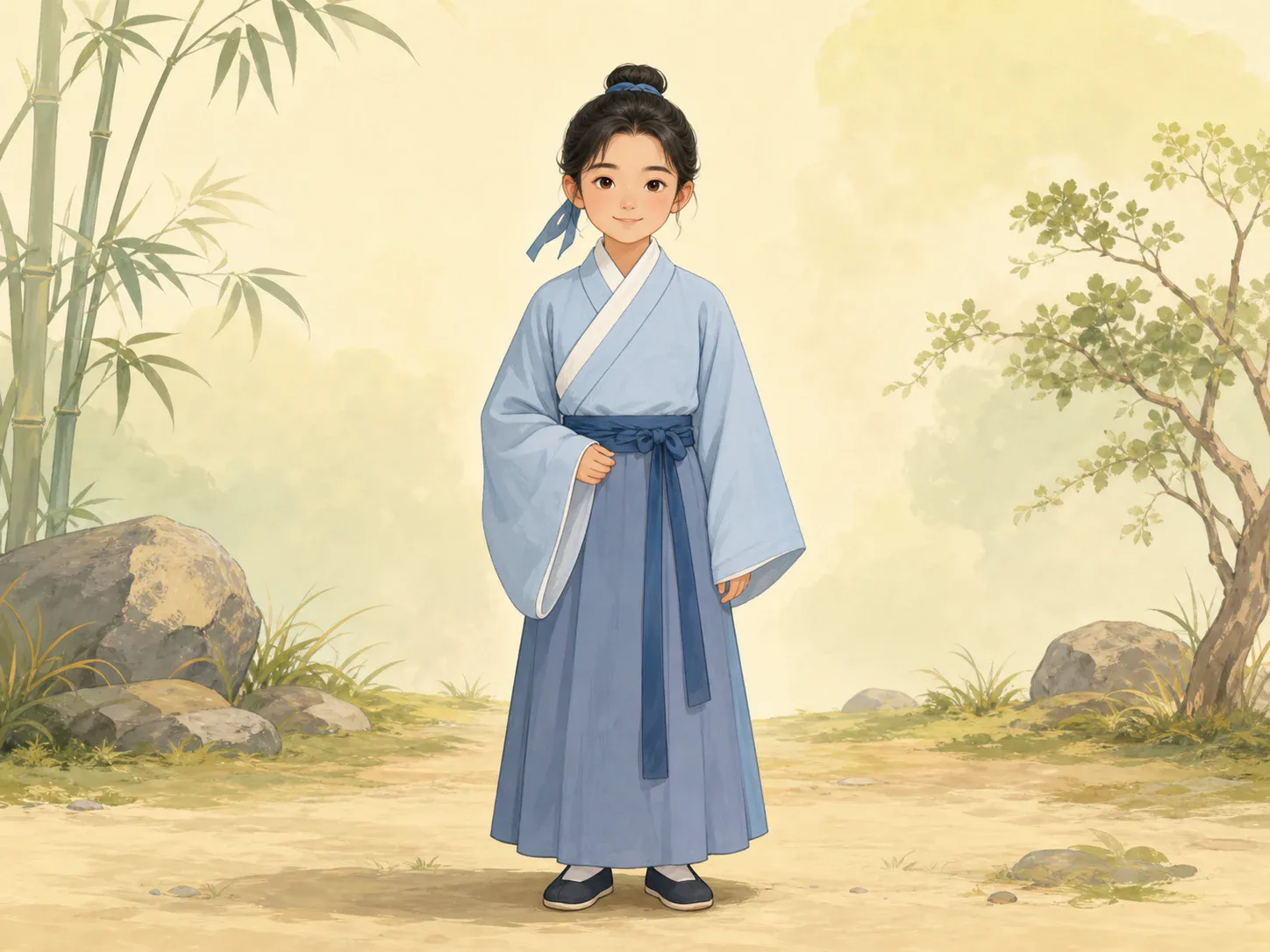
The left front piece crosses over the right one, and ties or a sash hold the clothing in place. Many clothes in old China used this design.
今天,我们常穿T恤、卫衣和牛仔裤。衣服可能有拉链、松紧带和一排扣子。可是,古代裁缝没有现代工厂里的机器和材料。他们面对的是一匹匹手工织成的布。
许多古代中国衣服用比较直的布片拼起来。穿衣时,左边衣襟盖在右边衣襟上,再用小带子或腰带系好。衣服平放时可能像一个宽宽的大写字母“T”,穿到身上却会随着腰带收拢。这种穿法叫“jiāolǐng yòurèn · 衣襟交叉、左襟盖住右襟的一种传统穿法。”。
今天所说的“hànfú · 中国历史上汉族服饰传统的统称。”,是一个很大的名字,指以古代汉族衣着传统为基础的服装。这里的“汉”主要指汉族,不只是Hàn cháo · 从公元前206年延续到公元220年的中国重要朝代。。汉族这个名称和古代汉朝有关系,所以两个“汉”并不是完全无关;不过,汉服也包括许多其他朝代的式样。几百、几千年里,衣领、袖子、裙子和袍子一直在变化,汉服并不是一套永远不变的制服。
Today, we often wear T-shirts, hoodies, and jeans. Our clothes may have zippers, elastic, and rows of buttons. Ancient tailors did not have the machines and materials found in modern factories. They began with lengths of cloth woven by hand.
Many clothes in old China were made from fairly straight pieces of fabric. The left front piece crossed over the right one, and small ties or a sash held everything in place. Spread out on the floor, a robe might look like a wide capital T. Once it was worn and tied, those flat pieces wrapped around the body. This design was called jiāolǐng yòurèn · 交领右衽 · A traditional robe construction in which the left front crosses over the right.: a crossed collar that closes on the right.
Today, hànfú · 汉服 · A broad modern name for historical Han Chinese clothing traditions. is a broad name for clothes based on the historical dress traditions of the Han people. Here, hàn means the Han people, not only the Hàn cháo · 汉朝 · A major Chinese dynasty that lasted from 206 BCE to 220 CE.. The name “Han people” grew from the name of the Han dynasty long ago, so the two meanings are connected. But hanfu includes styles from many dynasties. Collars, sleeves, skirts, and robes kept changing across the centuries.
Page 2
衣服这么宽,不会浪费布吗?
Did Wide Clothes Waste Fabric?
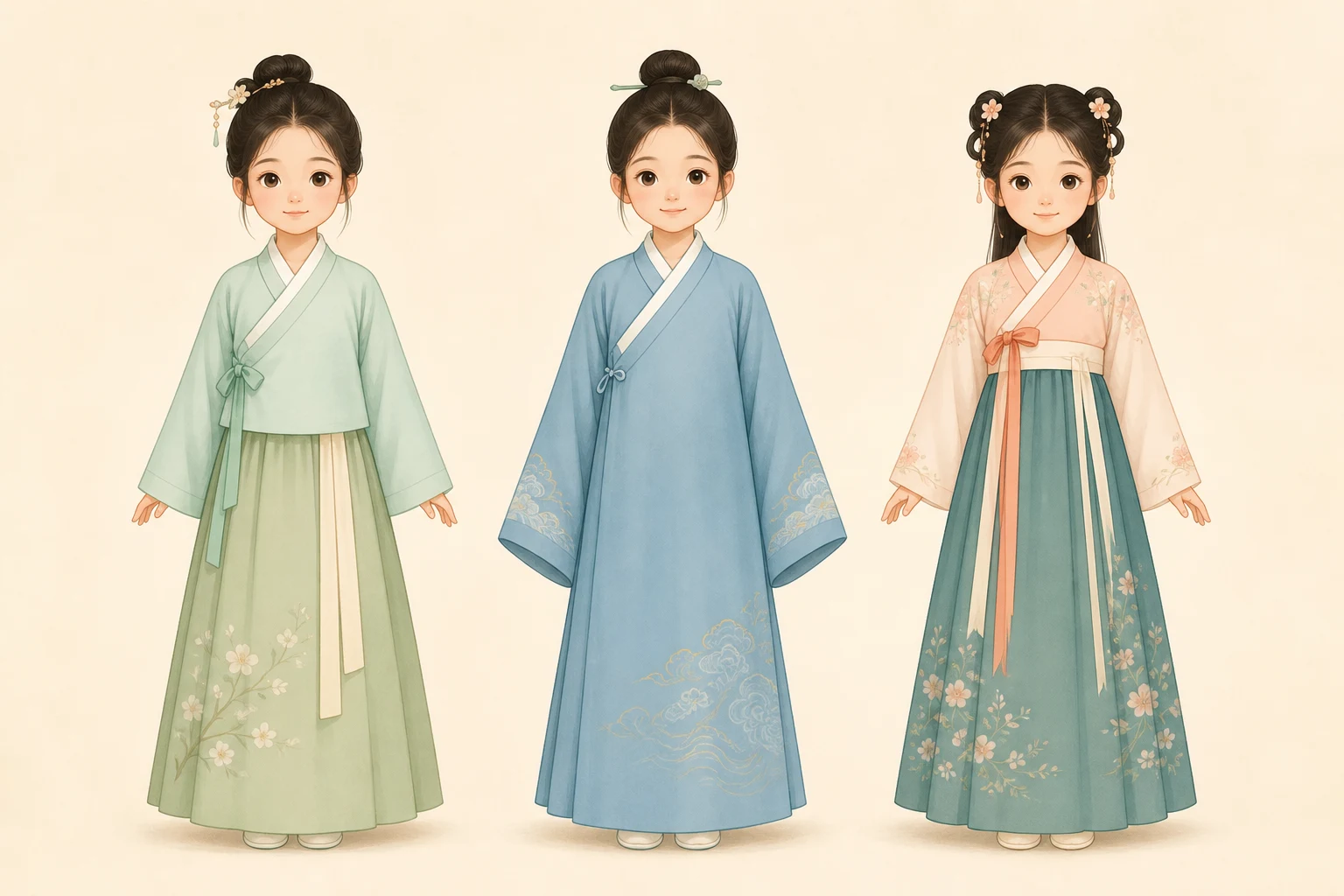
Long robes, jackets with skirts, and narrow-sleeved clothes used different amounts of fabric. Old China never had just one clothing shape.
在古代,做布很慢。做一匹丝绸,要先养蚕、抽丝、制线,再把许多根细线织成布。古人还会从大麻、苎麻等植物的茎中取出纤维,把纤维纺成线,再织成麻布。对普通家庭来说,每一块布都值得珍惜。
织布机织出的布有固定的宽度。裁缝常常顺着布幅,把它裁成直线或斜线衣片,再拼成衣服。这样可以少留下奇形怪状、很难再用的小碎片。衣服展开时看起来很宽,但许多布穿上以后会围住身体,并不都是多余的。
不过,有些衣服的确用了很多布。参加典礼的礼服可能有宽袖、长衣摆和好几层。有钱人也更能买得起精美布料。需要种田、赶路或搬东西的人,通常会选择较短的上衣、裤子或窄袖。古人不会穿着同一件大礼服去做每一件事。
In the ancient world, cloth was slow to make. Producing silk meant raising silkworms, unwinding their silk, making thread, and weaving many fine threads together. People also pulled strong fibers from plants such as hemp and ramie, spun the fibers into thread, and wove the thread into cloth. For an ordinary family, every piece of cloth was worth saving.
A loom produced cloth in a set width. Tailors often followed that width, cutting fairly straight or slanted pieces and joining them together. This left fewer odd scraps that were hard to use. Spread out, a robe could look surprisingly wide. Once it was worn, much of that cloth wrapped around the body instead of hanging loose.
Some clothes did use a great deal of fabric. Formal robes for ceremonies could have broad sleeves, long hems, and several layers. Wealthy people could also afford finer cloth. Someone farming, traveling, or carrying heavy things usually needed a shorter jacket, trousers, or narrow sleeves. People did not wear the same grand robe for every job.
Page 3
宽袖子里能藏东西吗?
Could You Carry Things in a Wide Sleeve?
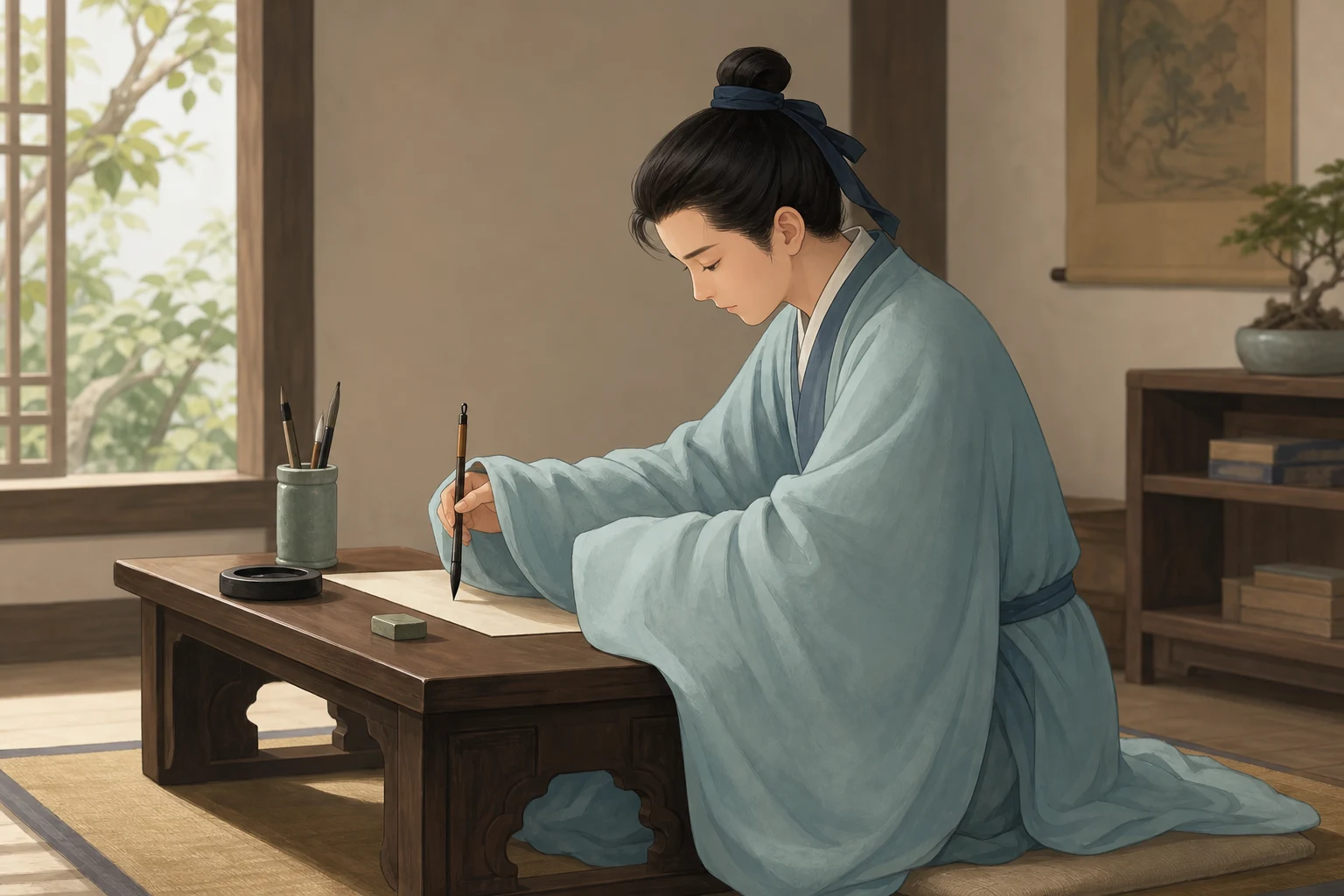
Large sleeves gave formal robes a grand shape. Some clothes also had a small pocket sewn inside the sleeve.
古装故事里,有人从袖子里拿出一封信,真的可以吗?有时候可以。不过,衣袖并不自动就是口袋。有些衣服会在袖子里面另外缝一个小口袋,袋口朝里。折好的信、小钱袋或手帕放进去以后,就不容易从袖口滑出来。人们也会把随身物品放在腰间的小袋子里。
可是,大袖子不是因为古代裁缝不会把衣服裁小。恰恰相反,把平平的布片拼成合身又整齐的衣服,需要认真计算和熟练的手艺。礼服使用宽大的袖子,是为了让衣服显得舒展、庄重。举手、行礼时,长袖也会让动作看起来更加缓慢、稳重。
宽袖还很“会演戏”。人行礼、转身或走路时,袖子会跟着身体摆动,在空中画出弧线。后来的戏曲服装把这种效果变得更加夸张,袖口接上长长的白布,叫作“shuǐxiù · 戏曲服装袖口接出的长白绸,演员用它表现动作和情绪。”。演员轻轻扬袖,可以表现害羞或难过;猛地甩袖再转身,也可以让观众看出角色正在生气,连一句话都不用说。
大袖子也有缺点:做饭、种田或骑马时,它很容易碍事。所以,劳动服和骑马服常有比较窄的袖子。古人和我们一样,会看今天要做什么,再选择合适的衣服。
In stories set in old China, someone may pull a letter out of a sleeve. Could that really happen? Sometimes—but an empty sleeve was not automatically a pocket. Some clothes had a small pocket sewn inside the sleeve, with its opening turned inward. A folded letter, a little coin purse, or a handkerchief was less likely to slip out. People also carried small bags at their waists.
Large sleeves were not a sign that ancient tailors did not know how to cut smaller clothes. In fact, joining flat pieces of cloth into a neat, well-fitting garment took careful planning and skill. Formal robes had broad sleeves because the shape looked graceful and grand. Long sleeves also made a bow or other careful movement look slower and more formal.
Wide sleeves could “act” too. When a person bowed, turned, or walked, the sleeves swung with the body and drew curves through the air. Chinese opera later made this effect much bigger. Actors wore extra lengths of white cloth called shuǐxiù · 水袖 · Long white silk extensions on opera sleeves, moved by performers to express action and emotion.. A gentle lift could show shyness or sadness. A sharp sweep of the sleeves and a quick turn could show anger without a single word.
Of course, a large sleeve could get in the way while cooking, farming, or riding a horse. Work clothes and riding clothes often had narrower sleeves. Like us, people chose clothes that fit what they had to do that day.
Page 4
汉服到底穿了多少年?
How Long Did People Wear Hanfu?
这个问题没有一个简单的起止日期。今天被放进“汉服”这个大名字里的衣服,来自很早的汉族服饰传统。有些做法在汉朝以前已经出现;从汉、唐、宋到明,一千多年里,人们一直在改变衣领、袖子、裙子和袍子。
如果把汉朝、Táng cháo · 618年至907年的中国朝代。、Sòng cháo · 中国历史上从960年延续到1279年的朝代。和Míng cháo · 1368年至1644年的中国朝代。的人排在一起,他们绝不会像穿着同一套校服。有的衣服宽大,有的衣服利落;颜色、帽子和穿法也会变化。我们今天把它们放在同一个大名字下面,是因为其中一些裁剪方法和穿衣习惯一代代传了下来。
十七世纪中期,Qīng cháo · 1644年至1912年的中国最后一个帝制王朝。建立以后,男子和官员的衣着规定发生了很大变化。可是,旧式样没有在一天之内全部消失。一些女子服装和地方穿法继续保留下来,旧的裁剪方法也没有被人忘记。到了今天,人们又会在节日、婚礼、表演和日常生活中穿上复原或重新设计的汉服。
There is no simple starting or ending date. The clothes now grouped under the broad name hanfu grew from very old Han clothing traditions. Some ideas began before the Han dynasty. From the Han through the Tang, Song, and Ming dynasties, people kept changing their collars, sleeves, skirts, and robes for well over a thousand years.
If people from those four dynasties stood side by side, they would not look as if they were wearing one school uniform. Some clothes were broad and flowing. Others were tidy and close to the body. Colors, hats, and ways of dressing changed too. We place them under one broad name today because some ways of cutting and wearing clothes were passed from one generation to the next.
After the Qīng cháo · 清朝 · China's last imperial dynasty, lasting from 1644 to 1912. took power in the mid-1600s, its rules greatly changed what many men and officials wore. Older styles did not disappear in a single day. Some women's clothing and local customs continued, and older ways of making clothes were not forgotten. Today, people once again wear recreated or newly designed hanfu at festivals, weddings, performances, and even in everyday life.