
官服上的鸟和猛兽
Birds and Beasts on Official Robes
Page 1
文官和武官做什么?
What Did Civil and Military Officials Do?
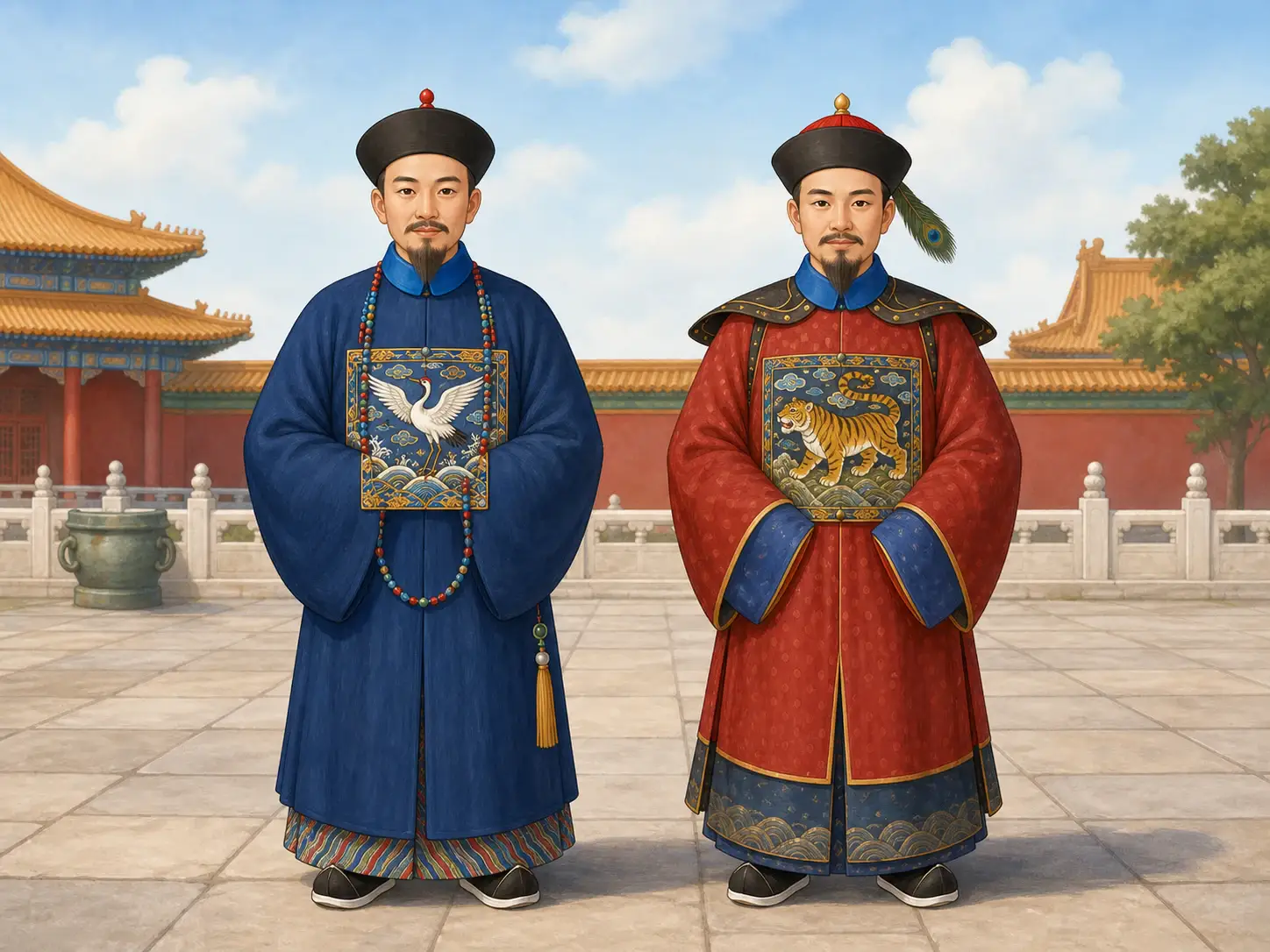
Cranes appeared on civil officials' badges, while tigers appeared on military officers' badges.
古代的“官员”,就是替国家和皇帝处理事情的人。到了明清时期,官员主要分成两大类。
文官处理法律、税收、粮食和政府文书等事情。很多文官要读很多书,还要参加考试。武官负责军队、训练士兵,也可能守卫城市和边疆。“文”是处理政务,“武”是负责军队,并不是说文官只会写字,武官每天都在打仗。
为了让人一眼看出他们属于哪一类、官位有多高,官服的前胸和后背缝着一块方形图案。这块图案叫“补子”。文官补子上大多是鸟,武官补子上大多是四脚猛兽或传说中的神兽。
In old China, an official was a person who worked for the emperor's government. During the Ming and Qing dynasties, officials belonged to two main groups.
Civil officials worked with laws, taxes, food supplies, and government papers. Many studied for years and took difficult exams. Military officers worked with the army. They trained soldiers and helped guard cities and borders. This did not mean that civil officials only wrote all day or that military officers were always fighting.
People needed a quick way to see which group an official belonged to and how high his rank was. A square picture was sewn onto the front and back of his robe. It was called a buzi, or rank badge. Civil officials usually wore birds. Military officers usually wore four-legged beasts or creatures from old stories.
Page 2
为什么一边是鸟,一边是猛兽?
Why Birds for One Group and Beasts for the Other?
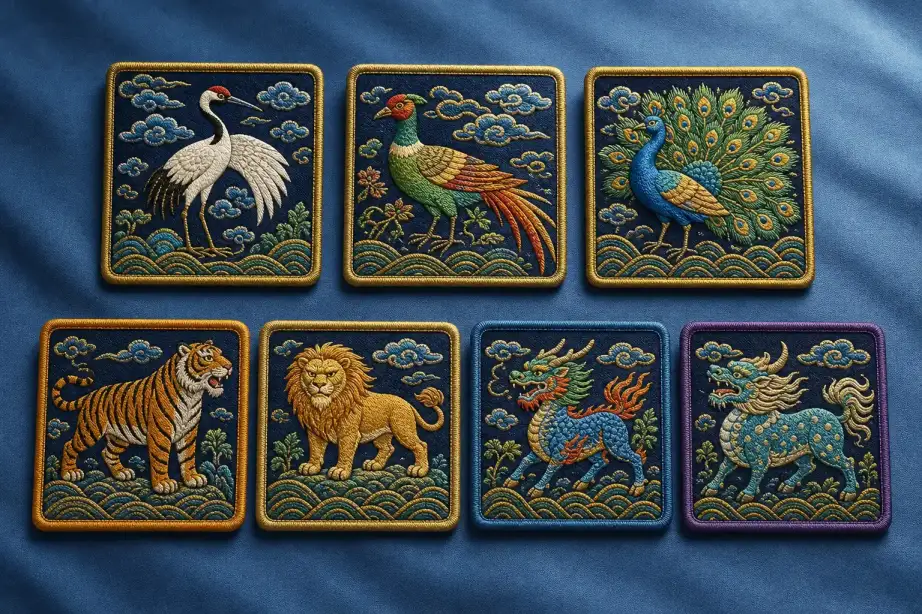
The animals are lined up for comparison; the animals and their ranks changed over time.
举行大典时,一排排官员站在一起。他们身上的衣服把朝廷的等级直接摆在了大家眼前。胸前和背后的大幅动物图案,隔着一段距离也能看见。它告诉别人:这个人是文官还是武官,官位大概有多高。
朝廷用两组很不一样的动物来分开文官和武官。文官用飞禽,让人想到文雅、祥瑞和学问;武官用走兽和神兽,让人想到力量、勇气和威严。两组一眼就能分开,然后每一种动物再表示一个等级。
官员不能挑自己最喜欢的动物,图案由朝廷规定,而且这些规定也会改变。同一只老虎,在Míng cháo · 1368年至1644年的中国朝代。和Qīng cháo · 1644年至1912年的中国最后一个帝制王朝。可能代表不同的等级。这些鸟兽是一套由朝廷制定的标志,并不是永远不变的规矩。
At a grand ceremony, rows of officials stood together. Their clothing made the order of the court visible. A large animal on the chest and back could be seen from a distance. It showed whether someone was a civil or military official and roughly how high his rank was.
The court used two very different groups of animals. Civil officials wore birds, which could suggest grace, good fortune, and learning. Military officers wore beasts and creatures from legends, which suggested strength, courage, and authority. The two groups were easy to tell apart, and each animal then showed a different rank.
Officials did not choose their favorite animal. The court set the rules, and those rules changed over time. A tiger showed one rank in the Míng cháo · 明朝 · The Chinese dynasty that lasted from 1368 to 1644. and another in the Qing. The birds and beasts formed a court-made code, not a rule that stayed the same forever.
Page 3
衣服上为什么有不存在的动物?
Why Put Make-Believe Animals on Real Clothes?
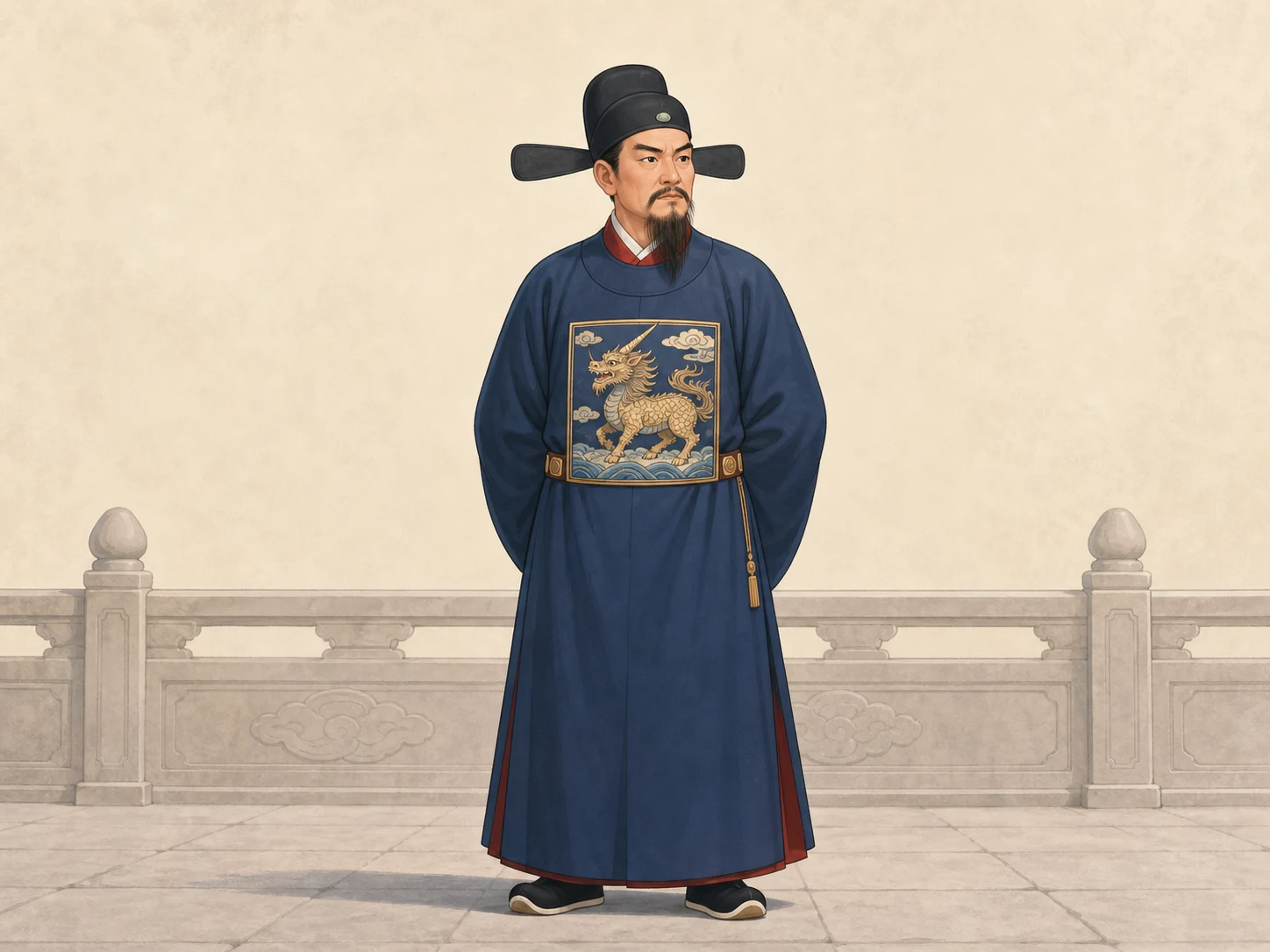
The one-horned creature is a xiezhi, which appeared on the badges of certain inspecting officials.
麒麟不是真实的鹿、马或龙。它是中国古代故事中的神兽,常常被画成长着蹄子、鳞片和角,有时身边还有火焰。这样神奇又有力量的动物,很适合出现在高等级武官的补子上。
獬豸也是传说中的动物。故事说,它长着一只角,能分清谁对谁错。因此,一些负责监察官员、检查案件的人把獬豸穿在官服上。这个图案代表他们的工作应该公平,但一只獬豸当然不能保证穿衣服的人真的永远公正。
这些神兽不是从森林里抓来画的。它们从古代故事和艺术中走上了衣服,把人们希望官员拥有的力量、勇气和公正变成人人看得见的图案。
A qilin was not a real deer, horse, or dragon. It was a creature from old Chinese stories. Artists often gave it hooves, scales, a horn, and sometimes flames around its body. A creature that looked both magical and powerful became a fitting badge for a high-ranking military officer.
The xiezhi came from old stories too. It was usually shown with one horn and was said to know right from wrong. Some officials who investigated wrongdoing and checked the work of other officials wore a xiezhi badge. The picture stood for fairness, although it could not make the person wearing it fair.
No one found these creatures in a forest. They moved from old stories and art onto real robes, turning hopes for strength, courage, and fairness into pictures everyone could see.
Page 4
动物是怎样排进九个等级的?
How Did the Animals Fit Nine Ranks?
清代官员的品级大体从一品排到九品。一品最高,九品最低。每一级都需要一个容易认出的图案,于是朝廷把不同的鸟兽排进了一张等级表。
这个顺序不是按照真实动物谁最厉害来排的。安排文官补子时,朝廷看重飞禽带来的文雅、吉祥和珍贵之感;安排武官补子时,更看重神兽和猛兽表现出的威严与力量。后来固定下来的清代等级表中,一品文官用仙鹤,二品用锦鸡,三品用孔雀;一品武官用麒麟,二品用狮子,三品用豹子,四品用老虎。
古代规定告诉了我们最后的顺序,却没有为每一格都留下完整的理由。豹子排在老虎前面,并不是说豹子一定比老虎厉害。这是朝廷规定的官位标志,不是一张真正的动物强弱表。
Qing officials were divided into nine main ranks. The first was the highest, and the ninth was the lowest. Each rank needed a picture people could recognize, so the court placed different birds and beasts into an official list.
This order did not measure which real animal was the strongest. For civil officials, the court chose birds that suggested grace, good fortune, or rarity. For military officers, legendary creatures and powerful beasts gave a feeling of strength and authority. In the later Qing list, the first three civil ranks wore a crane, a golden pheasant, and a peacock. The first four military ranks wore a qilin, a lion, a leopard, and a tiger.
Old rules give us the final order, but they do not explain every choice. A leopard appearing above a tiger did not mean that a leopard would always win a fight. This was a court ranking system, not a scientific list of the strongest animals.
Page 5
地方小官也穿补子吗?
Did Local Officials Wear Rank Badges Too?
补子不只属于站在皇帝身边的大官。这套品级从京城一直用到各地的府和县。一个官员在哪里做事,和他的品级有多高,是两件不同的事。远在地方的官员,品级也可能高过京城里职位较低的官员。
清代的知县通常是七品文官。他不是朝廷里最高的大官,却是管理一个县的主要官员。百姓交税、地方粮食、政府命令和许多案件,都可能来到他的县衙里。
按照后来固定的清代等级表,七品文官的补子上是鸂鶒,一种像鸳鸯的水鸟。县太爷胸前的这只水鸟,把他在地方上的工作,也放进了朝廷的官位等级里。
Rank badges did not belong only to powerful officials standing beside the emperor. The same system reached from the capital to cities and counties across China. Where an official worked and how high he ranked were two different things. A local official could even outrank someone with a smaller post in the capital.
During the Qīng cháo · 清朝 · China's last imperial dynasty, lasting from 1644 to 1912., the chief official of a county was usually a seventh-rank civil official. A county was a local area made up of towns and villages. He was not one of the court's most powerful men, but local taxes, grain, government orders, and many court cases could all reach his office.
In the later Qing list, his rank badge showed a Mandarin duck. The water bird on his chest connected his local job to the same rank system used at the emperor's court.