兵马俑:八千张脸,八千幅肖像吗?
Terracotta Warriors: Are 8,000 Faces 8,000 Portraits?
Page 1
八千张脸
Eight Thousand Faces
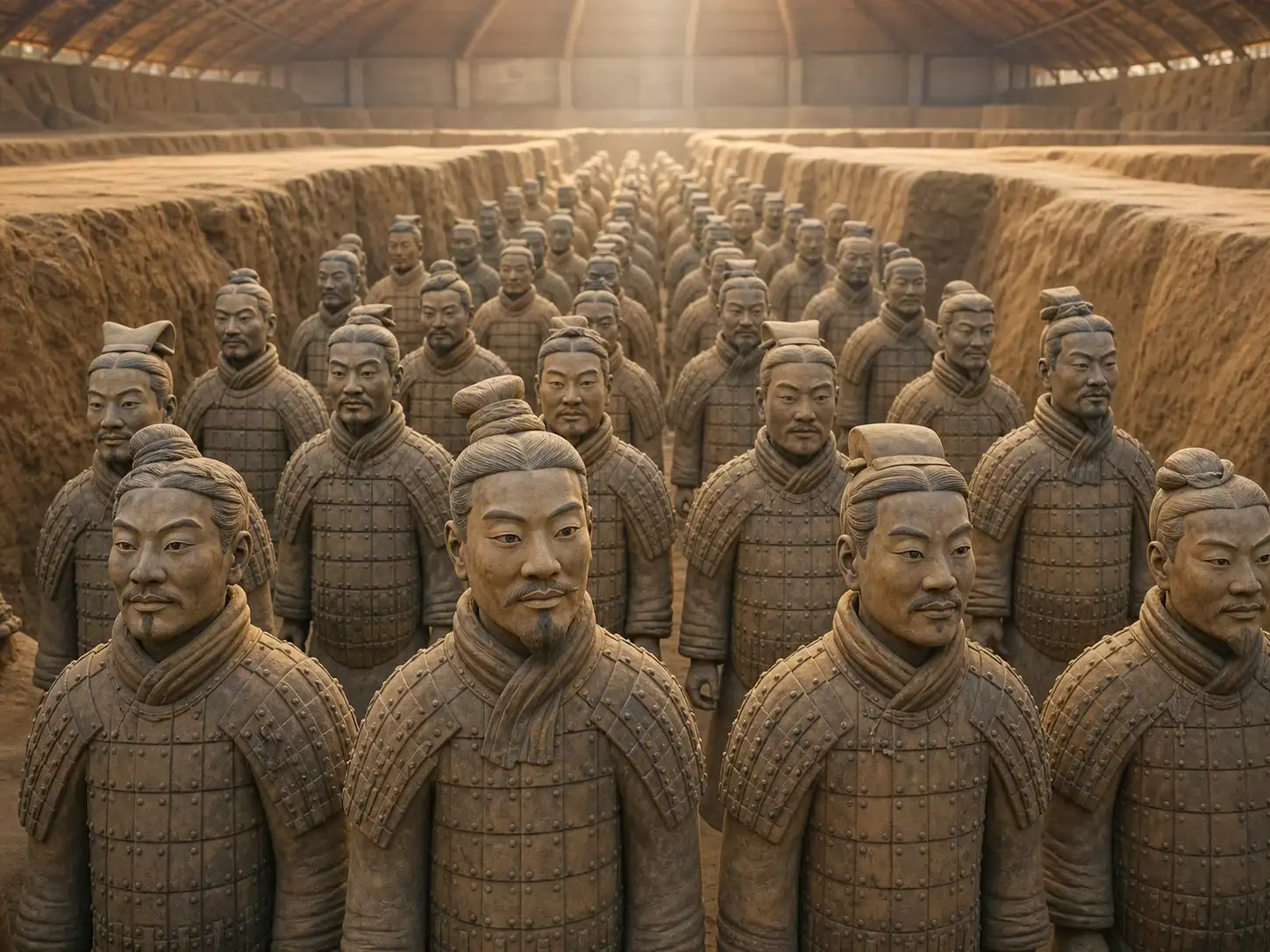
From far away, the figures form an army; up close, their different faces begin to appear.
1974年,Xī'ān · 中国著名古都,古代长安所在地。附近的农民打井时挖到了一些陶片。后来,考古人员顺着这些碎片,发现了巨大的俑坑:一排又一排和真人差不多高的陶俑站在地下,有步兵、弓弩手、军官,还有陶马。
这些Bīngmǎyǒng · 秦始皇陵附近出土的大型陶制军阵。属于Qín Shǐhuáng · 建立秦朝、统一中国的第一位皇帝。庞大的陵园。关于秦始皇本人和这座还没有完全发掘的陵墓,我们在《秦始皇》那篇故事里讲得更多。
三个主要俑坑里的陶俑,通常估计接近八千件。
走近一点,最容易让人停下来的却是脸。有的脸圆,有的长;有人留胡须,有人没有;发髻、眉眼、嘴角也各不相同。
于是一个问题自然冒出来:这些是不是八千名真实士兵的肖像?
“肖像”的意思,是照着某一个真实的人,把他的样子留下来。如果兵马俑都是肖像,那么每一张táotǔ · 经过塑形和烧制后变硬的陶土材料。做的脸后面,都应该曾经有一张真实的脸。
可是,现在的证据还不能这样告诉我们。
In 1974, farmers digging a well near Xī'ān · 西安 · A major historic city and the modern location of ancient Chang'an. found broken pieces of clay. Archaeologists followed the clues and uncovered something much larger: pits filled with rows of life-size clay soldiers, along with horses and weapons.
These warriors were made for the enormous mausoleum of Qín Shǐhuáng · 秦始皇 · The First Emperor, who founded the Qin dynasty and united China., China’s first emperor. We tell more of his story in our article about Qin Shi Huang.
The three main pits are estimated to contain thousands of figures—often rounded to about 8,000.
Walk past the restored warriors and look at their faces. One is round, another long. Some have mustaches or beards. Their eyebrows, hairstyles, mouths, and expressions change from figure to figure.
They look so individual that an obvious question appears: Were these portraits of 8,000 real soldiers?
A portrait is made to look like one particular person. If the warriors were portraits, somewhere behind each clay face there would once have been a real face.
But the evidence does not take us that far.
Page 2
怎样做几千个人,又不让他们一模一样?
How Do You Make Thousands Without Making Them All the Same?
兵马俑是用陶土做的,也就是把泥塑好,再经过烧制,让它变得坚硬。至于陶俑究竟一步一步怎样制作,研究者还有不同看法。不过,有一点越来越清楚:工匠会使用可以重复的基本做法,然后再用手把细节做出来。
头、手、身体等部分可以分步骤制作,表面再加上细泥,刻出头发、胡须、眼睛、嘴巴、衣褶和铠甲。这样就解决了一个大问题。工匠不用从一团泥开始,重新发明每一个人;可是到了最后,他们又可以让每张脸出现变化。
研究人员甚至用三维扫描去比较陶俑的耳朵。耳朵确实长得很不一样,可“每只耳朵不同”仍然不能证明“每一个陶俑都有一个真人原型”。这些差别也可能来自不同模具、不同工匠,以及最后的手工修改。
The warriors are made of táotǔ · 陶土 · Clay that is shaped and baked until it becomes hard.—clay that has been shaped and fired until it becomes hard. Scholars still debate some details of exactly how the figures were built. But research shows that craftspeople could use repeated basic methods and forms, then work the surface by hand.
Heads, hands, bodies, and other parts could be made in stages. Fine clay was added so workers could shape hair, beards, eyes, mouths, clothing folds, belts, and armor. This solved a huge problem. The workers did not have to invent every soldier from the beginning. They could repeat useful forms and then change the details.
Researchers have even used 3-D scans to compare the warriors’ ears. The ears vary a great deal. But different ears alone cannot prove that each warrior copied one real person. The differences may also come from different molds, different workers, and hand finishing.
Page 3
它们原来不是灰色的
They Were Not Gray
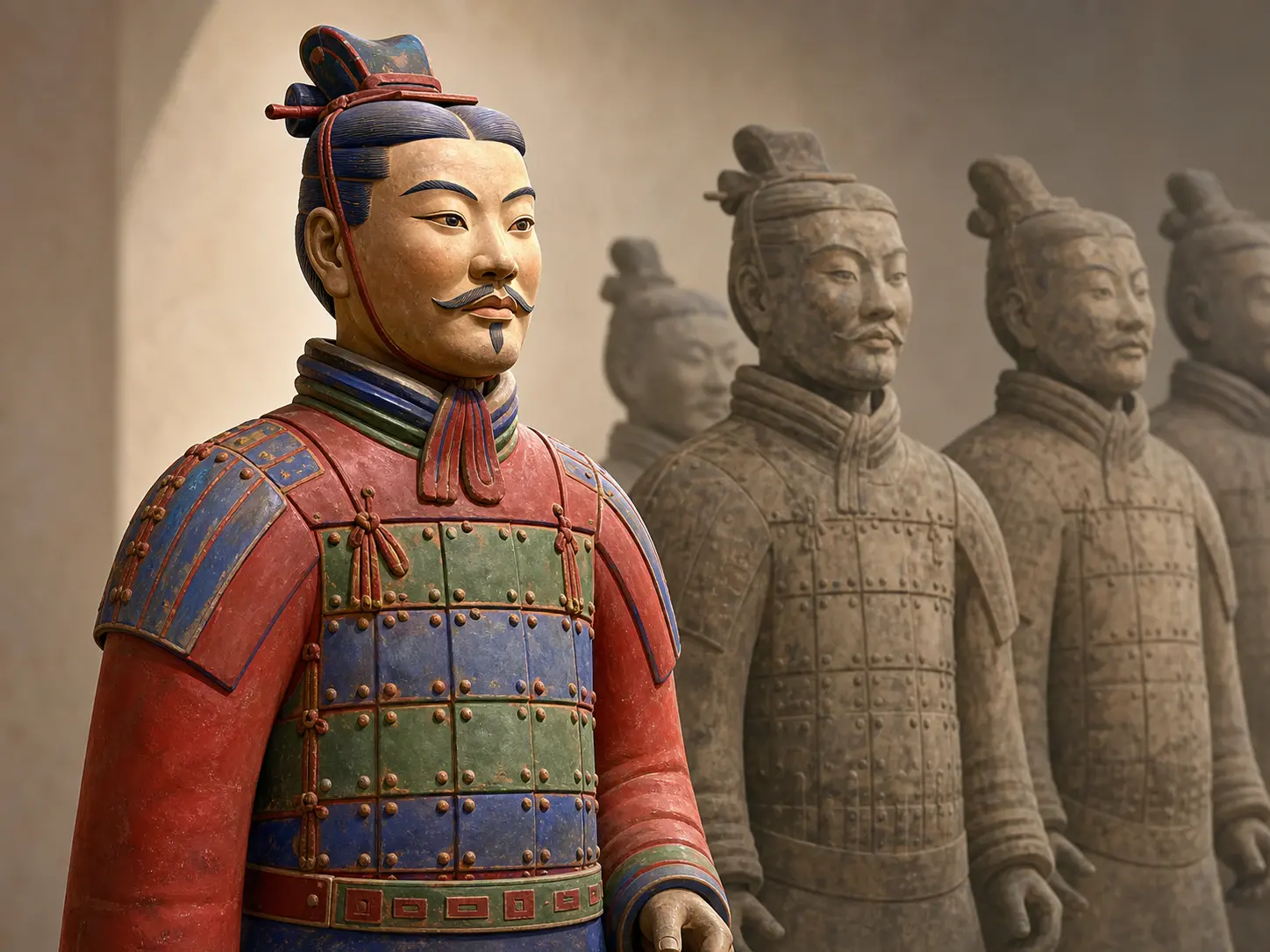
The bright colors suggest how the warriors' original paint may have looked without copying the exact colors of one figure.
今天看到的兵马俑大多是灰褐色,很容易让人觉得它们本来就是这样。其实不是。很多陶俑原来涂过漆和彩色颜料。红、绿、蓝、紫、黑、白等颜色,会出现在衣服、铠甲、脸和头发上。
可是这些颜色也给考古人员出了一个难题。陶俑在潮湿的土里埋了两千多年,颜料下面的漆层已经非常脆弱。刚挖出来以后,水分迅速减少,漆层可能收缩、卷起、脱落,连上面的颜色一起掉下来。
所以考古并不是“发现了就赶快挖”。有时候,最重要的动作反而是慢下来。
Today, most Bīngmǎyǒng · 兵马俑 · The life-size clay army found near the tomb of the First Emperor. look gray-brown. That is not how the army originally looked. Many figures were once covered with lacquer and bright pigments. Traces show reds, greens, blues, purples, black, white, and other colors. Faces, clothing, armor, and hair could all have been painted.
But the paint created a difficult problem for archaeologists. After more than two thousand years in damp soil, the lacquer beneath the color became extremely fragile. When a newly excavated figure began to dry, that layer could shrink, crack, curl, and pull the paint away with it.
So finding a warrior was not simply a matter of digging faster. Sometimes the safest thing was to slow down.
Page 4
这么大的军队,是谁做出来的?
A Giant Project Made by Many Hands
八千件真人大小的陶俑,不可能只是几个陶工在一间小作坊里慢慢完成的。陶俑和武器上留下的名字、印记和细小差异,让研究人员看到许多工匠和生产小组一起工作的痕迹。整个秦始皇陵本来就是一项巨大的工程,需要陶工、金属工、建筑工和许多其他劳动者共同完成。
所以,那八千张不同的脸真的是八千幅真人肖像吗?现在还没有证据证明这一点。但陶俑已经告诉我们另一件很了不起的事:两千多年前的工匠已经能够用有组织、可以重复的方法制作成千上万件作品,同时又让人的手在最后留下变化。
远远看过去,那是一支军队。走近以后,一张一张不同的脸才慢慢出现。
An army this large could not come from one small pottery shop. Names, marks, small style differences, and patterns in the weapons and figures help researchers study how different groups of craftspeople worked. The entire mausoleum was an enormous project involving potters, metalworkers, builders, and many other laborers.
That helps answer our first question. The warriors clearly have individual differences. But we cannot say that 8,000 soldiers stood still while artists copied 8,000 faces. What the clay does show is something just as remarkable. Ancient craftspeople found ways to make thousands of figures using organized, repeatable methods—while still leaving room for a hand to change a beard, an eye, a hairstyle, or the corner of a mouth.
From far away, they form an army. Walk closer, and one face at a time begins to appear.