
一面墙是一千年前的照片吗?
Is a Wall a Photograph from 1,000 Years Ago?
Page 1
沙漠里,怎么藏着这么多画?
A Painted World in the Desert
往中国西北走,Dūnhuáng · 中国西北以石窟壁画闻名的城市。周围的景色常常很单调:沙地、戈壁、灰黄色的山崖,还有沙漠边的一片绿洲。古代从中国向西走的许多道路经过这里,商人、旅行者和僧人都曾在这一带来来往往。
可是走到绿洲附近的一面崖壁前,你会发现山上密密麻麻全是洞口。
莫高窟今天还保存着七百多个洞窟。有的小小的,有的里面能放下巨大的彩塑,其中将近五百个洞窟还保存着壁画——直接画在墙壁和洞顶上的大幅图画。这里的开窟、绘画和重修,前后延续了大约一千年。
走进一个洞窟,外面的黄沙突然不见了。墙上有佛和菩萨,头顶有飘着长长彩带的飞天;还有乐队、马匹、骆驼和赶路的人。再仔细看——怎么还有人在田里耕地、坐下来吃饭?
这里明明是佛教洞窟,为什么墙上会有这些普通人的生活?
Travel west across northwestern China, and the land around Dūnhuáng · 敦煌 · A northwestern Chinese city famous for its painted cave temples. can look dry and almost empty. Sand, gravel, cliffs, and a patch of green oasis sit where old routes once connected China with Central Asia and places much farther west.
Then you reach a cliff near the oasis. It is full of openings.
The Mogao Caves have more than 700 surviving caves cut into the rock. Some are small. Others are large enough to hold giant painted statues. Nearly 500 caves still preserve murals—large pictures painted directly on the walls and ceilings. People kept making and remaking caves here for about a thousand years.
Step inside one, and the desert seems to disappear. Buddhas sit beneath painted canopies. Flying figures sweep across ceilings with long ribbons. Musicians play instruments. People ride horses and camels. Farmers work in fields. Wait—farmers?
Why are ordinary people working and eating on the walls of a Buddhist cave?
Page 2
这么大的洞窟,是谁画出来的?
Who Made All These Caves?
莫高窟当然不是有人路过,觉得墙壁空空的,就顺手画几笔。建一座洞窟,首先要有人出钱。
几百年间,地方官员、僧人、富裕家庭、统治者和其他佛教信众都曾出资开窟。有些出资人的画像,连同家人的画像,就画在他们赞助的洞窟里。
然后才轮到工匠上场。有人拿锤子和凿子把山崖挖进去;有人给粗糙的墙面抹上泥层,准备画画;画师先安排整面墙的大图,再把线稿画到墙上;其他工匠调颜料、填颜色、补细节,塑像也要在洞窟里一点点做出来。
到了十世纪,敦煌甚至还有专门的画院和一批专业画工。所以,一个大洞窟更像一项工程,不是一幅一个人一天画完的画。
那这些专业画师到底在画什么?主要是佛教的世界和佛经里的故事。可普通人的生活,恰恰就是这样跑进墙里的。
A cave like this was not made by someone passing by with a paintbrush. Someone had to pay for it.
Over many centuries, officials, monks, wealthy families, rulers, and other Buddhist believers sponsored caves at Mogao. Some donors even had portraits of themselves and their families painted on the walls.
Then the work began. Laborers used hammers and chisels to dig into the cliff. The rough walls were covered with layers of mud and plaster so they could be painted. Artists planned the composition. A skilled painter could transfer the main drawing to the wall, while other workers prepared pigments, filled in colors, and added details. Sculptors made statues inside the cave.
By the tenth century, Dunhuang even had a painting academy with teams of specialists. So a large cave was closer to a building project than to one person making a picture.
But what were all those professional artists painting? Mostly, Buddhist worlds and Buddhist stories. And that is exactly how everyday life slipped onto the walls.
Page 3
佛经故事里,为什么有人在吃饭?
Why Is a Farmer in a Buddhist Story?
莫高窟第23窟里,有一幅画来自《法华经》。佛经把佛法比作雨水:雨落下来,让不同的草木都得到滋润。
画师要把这个意思变成一幅画。于是,他画了雨。
雨下面当然要有田地。田里,一个农夫正赶着牛耕地。旁边还有父亲和孩子捧着碗吃饭,一位妇人站在一旁看着他们。一个佛经里的比喻,就这样留下了一小块普通人的生活。
莫高窟其他壁画里还能找到骆驼拉车、乐队和舞蹈、道路和商队、房屋、衣服、农具和赶路的人。第61窟甚至有一幅巨大的五台山图,山、河、寺庙、道路、城镇和旅行的人都画了进去。
画师当然不是想给一千年后的孩子编一本“古代生活百科”。他们只是想把佛教故事画得让当时的人看得懂。
要画田,就画自己熟悉的田;要画车,就画见过的车;要给人物穿衣服,也会从身边的世界寻找样子。结果,他们无意中给我们留下了很多线索。
In Cave 23, a Buddhist scripture compares the Buddha’s teaching to rain falling equally on plants. A painter had to turn that idea into a picture. So he painted rain.
Then he painted fields beneath the rain. A farmer drives an ox through the soil. Nearby, a father and child sit with bowls of food while a woman watches them. Suddenly, a religious idea also contains a tiny scene of ordinary family life.
Elsewhere at Mogao, murals show a camel pulling a cart, musicians and dancers, roads and caravans, buildings, clothes, farm tools, and people traveling. One enormous mural in Cave 61 even shows mountains, rivers, temples, roads, towns, and travelers in a painted map of Mount Wutai.
The artists were not trying to make a history textbook for children living a thousand years later. They were trying to make Buddhist stories understandable and vivid to people of their own time.
To paint a field, they used fields they knew. To paint a cart, they used carts they had seen. To dress a person, they drew clothes that made sense in their world. Without planning to, they left us clues.
Page 4
那壁画能不能当照片看?
So Is the Wall a Photograph?
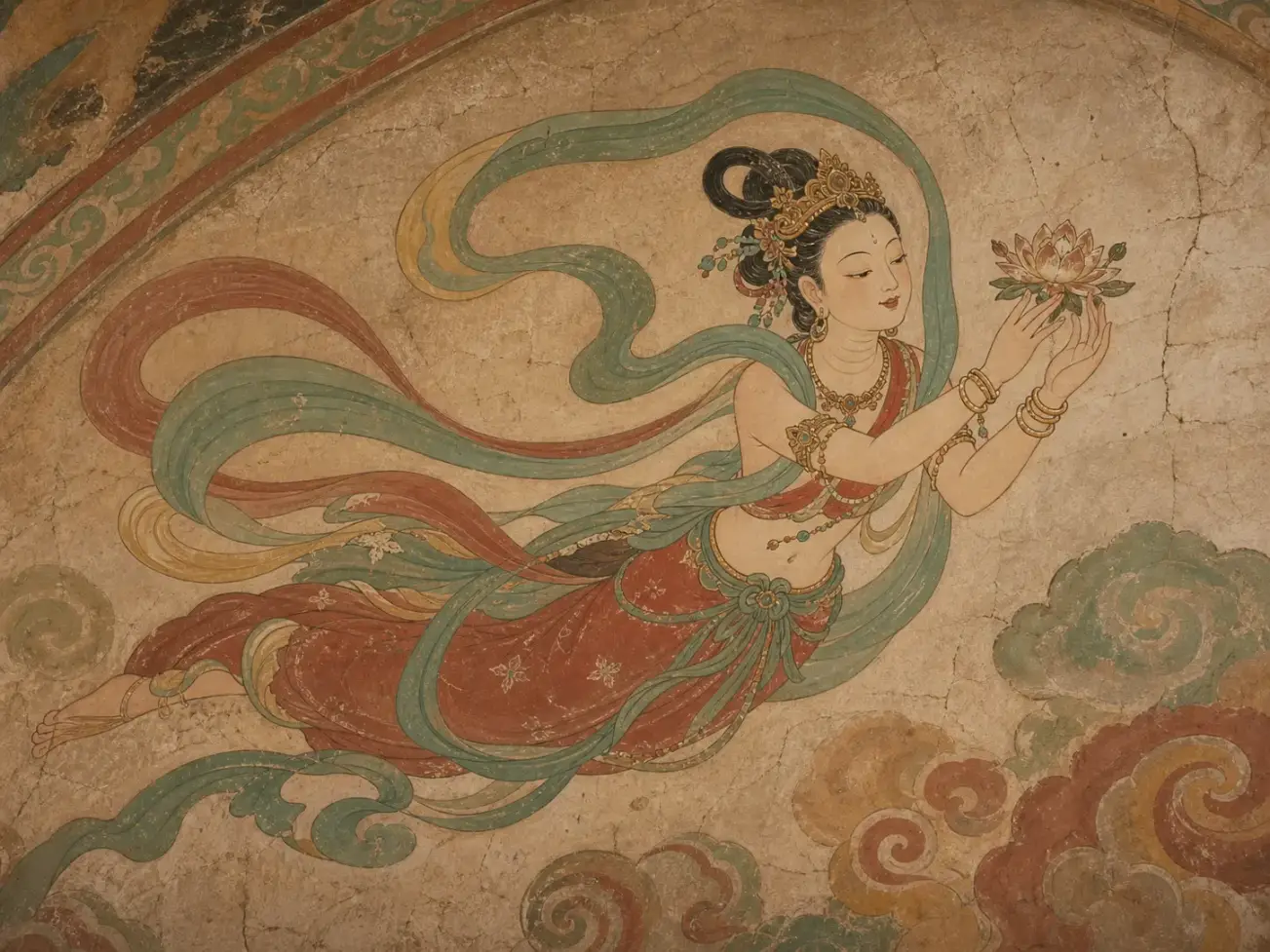
Dunhuang murals can place everyday life and flying figures from Buddhist stories within the same painted world.
不能完全这样看。照片把镜头前真的东西留下来;壁画留下的,却是画师选择画出来的世界。
敦煌的一面墙上,可以同时出现好几种东西。农具可能真的反映当时人怎样种田,供养人的画像可能保留了当时的衣服,骆驼和马车也可能让我们看到古代旅行的样子。
可旁边又有飞在空中的飞天,还有佛经故事里的九色鹿和想象中的佛国。这些当然不能证明一千年前的敦煌真的有会飞的人和九种颜色的鹿。
所以,研究敦煌壁画有点像找线索。历史学家会把墙上的东西和古代文书、出土的器物、建筑以及其他地方的图像放在一起比较。
当初出钱建洞窟的人,想留下的是一个佛教的世界。画师为了把那个世界画出来,却不断从自己身边借东西。
于是,他们生活里的车、碗、乐器、衣服、田地、道路,甚至人的脸,也一起留了下来。不是留在照片里,而是留在墙上。
Not quite. A photograph records light from something that was in front of a camera. A mural records what an artist chose to paint.
At Mogao, the same wall can mix things from very different kinds of worlds. A farmer may show us a real kind of plow. A donor portrait may show real clothing. A camel cart may resemble vehicles used on the Sīchóu Zhī Lù · 丝绸之路 · A network of old routes linking China, Central Asia, and lands farther west..
But beside them, heavenly beings fly through the air. A nine-colored deer appears in a Buddhist story. Palaces may represent an imagined paradise. Those are not proof that people once saw flying beings or magical deer in the desert.
That is why historians treat the murals more like clues than photographs. They compare what is painted with old documents, excavated objects, buildings, and other artworks. And the more carefully they look, the more the walls reveal.
The people who paid for the caves wanted to create Buddhist spaces. The artists filled those spaces with sacred stories. But to paint those stories, they borrowed pieces of the world around them.
So people who lived centuries ago ended up leaving behind their carts, bowls, instruments, clothes, farms, roads, and faces—not in a photograph, but on the walls.