同一个字,为什么能写得完全不同?
How Can the Same Character Look So Different?
Page 1
明明都是“福”,怎么差这么多?
Same Character, Different Shape
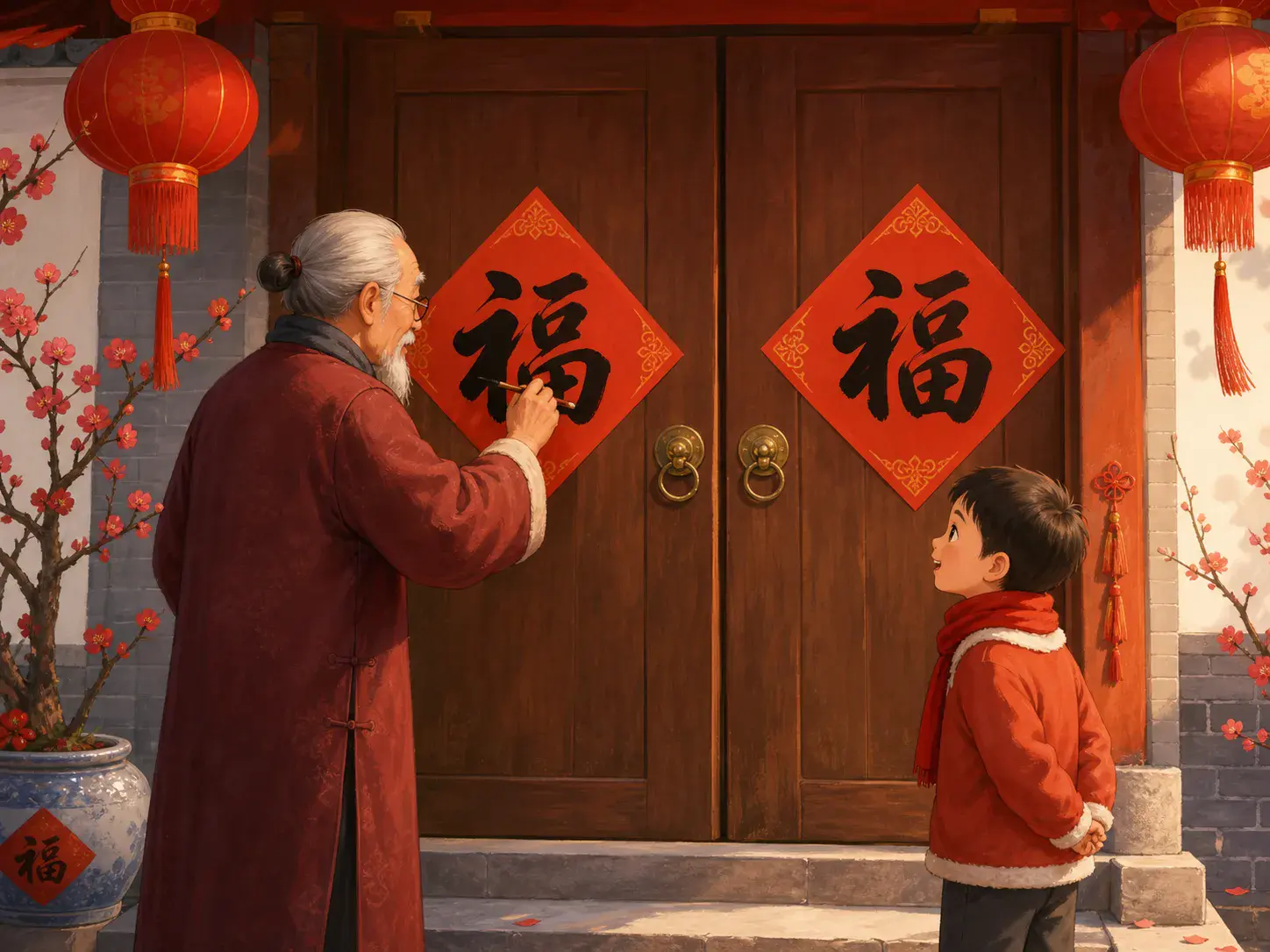
The same character, 福, can take different shapes while keeping a recognizable structure.
过年的时候,你可能会在门上看到一个红红的“福”字。现在,让两个人各拿一支毛笔,都写一个“福”。
一个写得方方正正,每一笔都看得很清楚。另一个却向一边舒展开来:这一笔又黑又粗,下一笔还没走到头,就已经细了下来。两个字看起来差别很大,可是会认这种书体的人,还是能看出它们都是“福”。
一个字到底可以变多少,还不会变成另外一个字?shūfǎ · 用毛笔等工具书写汉字的艺术。当然有规则。一个字里面的各个部分,不能想搬到哪里就搬到哪里;笔画也不能随便增加或消失。可是只要这些基本关系还在,同一个字仍然可以有很多不同的样子。
而且,它们不一样,还有另一个原因。汉字本来就不只有一种写法。
At Lunar New Year, you might see a large red 福 (fú) hanging on a door. The character means good fortune. Now imagine two people writing 福 with a brush.
One version stands straight and solid. Each stroke is easy to see. The other stretches farther to one side. One line is thick and dark; another becomes thin before it ends. The two versions may look surprisingly different, but a reader who knows the script can still recognize both as 福.
How much can a character change before it stops being the same character? shūfǎ · 书法 · The art of writing Chinese characters with expressive brushwork. has rules. The parts of a character have to stay in recognizable relationships, and strokes cannot simply be moved anywhere. But those rules leave plenty of room for variation.
And there is another reason the same character can change so much. There is more than one way to write it.
Page 2
写字的“路”不只有一条
Different Ways of Writing
在漫长的历史中,汉字形成了几种主要的书体。用kǎishū · 笔画和结构清楚、今天仍很常见的汉字字体。写,笔画通常比较清楚,字的结构也比较容易看出来。换成xíngshū · 介于楷书和草书之间、笔势较连贯流动的字体。,毛笔走得更流畅,一笔好像会顺势带向下一笔。到了cǎoshū · 笔画常被连写或简化、书写速度很快的书法字体。,有些笔画会缩短、连在一起,没有学过的人可能看了半天也认不出那个字。
另外,还有更早出现的zhuànshū · 秦代统一文字时使用并规范的一类古老字体。和lìshū · 由早期篆书演变而来、笔画更加平直舒展的古代字体。。这些书体并不是给同一个字换上几套漂亮的“字体”。每一种书体都有自己的习惯:笔画怎么写,一个字里的各个部分怎么安排,毛笔又怎样从一处走到另一处。
所以,一个楷书的“福”和一个行书的“福”长得不一样,并不奇怪。它们本来就在按照不同的方法写。
可是,如果两个人照着同一张字帖,都写同一种书体呢?他们写出来的“福”,还是不会完全一样。这一次,原因就在他们手里的毛笔。
Over many centuries, Chinese writing developed several major script types. In kǎishū · 楷书 · A clear, structured Chinese script style still widely used today., the strokes are clearly formed and the structure is relatively easy to see. In xíngshū · 行书 · A flowing script style between the formality of regular script and the speed of cursive., the brush moves more freely, and one stroke may seem to flow toward the next. In cǎoshū · 草书 · A fast, flowing calligraphic script whose strokes may join or simplify., strokes can be shortened or joined so much that a beginner may have trouble recognizing the character at all.
There are also older traditions such as zhuànshū · 篆书 · An ancient script style standardized for official use under the Qin. and lìshū · 隶书 · An early script style with flatter, more sweeping strokes than seal script.. These are not simply five decorative fonts. Each script has its own habits: how strokes are shaped, how parts of a character fit together, and how the brush moves from one place to another.
So a 福 in regular script and a 福 in running script may look different partly because they are following different writing traditions.
But suppose two people copy the same model, in the same script. Their 福 characters still will not be identical. For that, you have to look at the brush.
Page 3
毛笔不像铅笔那么听话
A Brush Does Not Behave Like a Pencil
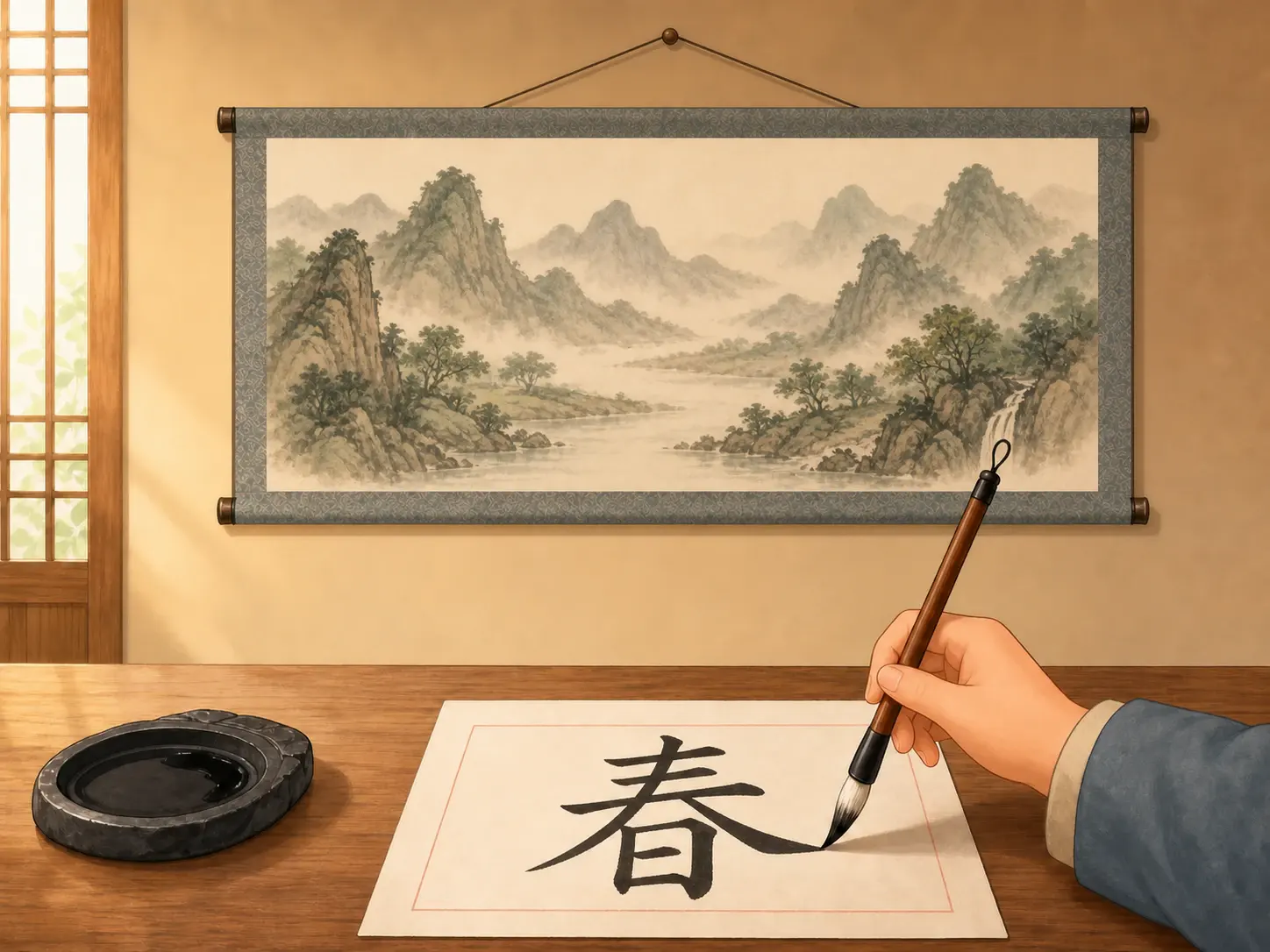
A flexible brush changes its line as pressure, angle, and speed change.
试试看临摹别人的一幅画。就算两个人拿着一样的铅笔,盯着同一张画,一笔一笔照着画,最后的两张也不会完全一样。这里按得重了一点,那里的弧线转得早了一点,另一条线又比原画长了一点。
毛笔会把这些差别变得更加明显,因为毛笔的笔头是软的。往下一按,笔毛散开,笔画就粗了;轻轻提起来,线又变细。手腕换一个角度,接触纸面的笔毛也跟着改变。走得快,笔毛会跟着手向前带;走得慢一点,或者在一个地方停下来,墨又可能在那里留下更深的痕迹。
毛笔很灵活,所以能写出很多变化。可也正因为它软,它并不好控制。手上只有一点点不同,纸上就可能看得出来。所以,两个人照着同一个字帖写,笔画还是会有差别。一个人的一横可能压得又稳又重,另一个人的却比较轻快。甚至同一个人连续写两遍,也很难让两笔长得一模一样。
书法当然是在写一个字。可是毛笔同时也把这只手刚才是怎么写的留在了纸上。
Try copying a drawing made by someone else. Even if you use the same kind of pencil and look carefully at every line, your copy will not be exactly the same. Your hand presses a little harder here, turns a little earlier there, or makes one curve wider than the original.
A calligraphy brush makes those differences even easier to see. Its tip is made of soft hairs. Press down and the hairs spread, making a wider stroke. Lift the brush and the line becomes thinner. Change the angle and a different part of the brush touches the paper. Move quickly and the hairs bend and follow the hand; slow down or pause, and more ink may settle into one place.
The brush is flexible, which makes it powerful—but also difficult to control. A tiny change in the hand can leave a visible change on the paper.
That is why two people can follow the same model and still produce different lines. One stroke may feel heavy and steady. Another may be lighter and sharper. Even the same person will not make two perfectly identical strokes every time. Calligraphy begins with the shape of a character, but the brush records how the hand actually made that shape.
Page 4
既然一定会不一样,为什么还要临帖?
Why Copy at All?
那为什么学书法的人还要花那么多时间临帖,一遍又一遍地照着前人的字写?这其实很像学画画的人临摹一幅画:不是只看最后画成什么样,而是去学那一笔到底是怎么画出来的。
学书法也是一样。你要看一笔从哪里落下,什么时候把毛笔压下去,在哪里开始转弯;还要看一个部分写大了,旁边的部分怎么和它平衡,两个笔画之间又留下了多少空白。然后自己来试。第一次,毛笔可能转晚了,一竖突然写得太胖,右边挤成一团,左边却空了一大片。
那就再写一次。写得多了以后,手会慢慢学会一些光靠眼睛很难学会的东西:到底该按多重,什么时候提笔,怎样转弯才不会突然停住,上一笔又应该怎样接到下一笔。
可是,练得再熟,两个人的手也不会变成同一只手。所以临帖并不会把所有人的字练成一模一样。恰恰相反,等大家都学会控制毛笔以后,那些细小的差别反而更容易看出来。汉字给了书写者一个基本结构,书体告诉他可以怎样写,练习让手学会控制毛笔。
可真正落到纸上的那一笔,还是只能由这个人在这一刻亲手写出来。所以,同一个字可以写一百遍。它还是那个字,却不会有两遍完全一样。
If every hand is different, why do calligraphy students spend so much time copying old works? For the same reason an art student might copy a drawing or painting: to understand how it was made.
A calligraphy student looks closely at where a stroke begins, when the brush presses down, where it turns, how two parts of a character balance each other, and how much space is left between them. Then the student tries to make those movements again. At first, the copy may look awkward. The brush turns too late. A line grows too fat. One side of the character feels crowded.
So the student tries again. After many copies, the hand begins to understand things that are difficult to learn just by looking: how much pressure is enough, when to lift the brush, how to turn without stopping, and how one stroke prepares for the next.
And because no two hands move in exactly the same way, copying does not erase differences between writers. It actually makes those differences easier to notice. The character provides a structure. The script provides a set of ways to write it. Training teaches the hand how to control the brush.
After that, every stroke still has to be made by a real person, once, on a real sheet of paper. That is why the same character can be written again and again without ever coming out exactly the same.