
一口钟,为什么能敲出两个音?
Why Can One Bell Play Two Notes?
Page 1
同一口钟,两个声音
One Bell, Two Sounds
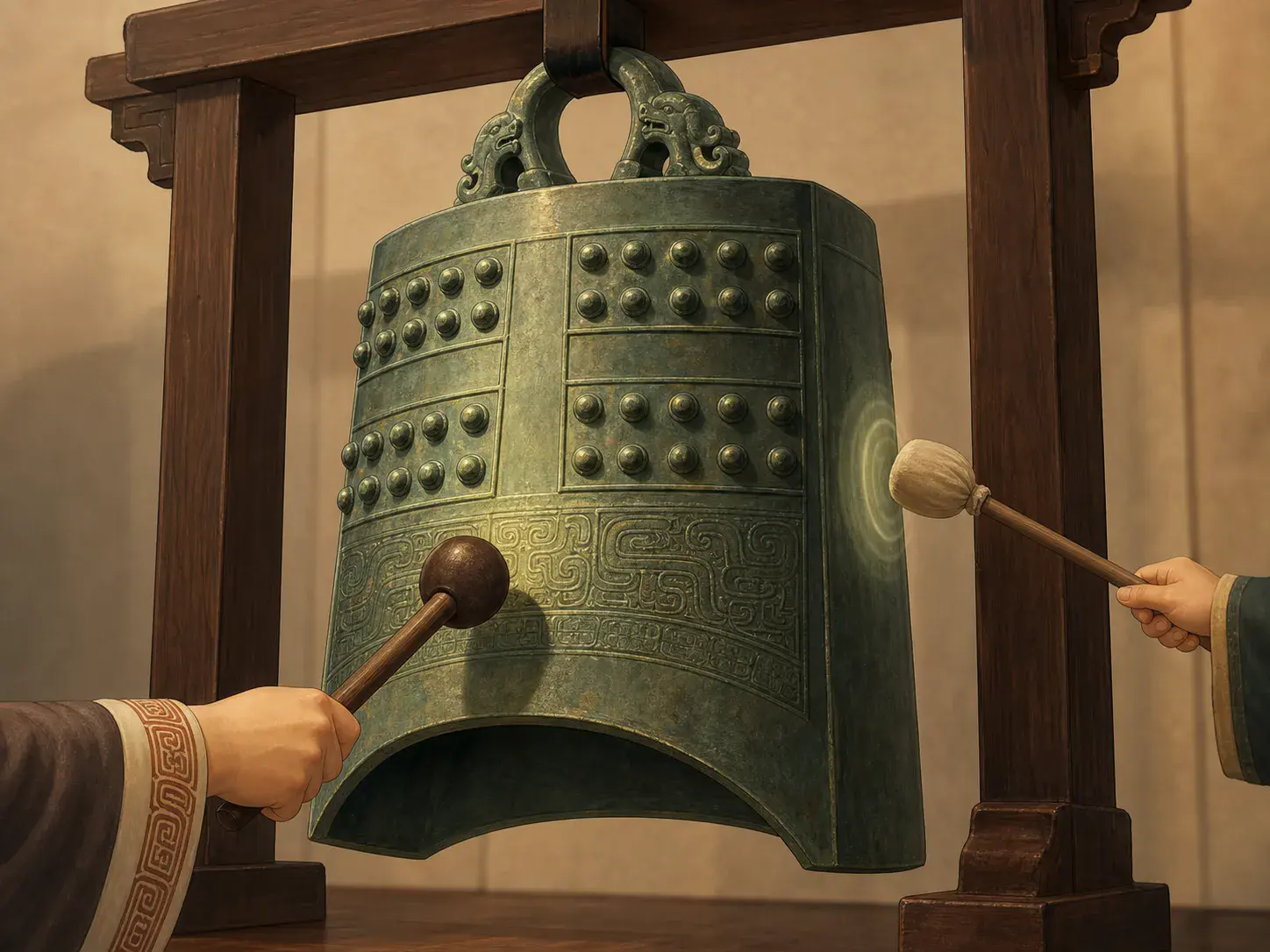
Two carefully chosen striking places on the same bell can produce two different notes.
木槌敲在qīngtóng · 主要由铜和锡熔合而成的合金,古人常用它铸造钟和器皿。钟的正面。当! 再换一个位置,敲在钟的侧面。叮!
第二个音高了一些。可是钟没有换,木槌也没有换。奇怪了——一口钟怎么会有两个不同的音?
秘密藏在钟的形状里。中国古代的许多乐钟,并不像我们常见的钟那样圆圆的。从下面看,它们有点扁,像两片弯弯的瓦合在一起。正因为这个特别的形状,敲正面时,钟会用一种方式zhèndòng · 物体快速来回运动;这种运动会推动空气,形成声音。;敲侧面的特定位置时,它又会用另一种方式振动,于是耳朵就听见了两个不同的yīngāo · 声音听起来高或低的程度。。
所以,钟里面并没有藏着两只小钟。藏在里面的,是同一块青铜振动的两种方式。
可是,如果一口钟有两个音,把六十五口这样的钟挂在一起,又会怎么样?
A wooden mallet strikes the front of a qīngtóng · 青铜 · An alloy made mainly from copper and tin, often used in ancient times to cast bells and vessels. bell. Dong! Now it strikes a spot near the side. Ding!
The second note is higher. But nothing has been changed—same bell, same metal, same mallet. How can one bell have two different notes?
The clue is in its shape. Many ancient Chinese music bells were not round like the bells you might see in a church tower. Look at one from below and it is flatter, almost like two curved roof tiles joined together. Because of that unusual shape, the bell can zhèndòng · 振动 · A rapid back-and-forth movement that can push the air and create sound. in different ways when it is struck in different places. Strike the center area and you hear one yīngāo · 音高 · How high or low a sound seems.; strike the right spot near the side and you hear another.
The two notes were not hiding inside like two tiny bells. They came from two different ways the same bronze bell could shake.
And if one bell can do that, what happens when you hang sixty-five of them together?
Page 2
六十五口钟一起出现了
A Whole Wall of Bells
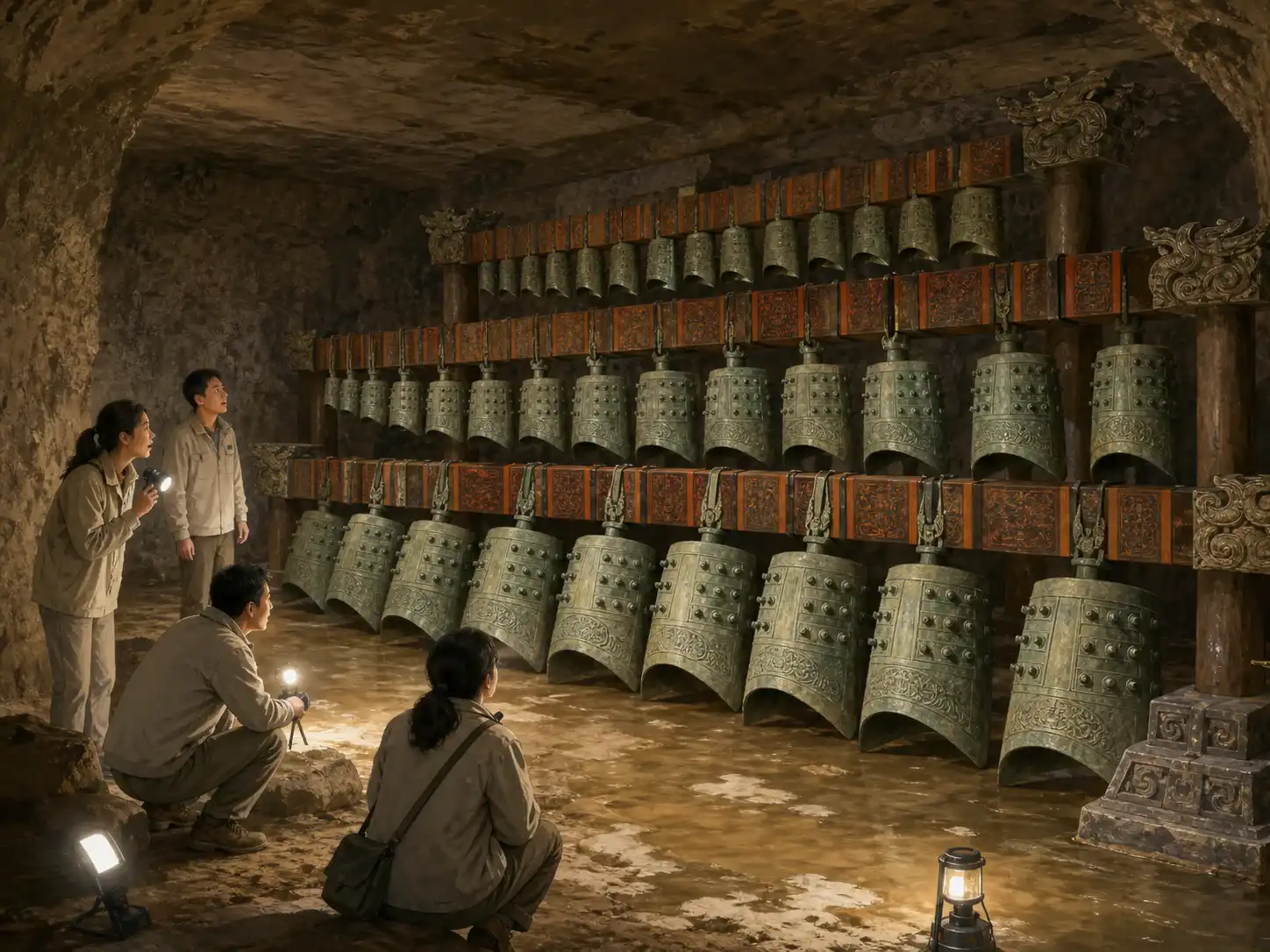
In 1978, archaeologists found the complete sixty-five-bell ensemble in the tomb of Marquis Yi of Zeng in Suizhou, Hubei.
1978 年,kǎogǔ rényuán · 通过遗址和出土物研究过去的人。在湖北发掘一座古墓时,看见了一件惊人的东西:一排又一排biānzhōng · 成组悬挂、按音高排列演奏的古代青铜钟。,整整齐齐地挂在三层高的巨大钟架上。一共有六十五口。
这些钟属于两千四百多年前的一位国君,后人称他为Zēng Hóu Yǐ · 战国早期曾国的一位国君,他的墓中出土了著名的六十五口编钟。。小钟可以发出明亮的高音,大钟则沉沉地低鸣。最大的一口钟重达两百多公斤。整套钟从低到高,可以奏出跨越五个多bādù · 音乐中从一个音到更高或更低的同名音之间的距离。的声音。
可是问题也跟着变大了。
如果每口钟都能敲出两个音,乐师不但要找对钟,还要敲对位置。眼前这么多大大小小的钟,怎么记得住哪里是什么声音?
答案的一部分,就写在钟上。
In 1978, kǎogǔ rényuán · 考古人员 · A person who studies the past through sites and objects people left behind. working in Hubei Province uncovered an ancient tomb. Inside stood something enormous: rows and rows of biānzhōng · 编钟 · A tuned set of ancient Chinese bronze bells hung on a frame. hanging from a three-level wooden-and-bronze frame.
There were sixty-five bells altogether.
They had belonged to a ruler remembered as Zēng Hóu Yǐ · 曾侯乙 · An early Warring States ruler of Zeng whose tomb held the famous set of sixty-five bells., who lived more than 2,400 years ago. Some bells were small enough to make high, bright notes. Others were huge—the largest weighs more than 200 kilograms. Together, the bells could play notes across a range of more than five bādù · 八度 · The musical distance from one note to the next higher or lower note with the same name..
Now the first mystery becomes a much bigger one. If every bell can make two pitches, a musician does not simply have to choose the right bell. The musician also has to strike the right part of that bell.
With so many bells and so many possible sounds, how could anyone keep track?
Part of the answer is written right on the bells.
Page 3
钟上真的有字
The Bells Have Labels
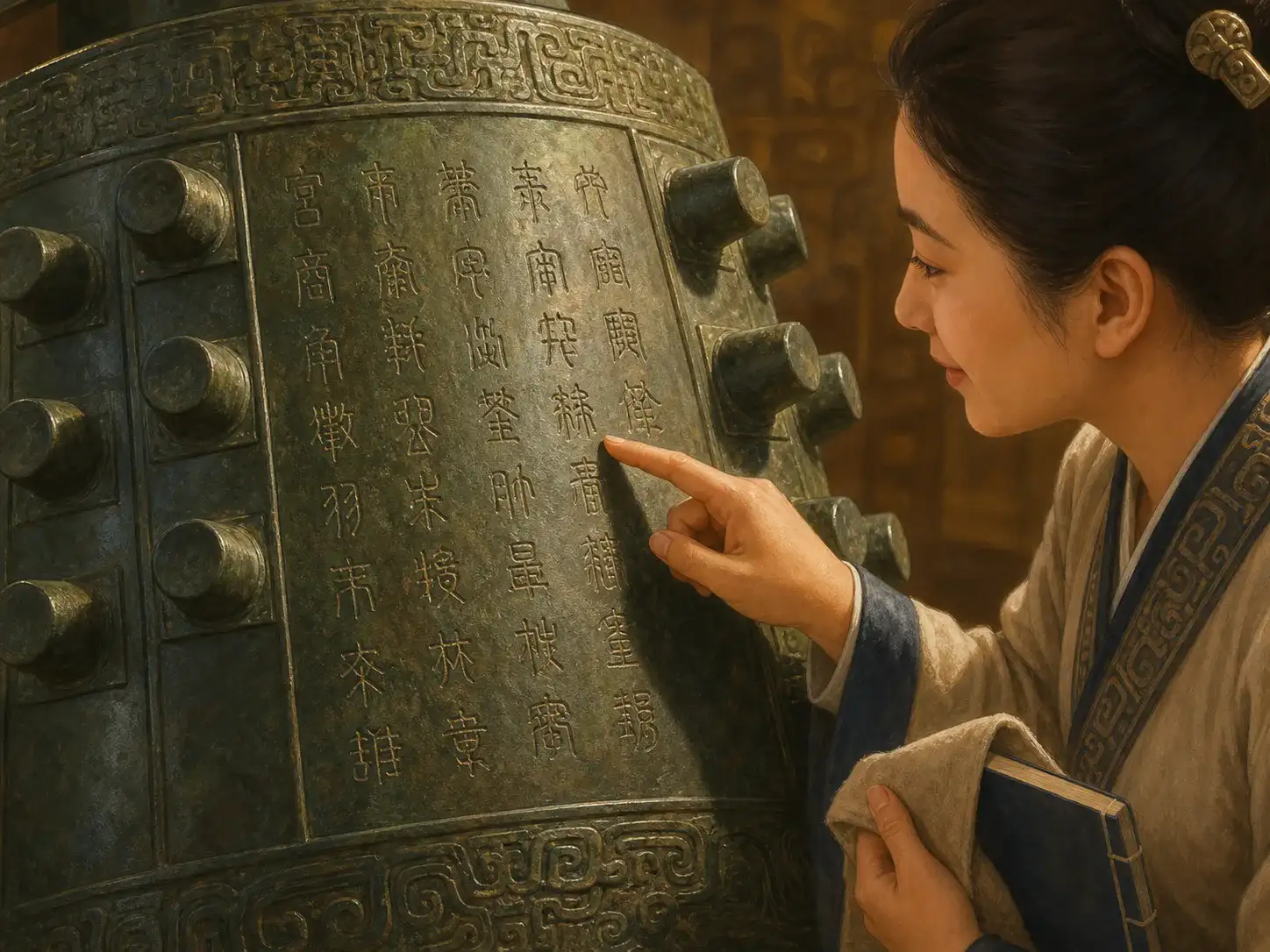
The characters on the bell represent bell inscriptions; they are not an exact transcription of the Marquis Yi bells.
凑近看,青铜钟上刻着一行行古老的míngwén · 铸、刻或写在器物上的文字。。钟、钟架和挂钟的部件上,一共留下了 3,755 个字。
有些字记录事情,有些标出音名,还有一些讲声音之间的关系。在一些钟上,这些文字保存了不同敲击位置能够发出什么音的信息。
不过,它们并不是一份从头写到尾的乐谱。上面不会告诉乐师:“先敲第三口,再敲第八口。”它们更像是写在乐器上的声音标签和音乐笔记:告诉人们这些钟能发出哪些声音,以及这些声音怎样互相对应。
两千多年以后,这些字还有一个特别的用处。研究人员可以把钟上的文字和真正测到的声音放在一起比较,看看古人留下的记录究竟在说什么。
可是这里又来了一个难题。
两千四百多岁的文物,可不能为了让大家听音乐,就每天拿木槌去敲。
Look closely at the bronze and you will see tiny Chinese míngwén · 铭文 · Words cast, carved, or written on an object.. Across the bells, their frame, and the hooks that hold them, there are 3,755 inscribed characters.
Some record events. Some identify sounds and pitch names. Some explain ideas about how musical pitches are related. On the bells, the writing helped preserve information about the notes that different striking places could produce.
But these inscriptions are not a song written from beginning to end. They do not say, “Hit this bell first, then that one.” They are closer to labels and musical notes about the instrument itself—a way of recording what these bells could do.
That is especially useful to us now. More than two thousand years later, researchers can compare the words carved into the bronze with the sounds the bells actually make.
There is only one problem.
You cannot keep hitting a 2,400-year-old treasure every day just because you want to hear it sing.
Page 4
那我们今天听见的是什么?
So What Are We Hearing Today?
真正的曾侯乙编钟现在是珍贵的博物馆文物。反复敲击会带来损伤的风险,所以研究人员仔细测量原钟的大小和形状,研究青铜材料、钟体结构和声音,再和工匠一起制作出一整套fùzhìpǐn · 根据原物制作的仿制品,可以用于研究、展示或演奏。。
复制品就可以真正演奏了。
今天,在湖北省博物馆听到的日常编钟演出,使用的就是这样的复制品。它们不是两千多年前的原钟,却是研究人员一遍遍观察、测量和试验原钟以后做出来的。
现在,再回到最开始的那两声:当——叮。
一口钟之所以能有两个音,是因为它特别的形状,让两个敲击位置产生不同的振动。把许多这样的钟放在一起,调好音,标出声音,再按照高低悬挂起来,一排沉甸甸的青铜,就变成了一件可以演奏旋律的乐器。
钟摆在那里,看起来又硬,又安静。可是木槌落在正确的位置,整块青铜便开始振动。
原来,第二个声音就藏在那里。
The original bells are protected museum objects. Repeated playing could risk damaging them, so researchers studied their size, shape, bronze, structure, and sound and worked with craftspeople to make a complete set of fùzhìpǐn · 复制品 · A carefully made copy of an original object, used for study, display, or performance..
Those replicas can be played.
Today, musicians at the Hubei Provincial Museum perform on replica bells, letting visitors hear something the silent originals behind the display case cannot safely do every day. The copies are not the ancient bells themselves, but they were made by studying the originals closely.
And that brings us back to the first dong and ding.
One bell can make two notes because its unusual shape allows it to vibrate differently when struck in two carefully chosen places. Put many such bells together, tune them, label their sounds, hang them in the right order, and suddenly a row of heavy bronze objects becomes an instrument capable of melody.
A bell looks still and solid. But strike the right place, and all that bronze begins to move.
That is where the second note was hiding.