
天坛:皇帝为什么向天祈祷?
The Temple of Heaven: Why Did the Emperor Pray to Heaven?
Page 1
蓝屋顶不是皇帝的家
The Blue-Roofed Hall Was Not the Emperor's Home
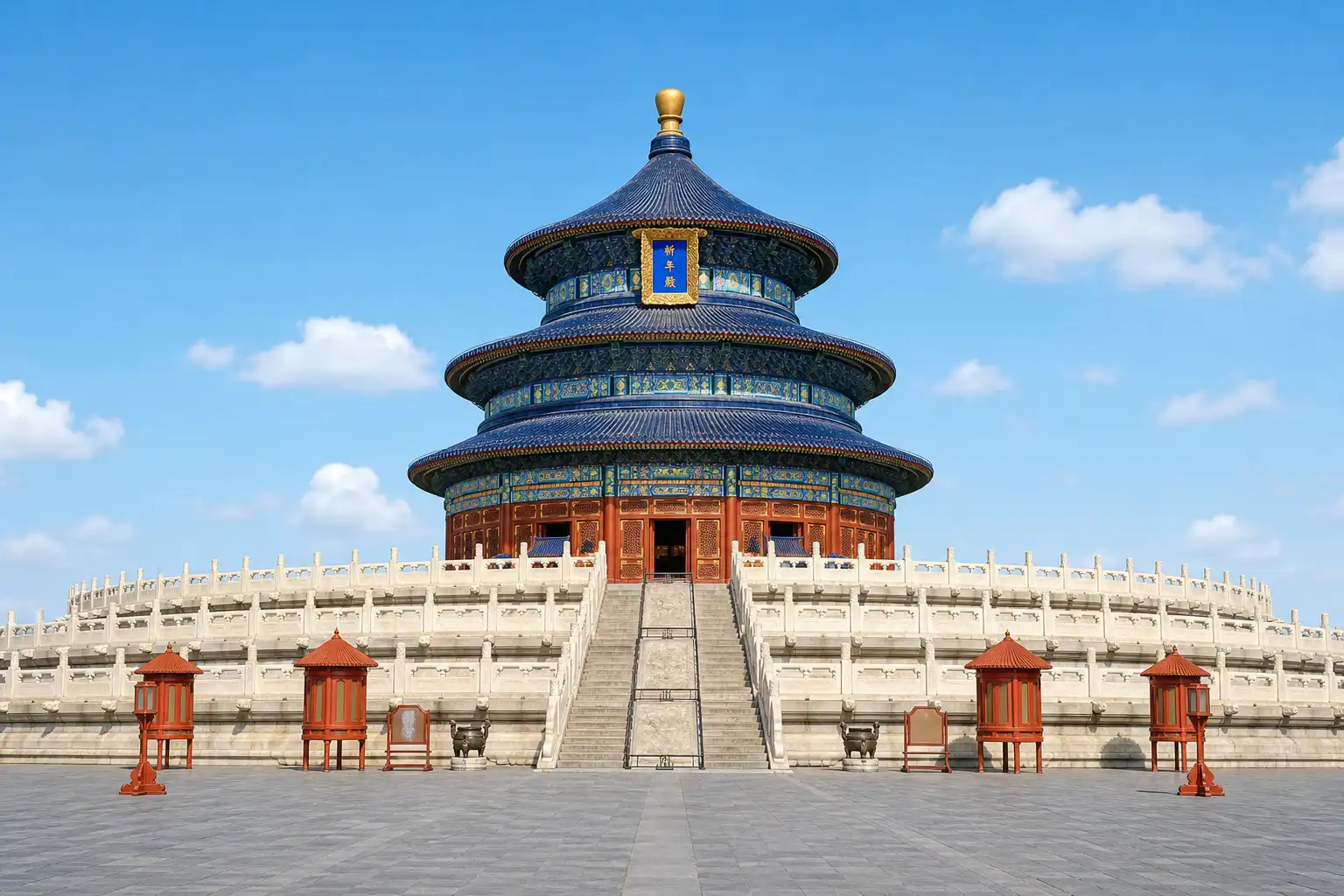
The blue roof of the Hall of Prayer recalls the sky. Emperors came here to pray for good harvests, not to live.
北京有一座圆圆的大殿,盖着三层蓝色屋顶。它看起来像童话里的宫殿,却不是皇帝的家。这座建筑叫祈年殿,是Tiāntán · 北京供明清皇帝祭天祈谷的建筑群。里最有名的一部分。
古代中国人大多靠种田生活。雨太少,庄稼会干死;雨太多,田地又会被淹。皇帝来到天坛,向“天”举行重要的礼仪,祈求风雨合适、粮食丰收。
这里的“天”不只是抬头看见的蓝天。古人相信,天与季节、收成和国家过得好不好都有关系。皇帝认为自己有责任代表天下的人来祈祷。所以,天坛既是举行礼仪的地方,也是在告诉大家:皇帝应该关心来年的粮食。
Beijing has a great round hall with three roofs of deep blue. It looks like a palace from a fairy tale, but no emperor lived there. This is the Hall of Prayer for Good Harvests, the best-known building at the Tiāntán · 天坛 · The Beijing complex where Ming and Qing emperors held ceremonies for Heaven..
Most people in ancient China depended on farming. Too little rain could dry up the crops. Too much could flood the fields. At the Temple of Heaven, the emperor took part in important ceremonies and prayed for good weather and a strong harvest.
“Heaven” meant more than the blue sky overhead. People connected it with the seasons, the harvest, and whether the country was doing well. The emperor believed it was his duty to pray for everyone. The ceremony also reminded people that a ruler was supposed to care about the food the country would grow.
Page 2
一场礼仪要准备多久?
Getting Ready for the Ceremony
皇帝不能在忙完一天以后随便走来,说几句话就离开。重要礼仪开始前,他要离开日常的热闹,住进天坛里一处安静的住所。他要洗浴、更衣,还要暂时放下一些平常的活动。
到了举行礼仪的日子,队伍沿着长长的道路前进。官员、乐师和其他参加者各有位置。音乐什么时候响,皇帝在哪里停下,礼物摆在哪里,都有规定。这里没有观众随便鼓掌,也没有人想走哪边就走哪边。
为什么这么麻烦?因为对古人来说,这不是皇帝自己的小愿望,而是关系到许多人能不能吃饱的大事。一步一步都很认真,正是为了表现这件事有多重要。
The emperor could not arrive after a busy day, say a few words, and leave. Before an important ceremony, he stayed in a quiet living area inside the Temple of Heaven. There he bathed, changed clothes, and prepared himself away from ordinary palace life.
On the day of the ceremony, a long line of people moved along the main path. Officials, musicians, and other helpers each had a place. Rules told them when music should begin, where the emperor should stop, and where gifts should be set. This was not a show where people clapped or wandered wherever they wished.
Why was everything so carefully planned? To people at the time, the harvest was not one person's small wish. It could decide whether millions of families had enough to eat. Every careful step showed how much the ceremony mattered.
Page 3
为什么到处都是圆形和蓝色?
Why So Many Circles and Blue Roofs?
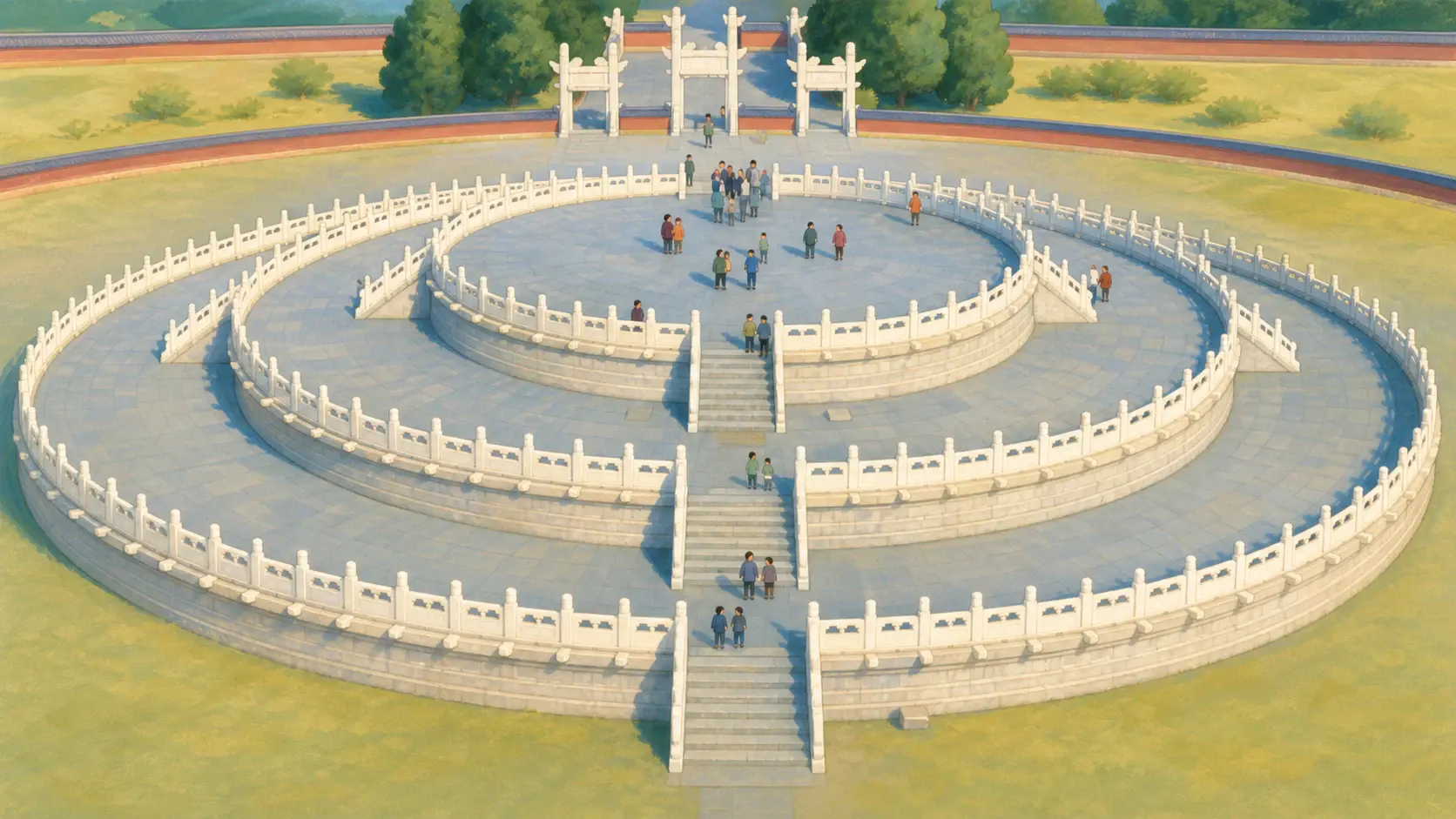
The Circular Mound Altar is a round stone platform under the open sky. The emperor held the winter-solstice ceremony here.
祈年殿的蓝色屋顶让人想到天空,圆形的大殿也和古人“天是圆的”这一想法有关。天坛的形状和颜色都在提醒来访者:这里是祭天的地方。
从祈年殿向南走,会来到另一座圆形建筑:Huánqiūtán · 天坛内用于冬至祭天的露天圆形石坛。,英文叫 Circular Mound Altar。这个名字的意思就是“用于重要礼仪的圆形高台”。它没有屋顶,而是由三层白色石台组成。人站在最上面,抬头就能看见整片天空。
皇帝在冬至这一天来到这里祭天。在北京,冬至是一年中白天最短、夜晚最长的一天。冬至以后,白天会一点点变长。古人把它看成一年中的重要转折。皇帝在这一天感谢“天”对过去一年的照顾,也报告国家的大事。到了春天,他还会在祈年殿举行另一场礼仪,祈求来年有好收成。
圜丘坛最上层的地面中央有一块圆石。围着它的第一圈有9块扇形石板,第二圈有18块,第三圈有27块——每向外一圈,就再增加9块。在古代中国,九常常和尊贵、皇权以及“天”联系在一起。设计者连地面石板的数目都仔细安排过。
The blue roof of the Hall of Prayer recalls the sky. Its round shape also fits an old Chinese idea that Heaven was round. Throughout the Temple of Heaven, shapes and colors reminded visitors that this was a place for ceremonies honoring Heaven.
Walk south from the hall, and you reach another round structure: the Huánqiūtán · 圜丘坛 · The open-air circular stone altar at the Temple of Heaven used for the winter-solstice ceremony.. Its name means a round, raised place used for an important ceremony. It has no roof. Instead, three levels of white stone rise beneath the open sky.
The emperor came here on the winter solstice. In Beijing, this is the day with the least daylight and the longest night of the year. After it, the days slowly begin to grow longer. People in ancient China saw this as an important turning point in the year. The emperor thanked Heaven for the year that had passed and reported on the country. In spring, he held a different ceremony at the Hall of Prayer for Good Harvests to ask for a good harvest.
At the center of the altar's top level is one round stone. The first ring around it has 9 fan-shaped floor stones, the second has 18, and the third has 27. Each new ring adds 9 more. In ancient China, nine was often connected with high honor, the emperor, and Heaven. Even the floor was carefully counted and planned.
Page 4
回音壁真的会传话吗?
Can the Echo Wall Carry a Voice?
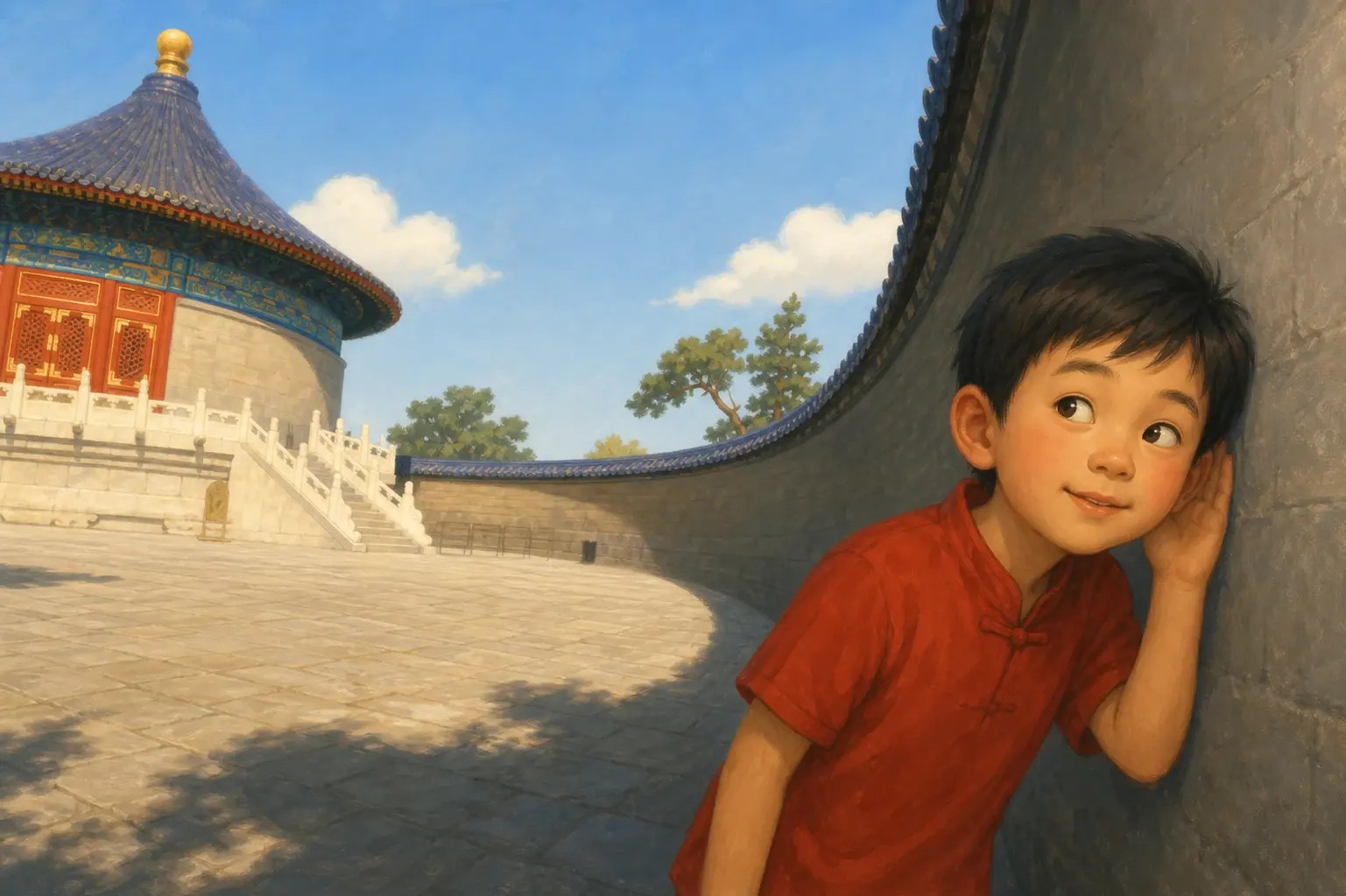
When two people stand in the right places beside the curved wall, sound can travel along it.
天坛还有一堵很受欢迎的圆墙,叫回音壁。两个人站在弧形墙边,相隔很远,轻声说话,有时对方也能听见。声音不是穿过墙,而是沿着光滑的弧形墙面传过去。
不过,回音壁不是魔法电话。要是周围挤满了说话的人,风很大,或者两个人站错位置,声音就可能听不清。墙面的形状和材料有帮助,安静的环境也很重要。
这堵墙原来围着一座圆殿,殿里保存着祭天时使用的木牌。它并不是为了给游客玩传话游戏才修的。只是建筑完成以后,人们发现弯曲的墙面还带来了一个有趣的声音效果。
The Temple of Heaven also has a popular round wall called the Echo Wall. Two people can stand far apart beside its curve. If one speaks softly, the other may still hear the voice. The sound does not travel through the wall. It follows the smooth, curved surface.
The Echo Wall is not a magic telephone. If a noisy crowd fills the space, the wind is strong, or the two people stand in the wrong places, the voice may be hard to hear. The wall's shape and surface help, but a quiet day helps too.
The wall was built around a round hall that held wooden name tablets used in the ceremonies. It was not created as a whispering game for visitors. The curious sound was an extra effect made by the shape of the building.
Page 5
28根木柱怎样托住三层屋顶?
How Do 28 Wooden Columns Hold Up Three Roofs?
走进祈年殿,抬头可以看见28根大木柱。正中间的4根柱子托住最高一层屋顶;中间一圈有12根,托住第二层;最外面还有12根,托住最下面一层。屋顶的重量就这样一层层传到柱子,再传到石台。大殿里面不需要一根横跨正中的巨梁来托住全部屋顶。
这些柱子还把时间藏进了建筑里。中间4根代表春、夏、秋、冬,旁边12根代表一年中的12个月。人们抬头看屋顶时,也像在看一座用木头搭成的日历。
1889年,雷电引起大火,祈年殿被烧毁。人们后来依照原来的样子把它重新建了起来。因此,今天的祈年殿保留了古老的设计,但里面的木料并不是从Míng cháo · 1368年至1644年的中国朝代。一直原封不动地留到现在。
Look up inside the Hall of Prayer, and you can see 28 large wooden columns. Four columns in the center support the highest roof. A ring of 12 supports the middle roof, and another ring of 12 supports the lowest roof. The weight moves down through the columns and into the stone base. The hall does not need one enormous beam stretching across its center to hold up the whole roof.
The columns also turn time into part of the building. The four in the center stand for spring, summer, fall, and winter. The next 12 stand for the 12 months of the year. Looking up at the roof is a little like looking at a calendar built from wood.
In 1889, lightning started a fire that destroyed the hall. It was later rebuilt in its earlier form. The Hall of Prayer we see today keeps the old design, but its wood has not remained untouched since the Míng cháo · 明朝 · The Chinese dynasty that lasted from 1368 to 1644..